
buy AI translators: 7 Checks Before You Buy AI Translators for Southeast Asia EdTech in 2026
October 14, 2026 · Team Star King
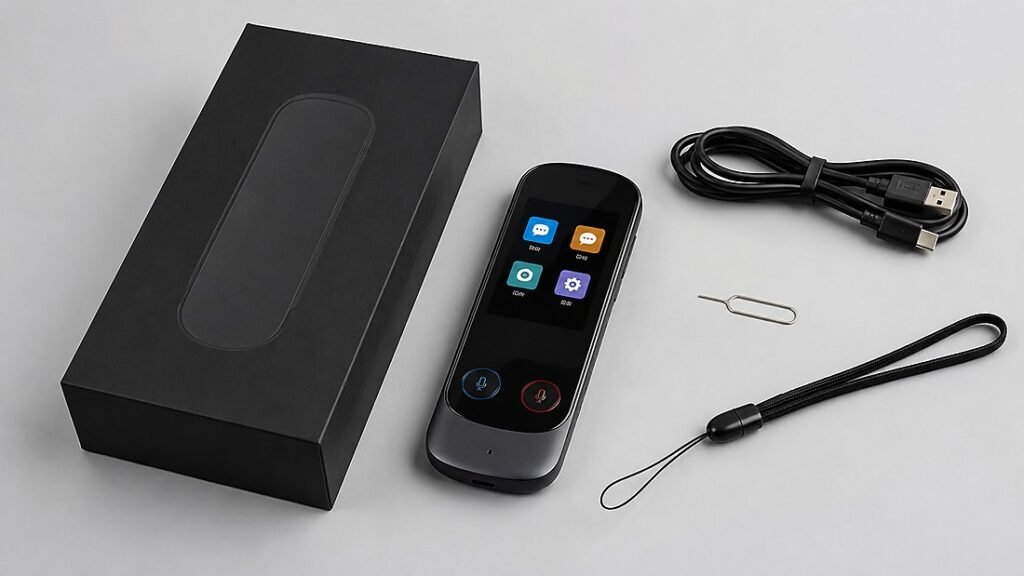
7 Checks Before You Buy AI Translators for Southeast Asia EdTech in 2026
If you are an edtech company preparing to buy AI translators for Southeast Asia, the nine procurement checks in this guide are the fastest way to avoid a costly pilot failure. Edtech buyers typically validate five areas before issuing a PO: real-time translation quality for ASEAN languages, offline and SIM/Wi‑Fi behaviour, OEM/ODM customization, MOQ and lead time, and certification for country-specific import. Run these checks in order and you will have a defensible RFQ, a realistic landed cost, and hardware that actually performs in classrooms and field programs.
Table of Contents
Table of Contents
This guide is written for education technology companies sourcing AI translation devices for schools, universities, training centers, and government-funded programs across Southeast Asia. It is not a consumer review. It is a buyer-focused framework that you can turn into a vendor scorecard and a request for quotation in the same week.
buy AI translators: Table of Contents
- Short Answer: What Edtech Buyers Should Know First
- Key Takeaways
- Key Facts for Buyers
- Check 1: Language Coverage and Real-World Accuracy
- Check 2: Offline, SIM, and Wi-Fi Behaviour in Classrooms
- Check 3: OEM, ODM, and Private Label Scope
- Check 4: MOQ, Tooling, and Lead Time Planning
- Check 5: Certification and Import Compliance
- Check 6: App, Firmware, and API Integration
- Check 7: Battery Safety, Shipping, and After-Sales
- Comparison: Ready-Made vs. OEM vs. Full ODM
- Common Mistakes and Buyer Red Flags
- Practical Buyer Checklist
- FAQ: AI Translator Procurement for Edtech
- Conclusion

Short Answer: What Edtech Buyers Should Know First
To buy AI translators successfully for Southeast Asia edtech, validate three things before signing a PO: on-device translation quality for the specific language pairs you will deploy (for example, English–Thai, English–Vietnamese, English–Bahasa Indonesia, English–Filipino), offline and connectivity behaviour in low-bandwidth schools, and the supplier’s ability to support OEM/ODM, MOQ, and country-specific certification. Buyers who skip field testing for two to four weeks usually discover accuracy, battery, or SIM issues after rollout, when remediation is expensive.
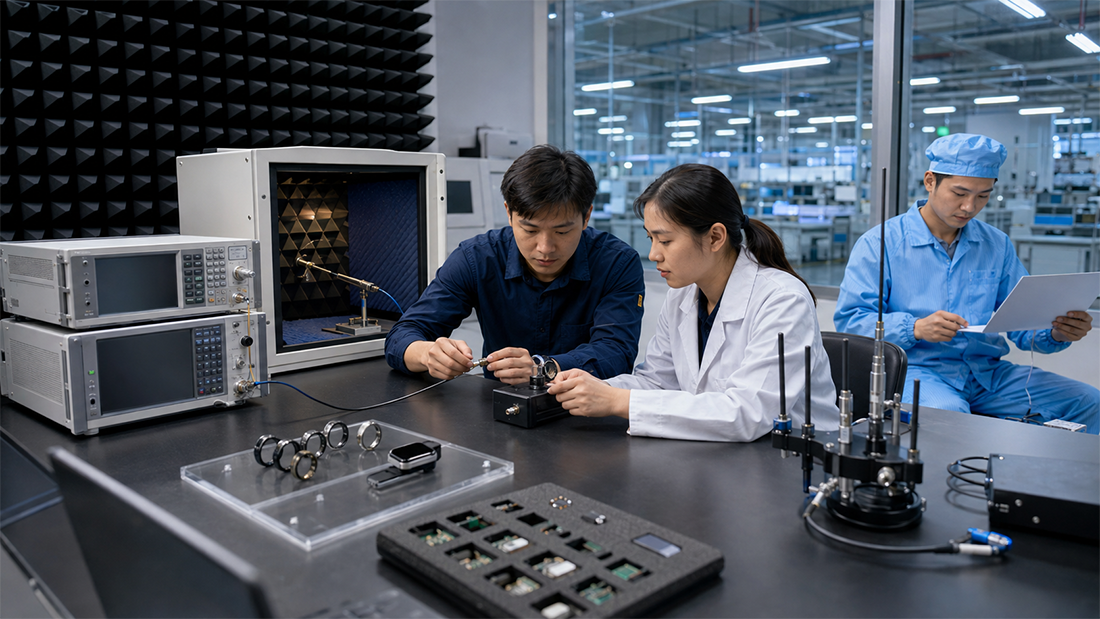
Key Takeaways
- Define the exact language pairs, usage environment, and user role (teacher, student, field trainer) before you request quotations for AI translators.
- Request a sample unit and run a 2–4 week pilot in the target country; translation quality varies by accent, noise level, and phrase domain.
- Confirm whether the supplier supports OEM, ODM, or private label, and clarify who owns the tooling, firmware, and app customizations.
- Ask for a written MOQ ladder with tooling, sample, and mass-production milestones, plus realistic lead times.
- Certification requirements typically depend on the specific product configuration and destination country; buyers should verify with the manufacturer and local authorities.
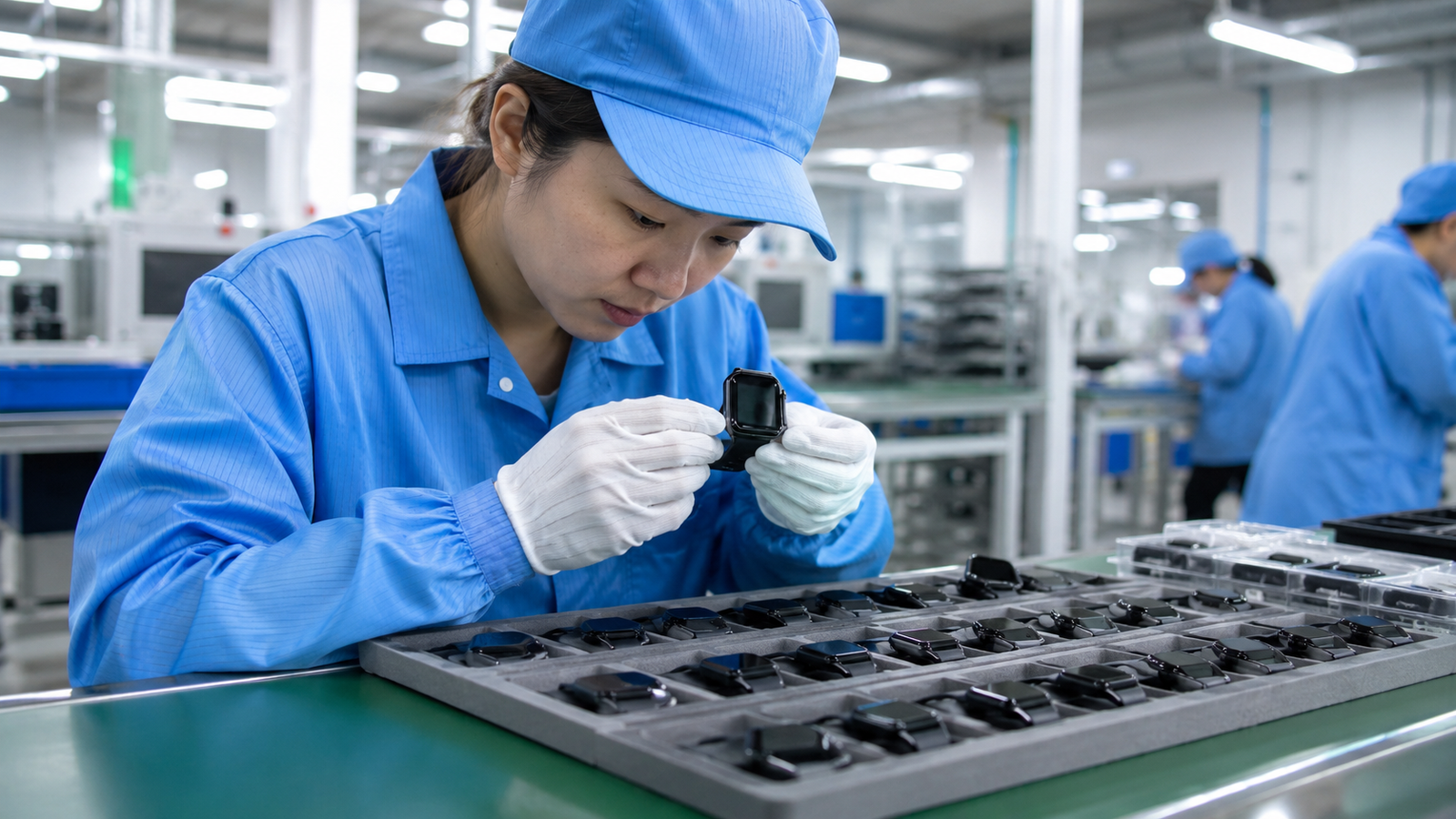
Key Facts for Buyers
| Buying factor | Typical buyer question | What to request from the supplier |
|---|---|---|
| Language coverage | Are my target ASEAN languages supported offline? | Language list with offline/online status and accuracy notes |
| Connectivity | Does it work without Wi-Fi in rural schools? | SIM slot details, offline mode documentation, test results |
| OEM/ODM scope | Can we brand the device and app? | Customization matrix: logo, packaging, UI, firmware |
| MOQ | What is the smallest order for a pilot? | Written MOQ ladder and sample policy |
| Certification | Which approvals are needed for my country? | Certificate list per product configuration |
| Battery & shipping | Can lithium batteries ship legally? | UN38.3 report, MSDS, and shipping declaration |
| After-sales | How are defects handled? | Warranty terms, spare parts availability, RMA process |

Check 1: Language Coverage and Real-World Accuracy
When you buy AI translators, language coverage is the first specification to verify, but a language list alone is not enough. Real-time translation quality depends on microphone arrays, noise handling, phrase domain (classroom vs. business vs. travel), and whether the translation engine is cloud-based or on-device.
What to verify
- Target language pairs with online/offline availability clearly labeled.
- Domain-specific accuracy: classroom instructions, academic vocabulary, and administrative phrases.
- Performance across accents common in your target market (for example, Thai English, Vietnamese English, Filipino English).
- Latency: how long a spoken phrase takes to produce a spoken or on-screen translation.
Field validation method
Create a 100-phrase test script that mirrors real use. Include short commands, full sentences, proper nouns, and numbers. Run it with two to three speakers of different accents in a noisy room. Score each phrase as correct, partially correct, or failed. A sample unit and a 2–4 week pilot will reveal more than any spec sheet.
Check 2: Offline, SIM, and Wi-Fi Behaviour in Classrooms
Southeast Asian education deployments often include schools with intermittent connectivity. If your AI translator depends entirely on the cloud, a dropped connection means a dropped lesson.
What to verify
- Offline language packs: which pairs work without any connection, and how they are updated.
- SIM support: 4G/LTE bands, data consumption per hour, and availability of eSIM.
- Wi-Fi onboarding: can a teacher connect 20–30 devices quickly, and can IT lock down settings?
- Fallback behaviour: does the device degrade gracefully or fail silently when offline?
Why this matters for procurement
Connectivity decisions affect data costs, IT support, and total landed cost. A device with strong offline capability may cost more per unit but reduce SIM and support expenses over a three-year deployment.
Check 3: OEM, ODM, and Private Label Scope
Most edtech buyers do not want a generic device. You want your brand on the hardware, your UI in the app, and your content in the onboarding flow. The key question is how far the supplier can go and where customization stops.
Customization layers to clarify
- Logo and packaging: device branding, box, quick-start guide, and warranty card.
- App and UI: splash screen, language defaults, teacher/student modes, and content preloads.
- Firmware: button behaviour, default language, offline pack selection, and update policy.
- Hardware: color, memory, screen size, and accessories such as lanyards or charging docks.
Ask the supplier to document which layers are standard, which require tooling, and which are not possible. Clarify tooling ownership and whether firmware or app customizations are exclusive to your brand. These terms should be in the quotation, not in a side conversation. For a wider view of private-label programs, see Private Label OEM/ODM solutions.
Check 4: MOQ, Tooling, and Lead Time Planning
MOQ and lead time are often the difference between a pilot and a stalled project. Suppliers may quote a low MOQ for a catalog device but a much higher one for a customized version.
Questions to include in the RFQ
- What is the MOQ for a catalog unit, a logo-only version, and a full ODM version?
- What are the sample lead time and the mass-production lead time after sample approval?
- Are tooling costs one-time, and who owns the tooling?
- What is the change-order process if we adjust the language pack or packaging after PO?
For education buyers, tooling development and sample development are the two stages where delays usually appear. Build buffer time into semester starts and government tender deadlines.
Soft CTA: If you are preparing an RFQ for AI translators and need a customization matrix plus MOQ ladder, you can request a quotation and get a written scope to compare vendors.
Check 5: Certification and Import Compliance
Certification requirements for AI translators typically depend on the specific product configuration (for example, Wi-Fi, Bluetooth, cellular, battery capacity) and the destination country. Do not assume a single certificate covers all of Southeast Asia.
Common documentation to request
- Radio and EMC certificates for the markets you plan to enter.
- RoHS compliance statements and material declarations.
- Battery transport documents: UN38.3 test summary and MSDS.
- Safety reports where applicable to the product category.
Buyers should verify requirements with the manufacturer and local authorities before import. Regulatory frameworks change, and country-specific registration may apply. For reference on radio frequency equipment rules, see the FCC RF equipment guidance and the EU CE marking framework as examples of how authorities structure equipment approvals.
Check 6: App, Firmware, and API Integration
Edtech buyers rarely deploy a standalone device. You may need to connect the translator to a learning platform, a student information system, or an analytics dashboard.
Integration questions
- Is there an API or SDK for translation logs, device status, or user management?
- How are firmware updates delivered, and can they be scheduled or staged?
- Can usage data be exported in a format your platform accepts?
- What privacy controls exist for student data, and where is data stored?
If your deployment includes classroom displays or hybrid learning setups, review how AI hardware fits into the broader business and education solutions stack.
Check 7: Battery Safety, Shipping, and After-Sales
AI translators are typically powered by lithium batteries, which are regulated for air and sea transport. Battery safety documentation is not optional for international education procurement.
Documents and terms to confirm
- UN38.3 test summary and MSDS for the battery configuration.
- Battery safety features: overcharge, over-discharge, and thermal protection.
- Warranty period, defect rate policy, and spare parts availability.
- RMA process, return shipping responsibility, and repair turnaround time.
For reference on lithium battery transport requirements, see the IATA lithium battery guidance.
Comparison: Ready-Made vs. OEM vs. Full ODM
| Model | Customization level | Typical MOQ | Lead time | Best for |
|---|---|---|---|---|
| Ready-made catalog unit | Logo and packaging only | Lowest | Shortest | Fast pilots and small programs |
| OEM customization | Branding, app skin, language packs | Moderate | Moderate | Edtech brands with defined markets |
| Full ODM | Hardware, firmware, app, tooling | Highest | Longest | Multi-year programs and tenders |
Use this table to decide how much customization your procurement can support. If your first deployment is a pilot, a ready-made or light OEM path may be faster. If you are entering a multi-country program, full ODM with tooling ownership is usually more defensible.
Common Mistakes and Buyer Red Flags
- Choosing a supplier based on price per unit without modeling landed cost, data cost, and support cost.
- Accepting a language list without offline/online status and accuracy testing.
- Skipping a field pilot in the target country, then discovering accent or noise issues at scale.
- Not clarifying tooling ownership, firmware exclusivity, or app customization scope in writing.
- Assuming one certificate covers all Southeast Asian markets.
- Ignoring UN38.3 and MSDS until shipping day, when air freight is blocked.
- Treating MOQ as a single number instead of a ladder tied to customization level.
Practical Buyer Checklist
- Language pairs and domain scenarios defined in writing.
- Sample unit ordered and 2–4 week pilot completed.
- Connectivity and offline behaviour documented.
- OEM/ODM scope and tooling ownership confirmed.
- MOQ ladder, sample lead time, and mass-production lead time in the quotation.
- Certification list per product configuration and destination country.
- UN38.3 and MSDS available before shipping.
- Warranty, RMA, and spare parts terms included in the contract.
- API/SDK and data privacy terms reviewed by IT and legal.
- Total landed cost modeled for year one and year three.
FAQ: AI Translator Procurement for Edtech
How many languages should an AI translator support for Southeast Asia schools?
There is no universal number. Define the exact pairs your curriculum needs, such as English–Thai, English–Vietnamese, and English–Bahasa Indonesia. Verify offline availability and test accuracy with local accents before committing to volume.
What MOQ should an edtech company expect for AI translators?
MOQ typically depends on customization level. A catalog unit with logo and packaging has a lower MOQ than a full ODM build with custom firmware and tooling. Ask for a written MOQ ladder covering catalog, OEM, and ODM options.
Can the device work without Wi-Fi in rural schools?
Some AI translators support offline language packs for selected pairs. Confirm which pairs work offline, how packs are updated, and how the device behaves when connectivity drops. Test this in a pilot.
Which certifications are required to import AI translators into Southeast Asia?
Requirements vary by country and product configuration. Radio, EMC, safety, and battery transport documents may be needed. Buyers should verify with the manufacturer and local authorities, and request the certificate list for the exact SKU.
Can we ship AI translators with lithium batteries by air?
Lithium batteries are regulated for transport. Suppliers should provide UN38.3 test documentation and MSDS. Shipping method and packaging must comply with carrier and destination rules.
Can the app and firmware be customized for our brand?
Many suppliers support app skinning, language defaults, and firmware behavior changes, but scope varies. Confirm what is standard, what requires tooling or NRE, and who owns the customizations.
How long does a typical OEM AI translator project take?
Timelines depend on customization depth, tooling, and certification. A logo-only project is faster; a full ODM build with tooling and app development takes longer. Build buffer time around semester and tender deadlines.
Conclusion
To buy AI translators for Southeast Asia edtech with confidence, treat the purchase as a procurement program, not a catalog order. Validate language performance in the field, confirm connectivity and offline behaviour, lock down OEM/ODM scope and tooling ownership, and request certification and battery documentation early. These seven checks reduce the risk of pilot failure and make your RFQ comparable across vendors.
STAR KING CTA
STAR KING works with education technology companies on AI translator programs that include OEM/ODM customization, private label options, and documentation support. To move your project forward, request a quotation with your target language pairs, deployment country, expected volume, and customization requirements. You can also review AI translator product options and compare specifications before the call.
Image suggestion: Insert a classroom pilot photo of AI translators being tested here. Alt text: edtech team using AI translators for classroom translation pilot in Southeast Asia.
Image suggestion: Insert an OEM/ODM customization diagram here. Alt text: AI translator OEM customization layers for education technology companies.
Image suggestion: Insert a certification document checklist screenshot here. Alt text: AI translator certification checklist for Southeast Asia import compliance.
Image suggestion: Insert a comparison table graphic here. Alt text: comparison of ready-made vs OEM vs ODM AI translators for edtech buyers.
Discuss Your Smart Wearable OEM/ODM Project
Planning a smart ring, smart watch, smart band, AI glasses, AI translator, or AI voice mouse project? Contact STAR KING to discuss product positioning, sample testing, customization scope, certification requirements, lead time, and quotation details.

Team Star King

Scan WhatsApp QR code
Leave a Reply