Smart Rings for Education Technology: 2026 Buyer’s Guide to OEM & Private Label Wearables
Smart Rings for Education Technology: 2026 Buyer’s Guide to OEM & Private Label Wearables
Smart rings for education technology are wearable devices that collect physiological and activity data to support student wellness programs, campus safety initiatives, and engagement tracking. For education technology companies, they represent a new hardware category that integrates with existing learning management systems, student information systems, and campus apps. This 2026 buyer’s guide explains how to evaluate suppliers, navigate OEM/ODM manufacturing, plan MOQs and lead times, and manage quality and compliance for a global rollout.
Table of Contents
Table of Contents
smart rings for education technology: Table of Contents
- Why Smart Rings Fit Education Technology
- Direct Answer: Can Smart Rings Be Deployed in Education?
- Key Takeaways
- Key Facts for Buyers
- Top Use Cases in Schools and Universities
- Smart Ring vs. Smart Watch vs. Smart Band for Education
- OEM/ODM and Private Label Paths
- MOQ, Lead Time, and Cost Drivers
- Quality Control and Certifications
- Software, App, and Data Integration
- Common Mistakes and Buyer Red Flags
- Practical Buyer Checklist
- FAQ
- Conclusion
- Next Step with STAR KING
Why Smart Rings Fit Education Technology
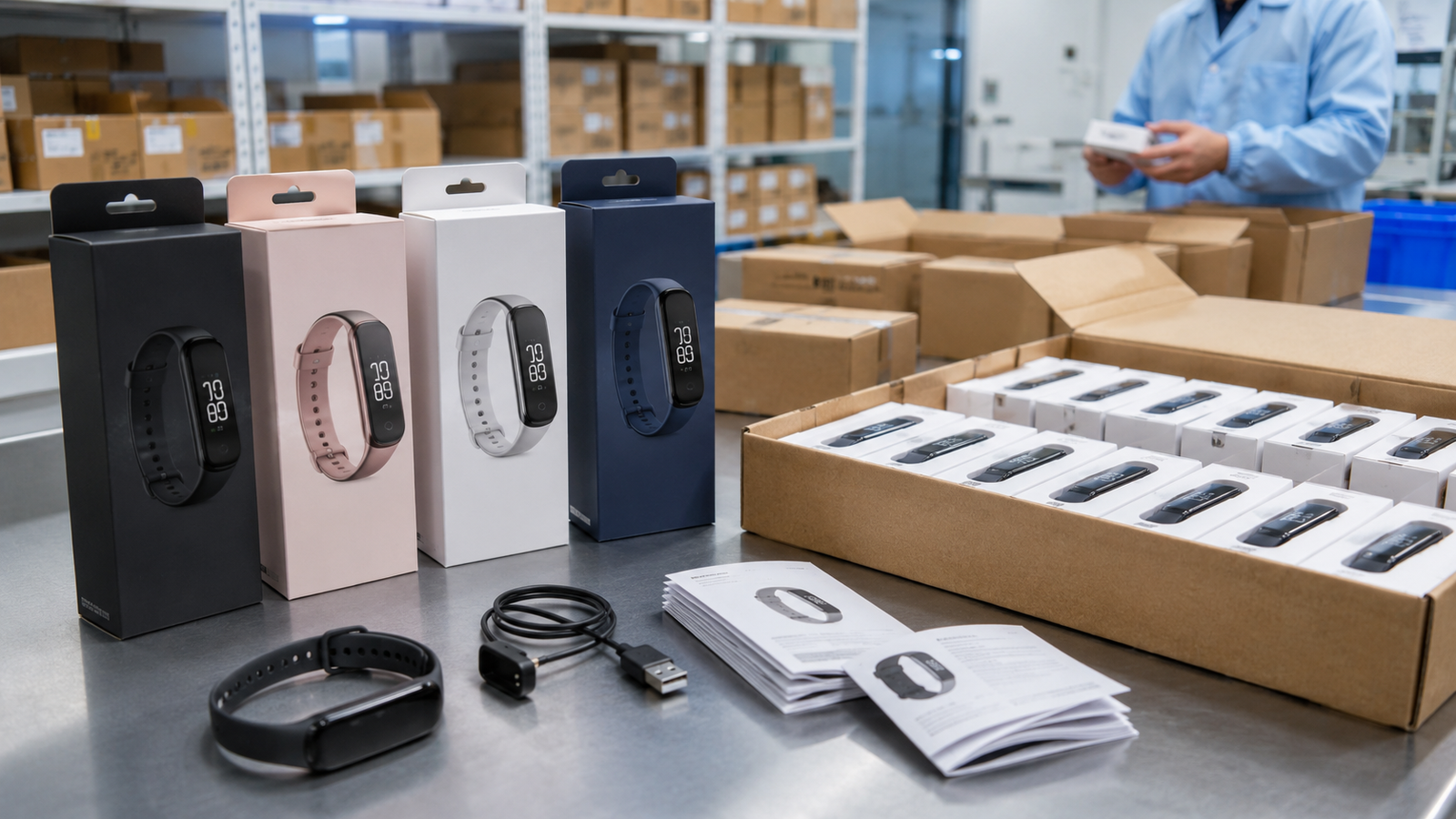
Education technology companies are expanding beyond software into connected hardware that captures real-world signals. Smart rings are a natural extension because they are unobtrusive, long-lasting in battery life, and capable of continuous monitoring. Unlike phones or watches, rings can be worn during exams, sports, and sleep studies without disrupting the student experience.
For edtech providers, the business case rests on three pillars:
- Student wellness programs: Sleep, recovery, and activity data can inform campus health initiatives.
- Campus safety: Wearables can support check-in and location-aware alerts when integrated with campus systems.
- Engagement and attendance: Ring-based authentication and presence detection can feed attendance dashboards.
Before building a hardware roadmap, edtech buyers should understand that smart rings for education technology are not medical devices. They are consumer-grade wellness tools. Any claim about diagnosis or treatment requires regulatory review that varies by country.

Direct Answer: Can Smart Rings Be Deployed in Education?
Yes, smart rings for education technology can be deployed for wellness, safety, and engagement applications. They are typically used as consumer-grade monitoring devices, not as medical diagnostic tools. Success depends on selecting an OEM/ODM partner that can customize firmware, app integration, and packaging to meet your institutional and regional compliance requirements.
Key Takeaways
- Smart rings for education technology serve wellness, safety, and engagement—not clinical diagnosis.
- OEM/ODM and private label models let edtech companies launch branded hardware without building a factory.
- MOQs commonly start in the low thousands; final numbers depend on customization depth.
- Certification needs vary by market: CE for the EU, FCC for the US, and additional battery and safety documentation for air freight.
- App and data integration is often the biggest technical risk; validate APIs before committing to a production run.
- Pilot programs with 50–200 units are a cost-effective way to test fit, firmware, and student acceptance.
Key Facts for Buyers
| Factor | Typical Range / Consideration |
|---|---|
| Target users | Students, faculty, campus health staff |
| Primary use cases | Wellness, safety, attendance, research |
| MOQ (private label) | 1,000–3,000 units [STAR KING TO CONFIRM] |
| Tooling lead time | 25–45 days for custom molds [STAR KING TO CONFIRM] |
| Production lead time | 30–60 days after sample approval [STAR KING TO CONFIRM] |
| Certifications | CE, FCC, RoHS, UN38.3, MSDS (dependent on configuration and market) |
| Battery life | 3–7 days typical for ring form factor |
| Data integration | SDK/API availability varies by supplier |
Top Use Cases in Schools and Universities
1. Student Wellness and Sleep Programs
Universities are investing in sleep and recovery programs to improve academic performance. Smart rings can provide anonymized, aggregated data for wellness dashboards. Buyers should ensure the supplier supports data export in standard formats and clarifies data ownership.
2. Campus Safety and Check-In
Rings can support presence detection for attendance or emergency check-in when paired with campus Wi-Fi or Bluetooth infrastructure. This requires firmware customization and clear privacy policies. Education technology companies should confirm whether the supplier can enable BLE beacon modes and geofencing.
3. Research and Behavioral Studies
Education researchers use wearables to study stress, activity, and sleep patterns. For these projects, access to raw sensor data and consistent sampling rates is critical. Ask for a technical datasheet and validate accuracy against reference devices.
4. Corporate Wellness for Staff and Faculty
Faculty and staff wellness programs often mirror corporate wellness initiatives. Smart rings can be bundled with app subscriptions and reporting tools. See our corporate wellness solutions for program design ideas.
Smart Ring vs. Smart Watch vs. Smart Band for Education
Choosing the right form factor affects cost, compliance, and student adoption. The table below compares options for education technology deployments.
| Feature | Smart Ring | Smart Watch | Smart Band |
|---|---|---|---|
| Discretion | High | Medium | Medium |
| Battery life | 3–7 days | 1–3 days | 5–10 days |
| Screen | None | Yes | Yes |
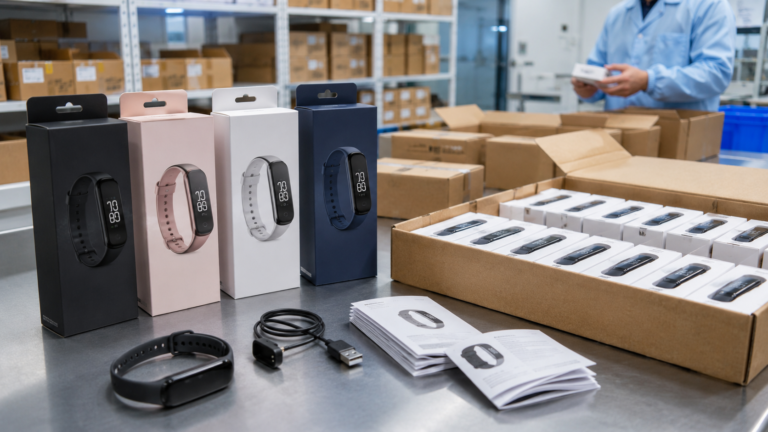
| Typical use | Sleep, recovery, presence | Notifications, apps | Activity, basic alerts |
| Unit cost | Medium | High | Low–Medium |
| Compliance complexity | Moderate | High | Moderate |
For a deeper comparison, review our smart rings product page and smart watches specifications.
OEM/ODM and Private Label Paths
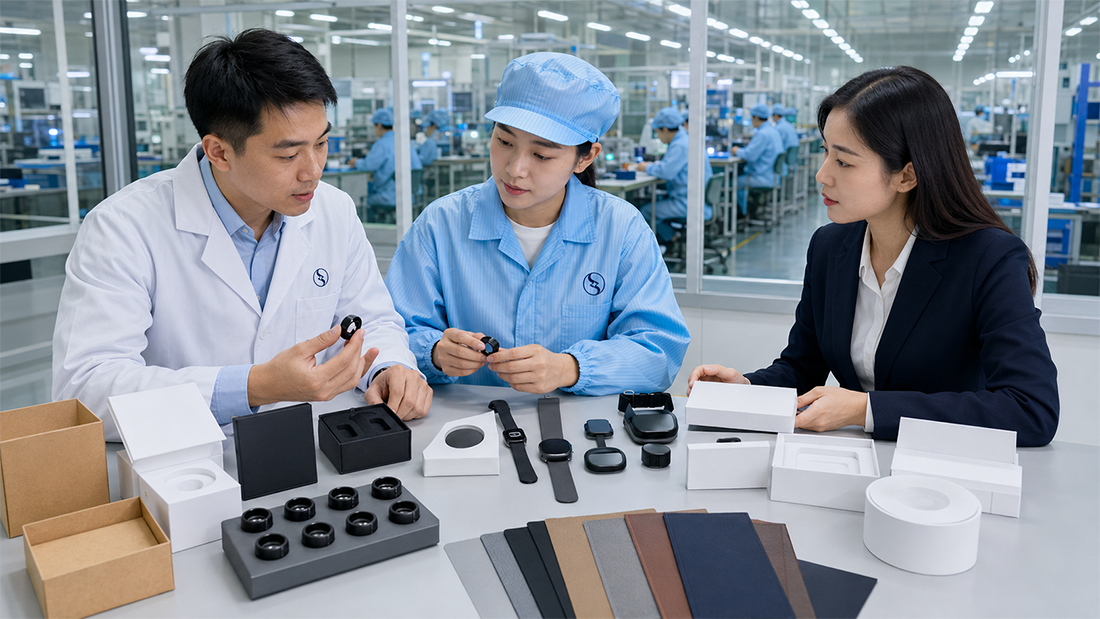
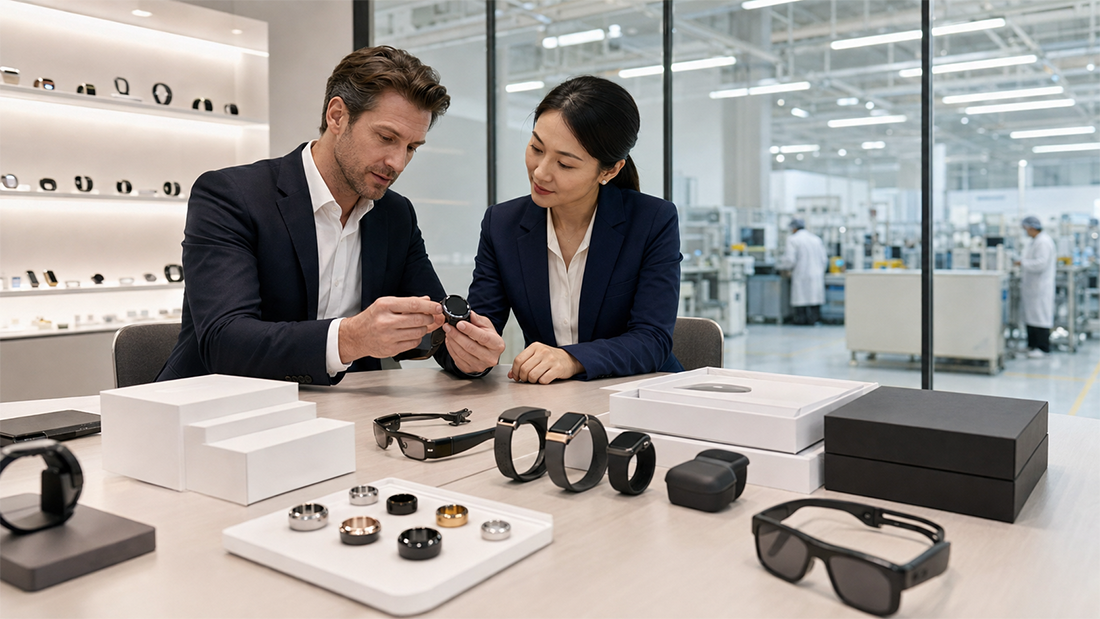
Education technology companies rarely manufacture hardware in-house. They choose between OEM (manufacturing an existing design) and ODM (customizing a design from a manufacturer). Private label sits within both models when you apply your own brand.
OEM: Build to Your Specification
OEM is suitable when you have a defined hardware specification and want a partner to produce it. You control industrial design, firmware, and packaging. This path offers the highest differentiation but requires higher investment and longer timelines.
ODM: Customize an Existing Platform
ODM is faster and more cost-effective. You select a proven ring platform and customize firmware, app skin, logo, and packaging. This is often the best entry point for edtech companies testing the hardware category.
Private Label: Brand Without Redesign
Private label applies your logo and packaging to an existing product. It has the lowest MOQ and fastest time to market. Learn more on our private label OEM/ODM solutions page.
MOQ, Lead Time, and Cost Drivers
MOQ and pricing for smart rings for education technology depend on several variables. Buyers should request a cost breakdown that separates tooling, materials, labor, testing, and packaging.
| Cost Driver | Impact on Price / MOQ |
|---|---|
| Custom tooling | High upfront cost; lowers unit price at scale |
| Sensor configuration | More sensors increase unit cost |
| Battery capacity | Larger battery raises cost and affects size |
| App development | Custom app can exceed hardware cost |
| Packaging | Custom retail packaging adds cost and lead time |
| Certification testing | Per-market testing fees apply |
Lead time typically includes sample development (2–4 weeks), tooling (4–6 weeks), and mass production (4–8 weeks). These ranges are indicative; confirm with your supplier. For planning support, see our sourcing and market insights blog.
Quality Control and Certifications
Quality control for education wearables must cover electronics, battery safety, and skin contact materials. Buyers should require:
- Incoming material inspection
- In-process testing for sensors and charging
- Pre-shipment inspection with functional tests
- Battery testing and documentation
Certification requirements depend on the target market. CE marking is typically required for the EU, while FCC authorization applies to the US. RoHS restricts hazardous substances. Lithium batteries may require UN38.3 test reports and MSDS for transport. Buyers should verify current requirements with their supplier and a compliance specialist. For official references, see the FCC and ISO websites.
Software, App, and Data Integration
Software integration is often the deciding factor for edtech buyers. Ask these questions:
- Does the supplier offer an SDK or API for data access?
- Can the app be white-labeled with your brand?
- Where is user data stored, and who owns it?
- Does the firmware support OTA updates?
Integration with learning management systems or student information systems may require middleware. Validate data formats early. Our health and fitness wearables solution outlines integration scenarios.
Common Mistakes and Buyer Red Flags
Common Mistakes
- Assuming all smart rings are medical devices.
- Ordering mass production before a pilot test.
- Ignoring data privacy regulations (e.g., GDPR, FERPA) in the target market.
- Choosing a supplier solely on unit price without verifying quality systems.
Red Flags: A supplier that cannot explain their testing process, refuses to provide certification documentation, or quotes unrealistically low MOQs should be treated with caution.
Practical Buyer Checklist
- Define the primary use case (wellness, safety, research).
- Confirm regulatory classification for each target country.
- Request samples and run a 30-day pilot with real users.
- Verify supplier quality management certifications.
- Agree on data ownership and privacy terms in writing.
- Plan for certification testing timelines and costs.
- Confirm MOQ, lead time, and payment terms.
FAQ
What is the typical MOQ for smart rings for education technology?
MOQs often start in the low thousands for private label, but can be lower for pilot programs. Exact numbers depend on customization; request a quote from your supplier.
Are smart rings safe for students to wear?
Consumer smart rings are generally designed for daily wear with skin-friendly materials. Suppliers should provide material safety documentation and comply with relevant regulations like RoHS.
Can smart rings integrate with school attendance systems?
Integration requires firmware support for BLE and APIs. Some suppliers offer SDKs; you may need middleware to connect with existing systems.
What certifications are needed for education wearables?
CE and FCC are common for the EU and US. Lithium batteries may require UN38.3 and MSDS. Requirements vary by market; verify with a compliance expert.
How long does OEM development take?
From concept to mass production, expect 3–6 months depending on design complexity and certification. Pilot runs can be faster.
Do smart rings collect personal data?
Yes, they collect physiological and activity data. Buyers must ensure GDPR, FERPA, and other privacy regulations are addressed in the app and data storage.
Can we white-label the app?
Many ODM suppliers offer white-label apps. Confirm the level of customization and ongoing support.
Conclusion
Smart rings for education technology offer a compelling hardware extension for edtech companies. Success requires careful supplier selection, a clear understanding of OEM/ODM options, realistic MOQ and lead time planning, and rigorous quality and compliance management. By following this guide, buyers can avoid common pitfalls and launch a wearable program that supports student wellness and campus safety.
Next Step with STAR KING
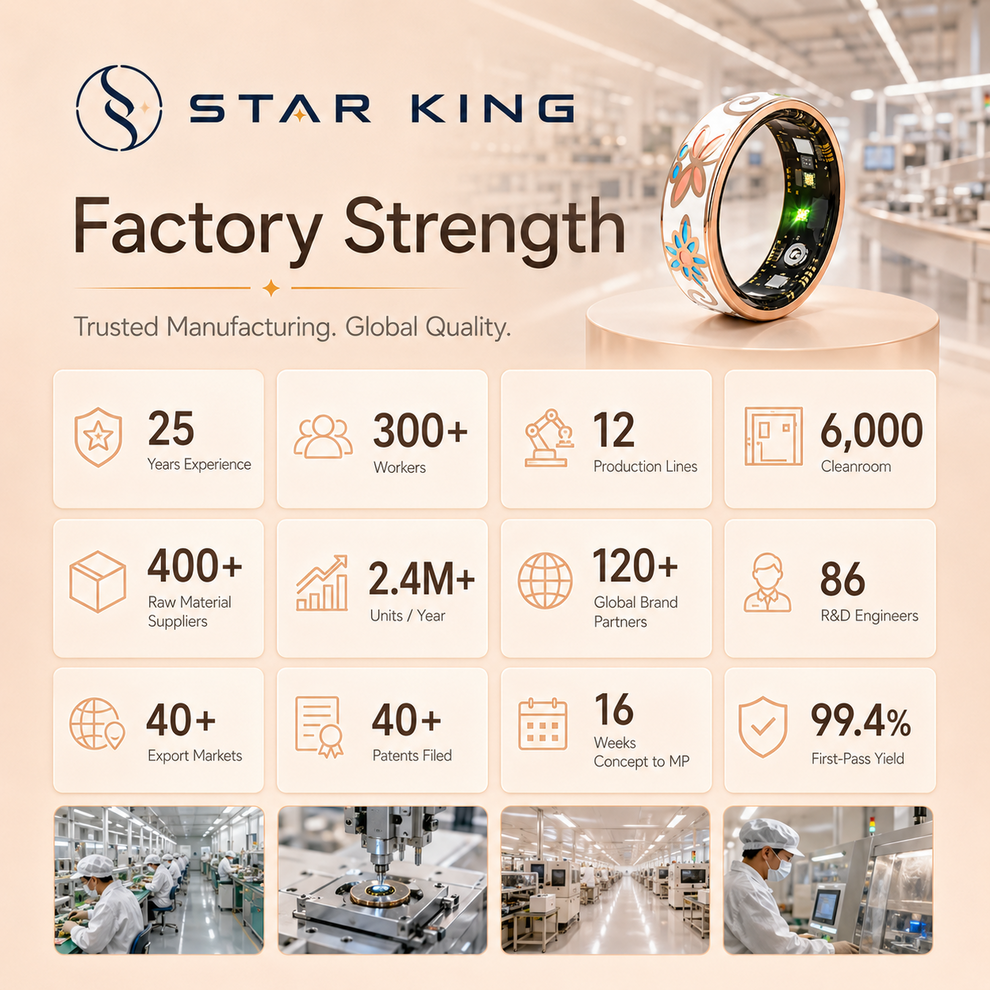
STAR KING specializes in smart rings and wearables for B2B clients, offering OEM/ODM and private label services with global compliance support. To evaluate customization options or request samples, request samples and discuss your education technology project with our team.
Discuss Your Smart Wearable OEM/ODM Project
Planning a smart ring, smart watch, smart band, AI glasses, AI translator, or AI voice mouse project? Contact STAR KING to discuss product positioning, sample testing, customization scope, certification requirements, lead time, and quotation details.

Team Star King
Scan WhatsApp QR code