
smart bands from China OEM: How to Source Smart Bands from China for Startup Brands: 7 Critical Steps for EU Market Entry in 2026
How to Source Smart Bands from China for Startup Brands: 7 Critical Steps for EU Market Entry in 2026
This smart bands sourcing guide for startup brands outlines 7 critical steps for EU market entry. If you are a startup brand planning to launch a smart band in the European Union, your most important decision is selecting a reliable smart bands from China OEM partner. The process involves evaluating suppliers, agreeing on an OEM or ODM model, validating samples, navigating CE and RoHS compliance, planning MOQ and lead times, and preparing for battery shipping regulations. This guide provides a practical, step-by-step framework to reduce risk and bring your product to market efficiently.
Table of Contents
Table of Contents
smart bands from China OEM: Table of Contents
- Short Answer
- Key Takeaways
- 1. Define Your Product Brief & Target Price
- 2. Evaluate Smart Band Suppliers & Verify Credentials
- 3. Choose OEM vs. ODM vs. Private Label
- 4. Understand MOQ, Pricing, and Cost Drivers
- 5. Sample Testing & Validation
- 6. Quality Control & EU Compliance
- 7. Production, Logistics, and Battery Shipping
- Common Mistakes & Buyer Red Flags
- Practical Buyer Checklist
- FAQ
- Conclusion
Short Answer
Sourcing smart bands from China OEM manufacturers for the EU market requires a structured approach: define your specifications, vet suppliers through audits and certifications, select the right manufacturing model, validate samples, ensure CE/RoHS compliance, plan MOQ and logistics, and secure quality control. Startup brands should prioritize suppliers that offer transparency, support customization, and can provide the necessary compliance documentation.

Key Takeaways
- Start with a clear product brief including features, target retail price, and market positioning.
- Verify supplier credentials: business license, ISO certifications, product test reports, and EU compliance documentation.
- Choose between OEM (your design) and ODM (supplier’s design) based on your budget and timeline.
- MOQ typically ranges from 500 to 2,000 units for custom smart bands; negotiate based on your forecast.
- Always test samples for functionality, battery life, app integration, and comfort.
- Ensure your supplier can provide CE, RoHS, and UN38.3 documentation for the EU market.
- Plan for lithium battery shipping regulations and potential customs delays.

Key Facts for Buyers
| Factor | Typical Range / Details |
|---|---|
| MOQ for custom smart bands | 500 – 2,000 units (depending on customization) |
| Sample lead time | 7 – 20 days |
| Mass production lead time | 30 – 60 days after sample approval |
| Unit cost (OEM, basic) | USD 15 – 35 (depends on features, volume) |
| Required EU certifications | CE (EMC, RED), RoHS, UN38.3 for battery, WEEE registration |
| Shipping considerations | Lithium batteries: must comply with IATA/ADR; sea or air freight with proper documentation |
1. Define Your Product Brief & Target Price
Before contacting suppliers, create a detailed product brief. Include the features you need: heart rate monitoring, blood oxygen monitoring, sleep tracking, GPS, NFC, waterproof rating, battery life, display type, and app requirements. Specify your target retail price point in the EU, as this will dictate the bill of materials (BOM) and manufacturing costs. Startup brands often aim for a retail price between €49 and €129. A clear brief helps suppliers provide accurate quotes and reduces back-and-forth.
2. Evaluate Smart Band Suppliers & Verify Credentials
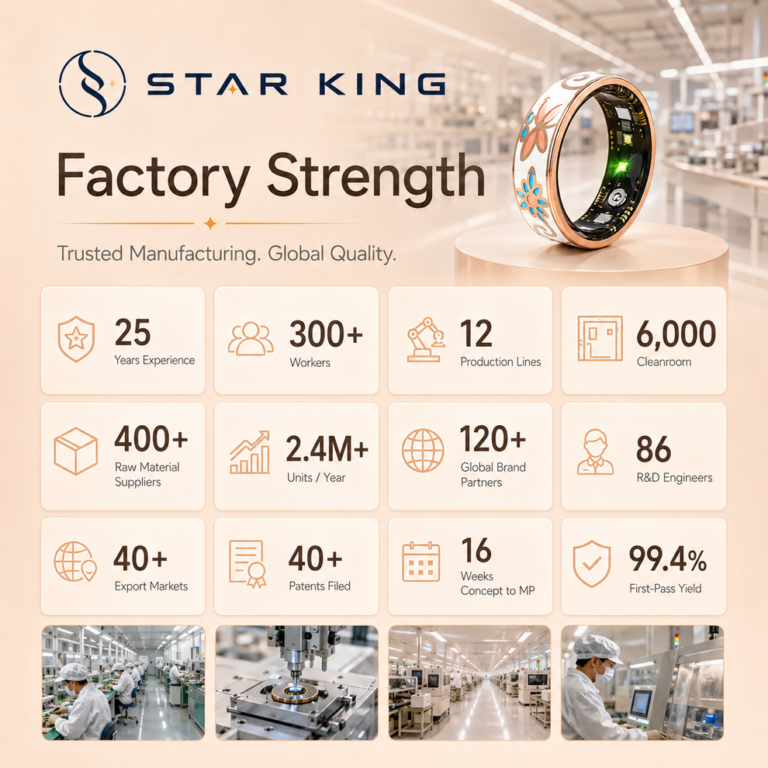
China has many smart band manufacturers, but not all are suitable for EU-bound products. Look for suppliers with experience in international markets and a portfolio of wearable devices. Request their business license, ISO 9001 certification, and product test reports. Verify their factory capabilities: do they have in-house SMT lines, testing equipment, and assembly lines? A supplier that specializes in smart bands will have better quality control. You can also check platforms like Alibaba for verified suppliers, but always conduct independent due diligence.
Supplier Evaluation Criteria
- Years in business and export experience to the EU
- Certifications: ISO 9001, ISO 14001, BSCI (social compliance)
- Product certifications: CE, RoHS, FCC (if also selling to US)
- Production capacity and lead times
- Customization options: logo, packaging, firmware, app
- Responsiveness and communication quality
Image suggestion: [Insert image of supplier factory audit or certification documents]
3. Choose OEM vs. ODM vs. Private Label
Startup brands have three main options:
- OEM (Original Equipment Manufacturer): You provide the design and specifications; the supplier manufactures to your requirements. This offers maximum brand differentiation but requires higher investment and longer development time.
- ODM (Original Design Manufacturer): The supplier has existing designs that you can rebrand. This is faster and more cost-effective, but your product may look similar to others on the market.
- Private Label: You purchase a standard product and apply your logo and packaging. This is the simplest and fastest route, but offers the least differentiation.
Evaluate your budget, timeline, and brand strategy. For many startups, ODM with some customization (logo, packaging, app skin) is a practical middle ground.
OEM vs. ODM vs. Private Label Comparison
| Factor | OEM | ODM | Private Label |
|---|---|---|---|
| Investment | High | Medium | Low |
| Time to Market | 6-12 months | 3-6 months | 1-2 months |
| Differentiation | High | Medium | Low |
| MOQ | 1,000+ | 500+ | 200+ |
| Tooling Cost | Yes | No | No |
For more on private label solutions, see Private Label OEM/ODM.
4. Understand MOQ, Pricing, and Cost Drivers
MOQ is a critical factor for startups. Smart band MOQs vary by supplier and customization level. Standard ODM products may have MOQs as low as 500 units, while fully custom OEM projects often require 1,000 to 3,000 units. Pricing depends on features, materials, display type, battery capacity, and order volume. Always request a detailed quotation that breaks down unit cost, tooling (if applicable), packaging, and shipping. Be wary of quotes that seem too low; they may indicate inferior components or hidden costs.
Typical Cost Drivers
- Display: OLED vs. LCD
- Sensors: heart rate, SpO2, GPS
- Battery: capacity and type
- Materials: plastic vs. metal casing
- Waterproof rating: IP67 vs. IP68
- App development and customization
- Packaging and branding
Image suggestion: [Insert cost breakdown chart or table]
5. Sample Testing & Validation
Never skip sample testing. Request pre-production samples that match your specifications. Test the following:
- Functionality: heart rate accuracy, step count, sleep tracking
- Battery life: actual usage vs. claimed
- App integration: pairing, data sync, user interface
- Comfort and fit: strap material, weight
- Waterproof performance: if applicable
- Build quality: buttons, screen, charging
Consider third-party lab testing for critical parameters if your budget allows. Document all issues and request improvements before mass production.
Image suggestion: [Insert image of smart band sample testing]
6. Quality Control & EU Compliance
The EU market has strict regulations. Your smart band must comply with:
- CE Marking: Required for radio equipment (RED), EMC, and safety. Your supplier should provide a Declaration of Conformity.
- RoHS: Restriction of hazardous substances.
- REACH: Chemical safety.
- WEEE: Waste electrical and electronic equipment registration.
- Battery Regulations: UN38.3 for transport, and EU Battery Directive.
Not all suppliers can provide these documents. Ensure your contract specifies that the supplier will provide all necessary compliance documentation. For more details, refer to official EU resources such as CE Marking and FCC (if also selling to US).
Implement a quality control plan: pre-production inspection, during-production checks, and pre-shipment inspection. Consider hiring a third-party inspection company like SGS or Bureau Veritas.
7. Production, Logistics, and Battery Shipping
After sample approval, production begins. Typical lead time is 30-60 days. Plan for logistics: smart bands contain lithium batteries, which are classified as dangerous goods. They must be shipped according to IATA (air) or ADR (road) regulations. Ensure your supplier provides UN38.3 test reports and MSDS. Shipping options include air freight (fast but expensive), sea freight (slower but cheaper), and express couriers. For startups, air freight for initial orders may be necessary to meet launch timelines.
Logistics Checklist
- UN38.3 test report
- MSDS
- Proper labeling and packaging
- Customs documentation
- Insurance
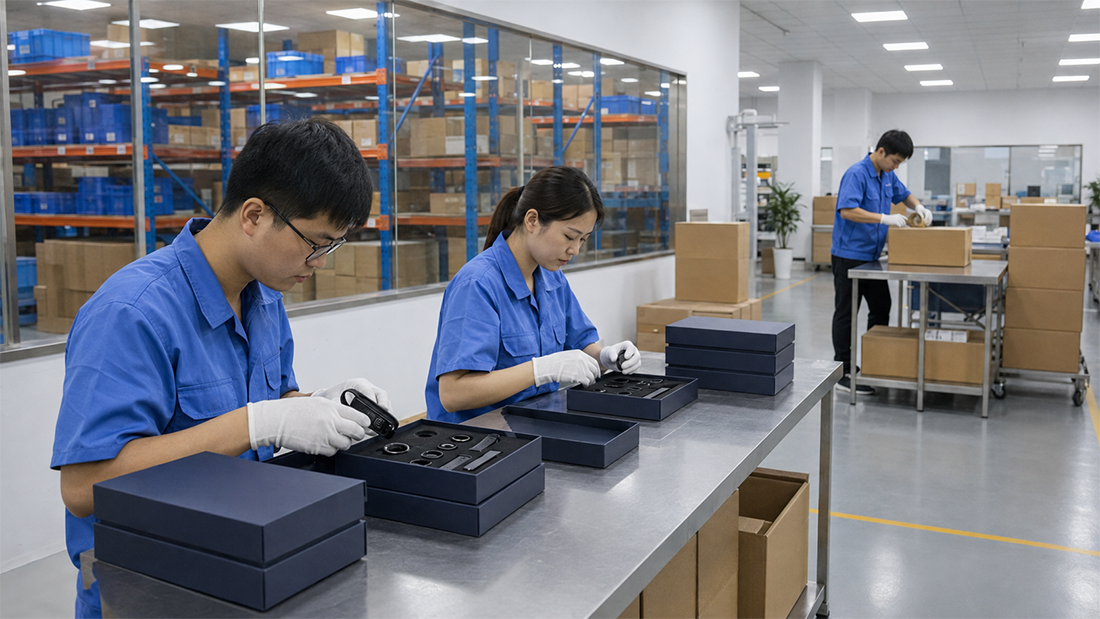
Image suggestion: [Insert image of smart band packaging or shipping preparation]
Common Mistakes & Buyer Red Flags
- Choosing a supplier based solely on price: Low quotes often mean low quality or hidden costs.
- Ignoring compliance: Missing CE or RoHS can lead to customs seizures and fines.
- Not testing samples: Assuming samples match mass production is risky.
- Underestimating MOQ: Some suppliers may not disclose true MOQ until late in negotiations.
- Overlooking app support: The app is critical for user experience; ensure it is stable and customizable.
- Failing to secure IP: Clarify ownership of tooling and designs.
Practical Buyer Checklist
- Define product specifications and target retail price.
- Request quotes from at least 3 suppliers.
- Verify supplier certifications and factory audit reports.
- Clarify OEM/ODM/Private Label options and associated costs.
- Negotiate MOQ, unit price, and payment terms.
- Order samples and test thoroughly.
- Confirm compliance documentation: CE, RoHS, UN38.3, MSDS.
- Arrange third-party inspection before shipment.
- Plan logistics and customs clearance.
- Discuss warranty, after-sales support, and spare parts.
FAQ
What is the typical MOQ for custom smart bands from China?
MOQ varies by supplier and customization level. For ODM with logo and packaging, MOQ often starts at 500 units. Fully custom OEM designs may require 1,000 to 3,000 units.
How long does it take to get samples and then mass production?
Sample lead time is typically 7-20 days. Mass production usually takes 30-60 days after sample approval, depending on order volume and component availability.
What certifications are required for selling smart bands in the EU?
At minimum, CE marking (covering RED, EMC, and safety), RoHS, and WEEE registration. For lithium batteries, UN38.3 and MSDS are required for transport. Always verify with your supplier and a compliance consultant.
Can I customize the app for my smart band?
Yes, many manufacturers offer app customization, from simple logo changes to full white-label app development. Discuss your requirements and associated costs.
How do I ensure quality during production?
Implement a QC plan: pre-production sample approval, during-production checks, and pre-shipment inspection. Hiring a third-party inspector is recommended.
What are the shipping options for smart bands with lithium batteries?
They can be shipped by air (IATA) or sea (ADR), but must comply with dangerous goods regulations. Your supplier should provide UN38.3 and MSDS. Express couriers also handle lithium batteries with proper documentation.
Who owns the mold if I pay for tooling?
Typically, the brand that pays for the tooling owns the mold. Ensure this is explicitly stated in your contract.
Conclusion
Sourcing smart bands from China OEM suppliers for the EU market is a complex but manageable process. By following these seven steps, startup brands can mitigate risks, ensure compliance, and launch a competitive product. Focus on supplier verification, sample testing, and compliance documentation. Build strong relationships with your manufacturer, and consider starting with ODM to reduce upfront costs before moving to full OEM.
STAR KING CTA
Ready to discuss your smart band project? STAR KING supports startup brands with flexible OEM/ODM and private label solutions. Request samples or contact us to discuss your customization needs, MOQ, and compliance requirements.
For more information on our smart bands, visit our Smart Bands page. Explore our Private Label OEM/ODM solutions.
Discuss Your Smart Wearable OEM/ODM Project
Planning a smart ring, smart watch, smart band, AI glasses, AI translator, or AI voice mouse project? Contact STAR KING to discuss product positioning, sample testing, customization scope, certification requirements, lead time, and quotation details.

Team Star King

Scan WhatsApp QR code