import smart watches from China: 7 Steps to Import Smart Watches from China to the US: A 2026 Distributor’s Guide
7 Steps to Import Smart Watches from China to the US: A 2026 Distributor’s Guide
Importing smart watches from China in 2026 is a repeatable process, not a gamble. If you are a US distributor ready to buy, the safest route is to treat the purchase like a product launch: define the market need, vet suppliers against your channel, confirm FCC and battery compliance, lock down MOQs and lead times, and only then scale. This guide walks you through seven steps that cover vetting, compliance, costing, and logistics, so you can move from inquiry to purchase order without surprises on the water.
Table of Contents
Table of Contents
import smart watches from China: Short Answer
To import smart watches from China to the US, first identify a product tier and target retail price, then screen suppliers for OEM/ODM capability and US market experience. Confirm FCC, RoHS, and UN38.3 documentation, agree on MOQs and lead times, validate samples, and plan air or sea logistics with a customs broker. A typical first order for a distributor runs 500–2,000 units with 15–30 day production and 25–40 day sea transit.

Table of Contents
- Key Takeaways
- Key Facts for Buyers
- Step 1: Define the Smart Watch Tier and Target Retail Price
- Step 2: Vet Suppliers for OEM/ODM and US Market Readiness
- Step 3: Confirm Certifications and US Compliance
- Step 4: Understand MOQs, Pricing Factors, and Total Landed Cost
- Step 5: Validate with Samples and Pre-Shipment Inspection
- Step 6: Plan Lead Times, Logistics, and Lithium Battery Shipping
- Step 7: Negotiate Warranty, Spare Parts, and App Support
- Common Mistakes and Buyer Red Flags
- Practical Buyer Checklist
- FAQ
- Conclusion

Key Takeaways
- US distributors should match smart watch specs to a specific channel and price band before contacting suppliers.
- FCC certification, RoHS, and UN38.3 battery reports are typically required for US market entry. Verify certificates against the actual product and manufacturer.
- MOQs for OEM smart watches usually start around 500–1,000 units; private label runs are often higher.
- Landed cost is driven by FOB price, freight mode, duty rate, tariffs, and last-mile handling—not just unit price.
- Sample testing and pre-shipment inspection are the cheapest risk controls available to an importer.
- Lock in warranty, spare parts, and app update commitments before mass production.
Key Facts for Buyers
| Item | Typical Range / Note |
|---|---|
| First order MOQ | 500–2,000 units for OEM/ODM; varies by model and customization |
| Production lead time | 15–30 days after deposit and sample approval |
| Sea freight transit | 25–40 days to US West/East Coast ports |
| Air freight transit | 5–10 days |
| Required US compliance | FCC (if radio), RoHS, UN38.3 for lithium battery |
| Typical unit FOB price | US$8–US$45 depending on specs and display |
| Warranty | 12 months standard; confirm spare part availability |
Step 1: Define the Smart Watch Tier and Target Retail Price
Before you request quotes, decide which slice of the US market you are serving. Distributors who skip this step end up comparing incomparable quotes and losing margin to freight and returns.
Common US smart watch tiers
- Entry / promotional: 1.7–1.9 inch LCD, basic heart rate, 5–7 day battery. Retail US$25–US$50. Often sold on marketplaces and discount channels.
- Mid-tier: AMOLED display, SpO2, calls, GPS optional. Retail US$60–US$120. Fits e-commerce and specialty retail.
- Premium / branded: stainless or titanium case, advanced sensors, longer battery, branded app. Retail US$150+. Suits retail chains and private label programs.
Your tier determines sensor choices, app requirements, panel type, and packaging—all of which change cost, MOQ, and compliance scope. Write a one-page spec brief before you contact any supplier. This single document will save you weeks of back-and-forth.
Step 2: Vet Suppliers for OEM/ODM and US Market Readiness
Supplier selection is the highest-leverage decision in the entire import cycle. A capable supplier reduces compliance risk; a weak one transfers it to you.
What to verify
- Business license and manufacturing scope—match the legal entity to the quotation.
- OEM/ODM capability: can they modify firmware, app UI, logo, and packaging?
- Existing US market shipments and references you can verify.
- In-house or partner testing for FCC and battery safety.
- Engineering support during sampling and after mass production.
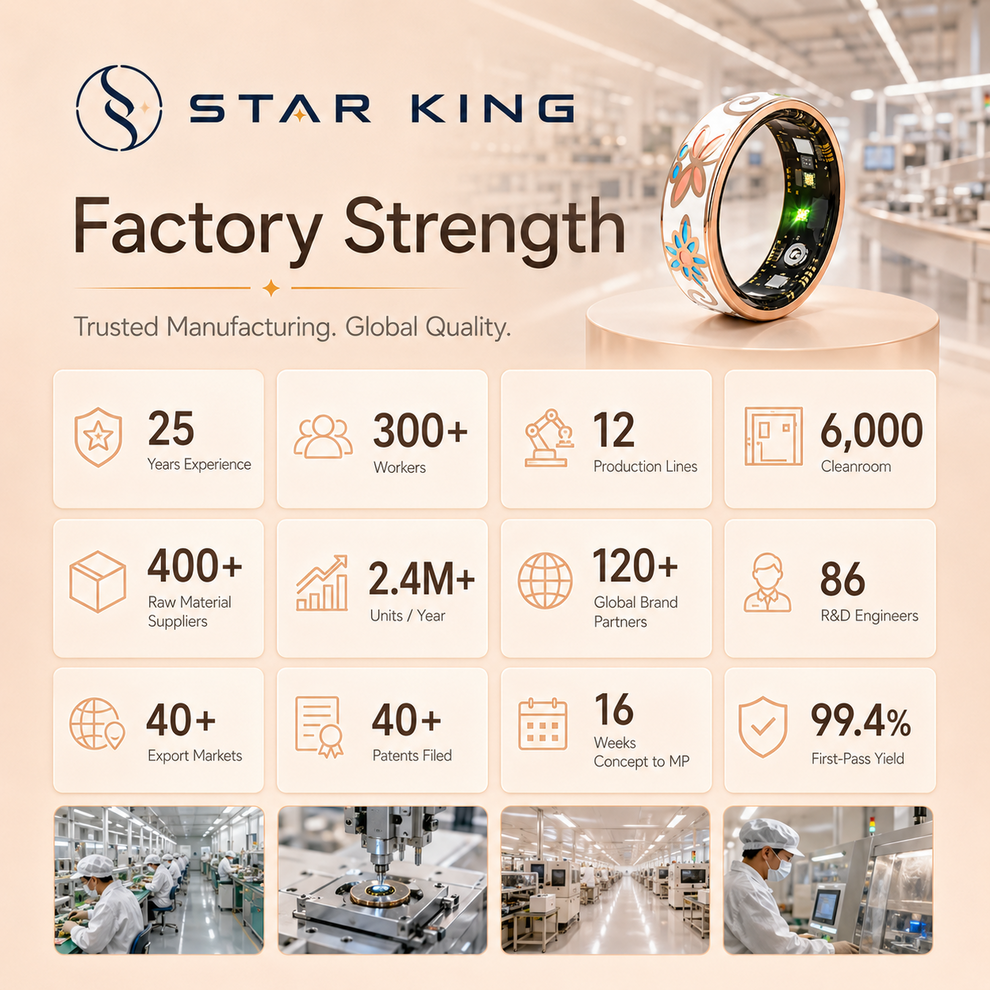
If your program involves a branded app, ask about app customization, firmware customization, and cloud/API support early. These are common bottlenecks. STAR KING, for example, offers OEM and private label programs for smart watches and adjacent wearables through its Private Label OEM/ODM solution, which is worth reviewing as a benchmark for what a full-service partner provides.
Step 3: Confirm Certifications and US Compliance
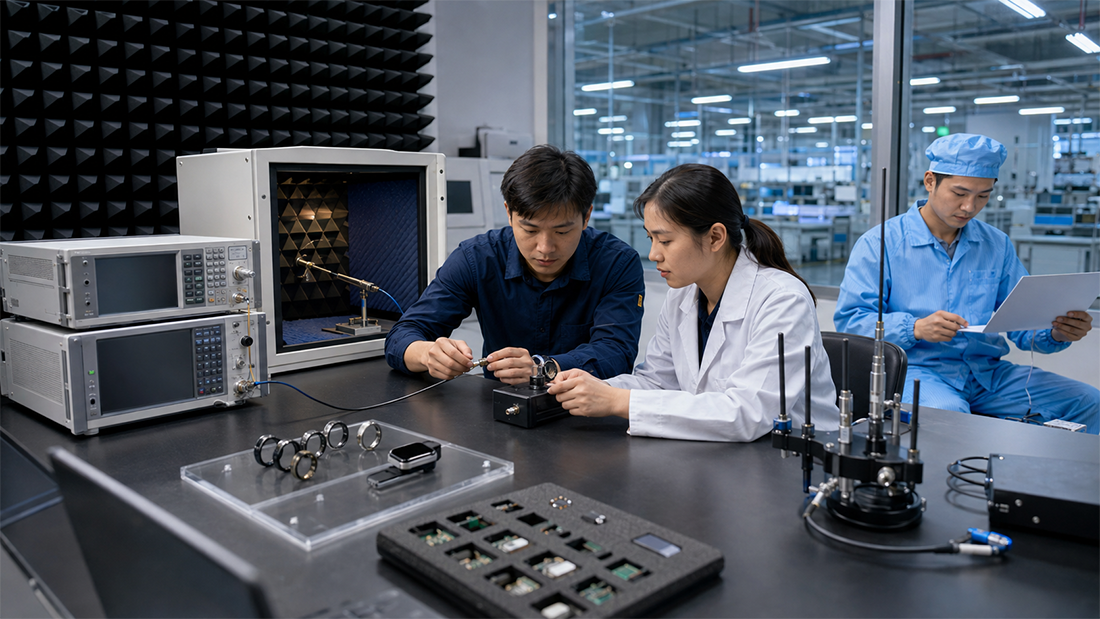
Compliance is where inexperienced importers lose money. Certification requirements depend on the exact product configuration—radio modules, battery type, charger—and on your target market. For US distribution, the core items are usually FCC, RoHS, and UN38.3.
Core US documentation
- FCC: required for devices with radio transmitters (Bluetooth, Wi-Fi). Verify the FCC ID and that it matches the model being shipped. See the FCC ID database for verification.
- RoHS: restricts hazardous substances; commonly requested by US retail buyers even where not federally mandated.
- UN38.3: required for shipping lithium batteries. Confirm the test summary report is current and matches the battery cell and pack used. See the IATA lithium battery guidance for transport context.
- MSDS/SDS: often required by carriers for battery-containing goods.
Buyers should verify certificates against the manufacturer name and model. A generic certificate PDF is not sufficient evidence. If a supplier cannot produce a matching FCC ID or UN38.3 report, treat the quote as high risk.
Note: Consumer smart watches are not medical devices. Health monitoring features such as heart rate or SpO2 are for general wellness and should not be marketed as diagnostic tools. Any medical claims may trigger additional FDA requirements that buyers must verify independently.
Step 4: Understand MOQs, Pricing Factors, and Total Landed Cost
Unit price is only one line item. Distributors should model total landed cost before committing.
Factors that move smart watch pricing
- Display type (LCD vs AMOLED) and size.
- Sensor set (heart rate, SpO2, GPS, NFC).
- Case material (plastic, alloy, stainless, titanium).
- Battery capacity and claimed usage time.
- App development and firmware customization scope.
- Packaging and logo customization.
- Order quantity and tooling amortization.
Landed cost components
| Component | What to Confirm |
|---|---|
| FOB unit price | Incoterm, currency, payment terms |
| Freight | Air vs sea, volumetric weight, battery surcharge |
| Duty & tariffs | HTS code and current duty rate; policy changes frequently |
| Customs brokerage | Entry fees, ISF filing |
| Inland transport | Port to warehouse |
| Warranty reserve | Expected return rate and spare parts |
Confirm the HTS classification with your customs broker. Duty rates and tariff programs change, and buyers should verify current rates rather than rely on a supplier’s estimate.
Step 5: Validate with Samples and Pre-Shipment Inspection
Samples are not a formality. They are your only low-cost chance to catch problems before 1,000 units ship.
Sample testing plan
- Test battery life in real usage, not just the spec sheet.
- Pair the watch with the app on the phones your customers actually use.
- Check sensor accuracy against a known reference device.
- Evaluate charging, waterproofing claims, and strap comfort.
- Review packaging print quality and language for the US market.
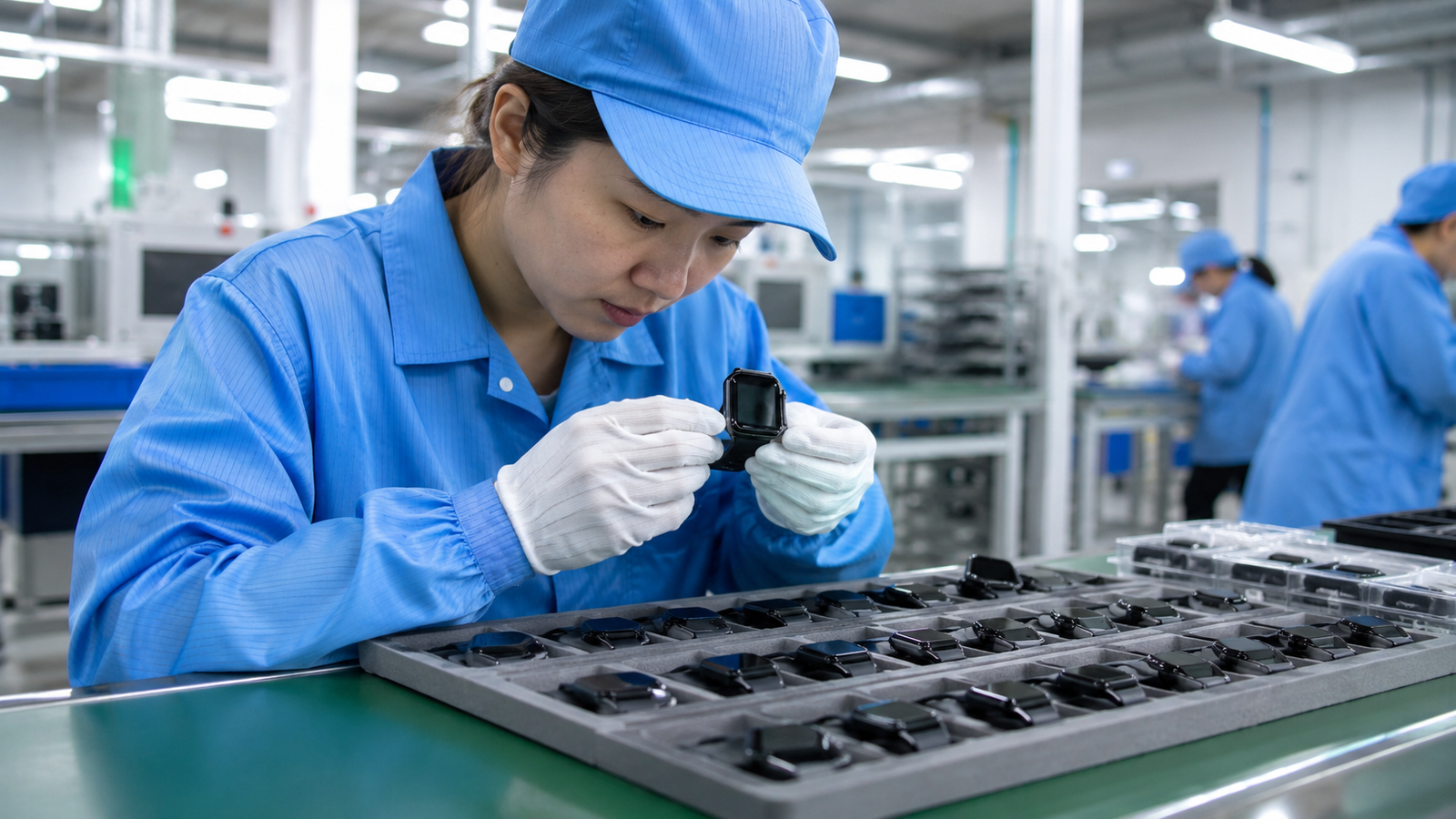
After samples are approved, book a pre-shipment inspection (PSI) before the balance payment. A PSI typically checks function, appearance, packing, and quantity against your approved sample. For distributors, this is often the single highest-ROI quality control step. If you want a deeper look at how quality and testing fit into a wearable program, STAR KING’s smart watches product page outlines the categories and configurations available for OEM discussions.
Step 6: Plan Lead Times, Logistics, and Lithium Battery Shipping
Smart watches contain lithium batteries, which makes them regulated cargo. Plan logistics around this from the start.
Lead time planning
- Sample round: 5–15 days.
- Production: 15–30 days after deposit and sample approval.
- Sea freight: 25–40 days plus customs clearance.
- Air freight: 5–10 days, higher cost, useful for launch stock.
Battery shipping considerations
- UN38.3 test summary required for transport.
- Battery must be correctly labeled and packed.
- Some carriers restrict standalone or high-capacity cells; confirm with your forwarder.
- MSDS/SDS may be requested by the airline or carrier.
Build buffer into your launch calendar. Chinese New Year, National Day, and peak freight season can add weeks. Distributors who plan 8–12 weeks from PO to landed inventory are rarely caught short.
Step 7: Negotiate Warranty, Spare Parts, and App Support
The purchase order is not the end of the relationship. After-sales terms determine your return rate and reputation.
What to lock in before production
- Warranty period and defect definition (typically 12 months).
- Spare parts availability: straps, chargers, screens.
- DOA (dead on arrival) policy and replacement lead time.
- App maintenance and firmware update commitment.
- Escalation contact for technical issues.
If the watch uses a companion app, confirm who maintains the app, how updates are delivered, and what happens if the app is discontinued. This is frequently overlooked and can strand inventory.
Common Mistakes and Buyer Red Flags
- Quotes without a matching spec. If two suppliers quote very different prices, compare the actual components.
- Copy-paste certificates. A certificate that does not name the manufacturer or model is a red flag.
- Ignoring landed cost. Distributors who price off FOB alone often discover their margin is gone after freight and duty.
- No written warranty. Verbal assurances do not survive a shipment of returns.
- Skipping PSI to save time. The cost of one inspection is usually far less than reworking or scrapping a container.
- Assuming all health claims are fine. Marketing beyond general wellness may create regulatory exposure.
Practical Buyer Checklist
- Define target tier and retail price band.
- Write a one-page spec brief.
- Screen at least 3 suppliers; verify legal entity and manufacturing scope.
- Confirm FCC ID, RoHS, and UN38.3 against the exact model.
- Request sample units and test against your own phones and users.
- Model total landed cost with your customs broker.
- Agree MOQ, lead time, payment terms, and Incoterm in writing.
- Book pre-shipment inspection before balance payment.
- Confirm warranty, spare parts, and app support commitments.
- Plan freight with a forwarder experienced in lithium battery cargo.
FAQ
What is the typical MOQ for importing smart watches from China?
For OEM or ODM smart watches, MOQs commonly start at 500–1,000 units, with private label programs often higher. MOQ depends on the model, customization scope, and whether tooling is involved.
Do I need FCC certification to sell smart watches in the US?
If the watch includes a radio transmitter such as Bluetooth or Wi-Fi, FCC authorization is typically required. Requirements depend on the specific configuration; buyers should verify the FCC ID and confirm it matches the model being imported.
How much does it cost to import smart watches to the US?
Unit FOB prices commonly range from about US$8 to US$45 depending on specs. Total landed cost adds freight, duty, brokerage, and inland transport. Duty rates and tariffs change, so confirm the current rate with a customs broker.
Why is UN38.3 important for smart watch imports?
UN38.3 is the transport test standard for lithium batteries. Carriers and customs authorities often require a current test summary report for battery-containing devices. A report that does not match the battery used is not acceptable.
Can I get a private label smart watch with my own logo and packaging?
Yes. Many Chinese manufacturers offer logo, packaging, app, and firmware customization. Scope and MOQ vary by supplier and model; confirm what is included before quoting.
How long does shipping take from China to the US?
Sea freight typically takes 25–40 days to US ports, while air freight is usually 5–10 days. Add customs clearance and inland transport. Battery cargo may face additional carrier requirements.
Are smart watch health features medically certified?
Consumer smart watches are generally wellness devices, not medical devices. Heart rate and SpO2 features are not diagnostic. Any medical claims may trigger additional FDA requirements, which buyers must verify independently.
Conclusion
Importing smart watches from China as a US distributor is a controlled process when you treat compliance, sampling, and landed cost as core parts of the purchase rather than afterthoughts. The suppliers who make your life easy are the ones who can show matching FCC IDs, current UN38.3 reports, transparent MOQs, and real after-sales commitments. Build your spec brief, vet at least three suppliers, test before you scale, and plan for lithium battery logistics early.
If you are comparing suppliers for an upcoming US launch or private label program, STAR KING can review your specifications and outline OEM/ODM options, MOQs, and certification documentation for your target configuration.
Ready to move from evaluation to purchase?
Request a smart watch quotation or start an OEM/ODM discussion with our team.
Discuss Your Smart Wearable OEM/ODM Project
Planning a smart ring, smart watch, smart band, AI glasses, AI translator, or AI voice mouse project? Contact STAR KING to discuss product positioning, sample testing, customization scope, certification requirements, lead time, and quotation details.

Team Star King

Scan WhatsApp QR code