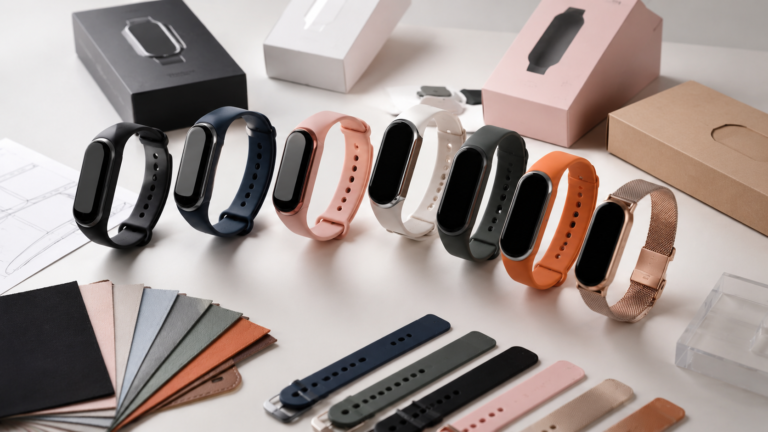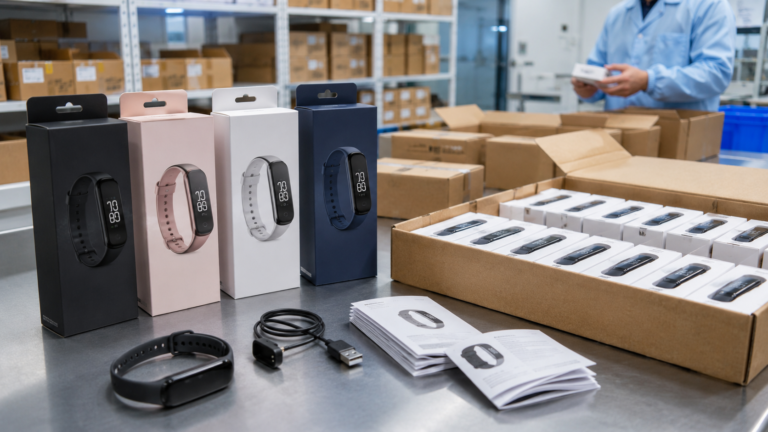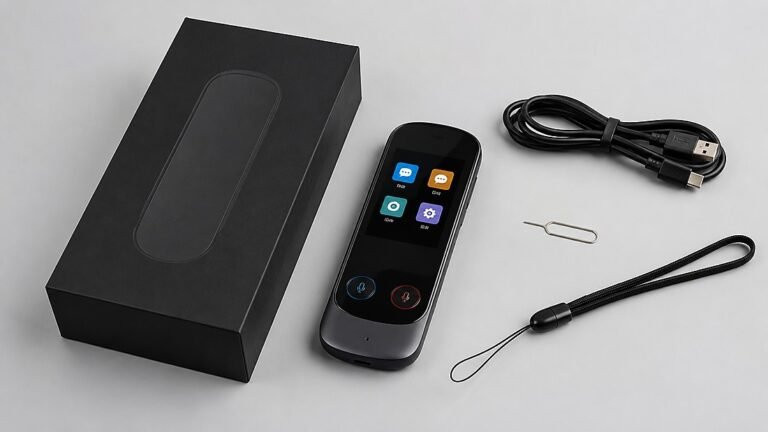

smart watches OEM: Smart Watches for Startup Brands: 7 OEM/ODM Steps to Launch a Private Label Line in the U.S.
Smart Watches for Startup Brands: 7 OEM/ODM Steps to Launch a Private Label Line in the U.S.
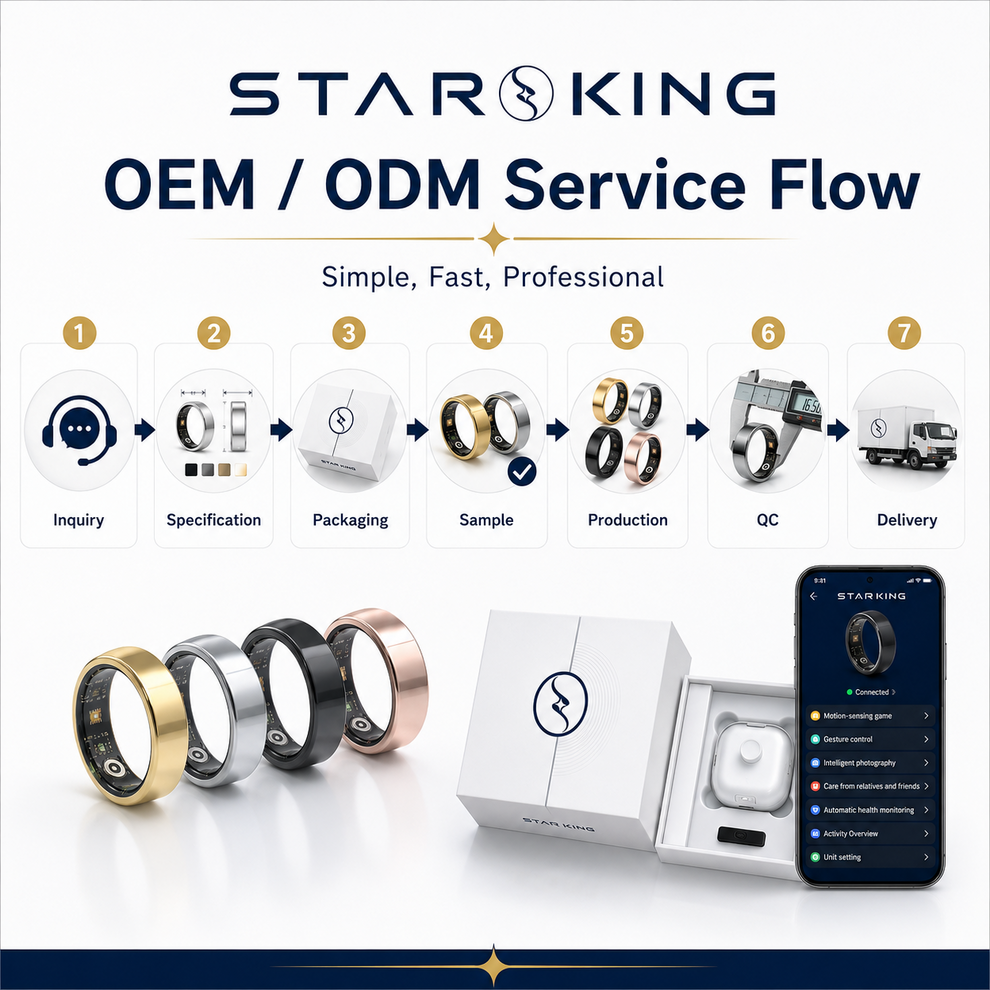
Evaluating smart watches OEM partners as a startup brand means balancing three things: unit cost at low volumes, firmware and app flexibility, and U.S. compliance. A practical path is to shortlist manufacturers, request samples, validate firmware and battery documentation, agree on tooling and MOQ, then schedule production and labeling around U.S. import rules. This guide breaks the process into seven concrete steps so you can compare suppliers with the same checklist and avoid expensive redesigns later.
Table of Contents
Table of Contents
smart watches OEM: Table of Contents
- Short Answer
- Key Takeaways
- Key Facts for Buyers
- Step 1: Define the Product Before You Contact Suppliers
- Step 2: Choose Between OEM, ODM, and Private Label
- Step 3: Evaluate Smart Watch Manufacturers
- Step 4: Request Samples and Run a Structured Test
- Step 5: Map MOQ, Cost Drivers, and Landed Cost
- Step 6: Control Compliance, Battery Documentation, and Labeling
- Step 7: Plan Production, Packaging, and Launch
- OEM vs. ODM vs. Private Label Comparison
- Common Mistakes and Buyer Red Flags
- Practical Buyer Checklist
- FAQ
- Conclusion
Short Answer
For a startup brand, the fastest reliable route to launch smart watches in the U.S. is to select an OEM/ODM partner that supports small-batch private label production, provides verifiable battery and RF test documentation, and offers app or firmware customization without heavy tooling. Expect to validate samples first, confirm MOQ and lead times in writing, and budget for FCC-related testing and lithium battery shipping requirements before committing to mass production.
Key Takeaways
- Define features, price band, and target retail channel before requesting quotes; vague briefs produce incomparable offers.
- OEM, ODM, and private label differ mainly in who owns the design, the firmware, and the tooling.
- Samples are a screening tool, not a formality: test battery life, app pairing, sensor accuracy trends, and strap durability.
- MOQ is negotiable in structure, not just in number; you can often lower risk through shared tooling, standard modules, or staged orders.
- U.S. market access typically depends on FCC-related requirements for wireless devices and UN38.3 documentation for lithium batteries; buyers should verify applicability with the manufacturer and a compliance lab.
- Landing cost, not unit price, determines whether your retail price is viable.
Key Facts for Buyers
| Decision Area | What to Confirm | Why It Matters for a Startup |
|---|---|---|
| Product definition | Display size, sensors, battery target, app platform | Prevents redesigns after tooling starts |
| Production model | OEM vs. ODM vs. private label | Determines IP ownership and speed to market |
| MOQ | Units per SKU, per color, per packaging | Directly affects cash tied up in inventory |
| Sample terms | Sample fee, lead time, refund on order | Lets you test before committing |
| Compliance | FCC-related test reports, UN38.3, MSDS, RoHS statements | Reduces customs and marketplace risk |
| Lead time | Sample, production, and shipping windows | Aligns launch with marketing spend |
| Customization | Logo, packaging, watch face, app branding | Builds brand identity at low cost |
Step 1: Define the Product Before You Contact Suppliers
A precise brief is the cheapest form of cost control. Before you contact any smart watch manufacturer, write down the display size, case material, expected battery life, sensor set, connectivity, app platform, target retail price, and the channel you plan to sell through. Startup brands that sell on Amazon or direct-to-consumer often prioritize different features than brands selling into corporate wellness or retail chains.
Also decide what you will not compromise on. If your positioning is sleep and recovery, the optical sensor and companion app experience matter more than a large AMOLED display. If your positioning is fitness, GPS behavior and waterproof rating move to the top. Once these priorities are fixed, supplier conversations become comparisons instead of brainstorming sessions.
For background on how wearable categories differ in use case and buyer expectations, review the overview at smart watches before finalizing your feature list.
Step 2: Choose Between OEM, ODM, and Private Label
These three terms are often used interchangeably, but they carry different implications for cost, speed, and intellectual property.
OEM
In a true OEM arrangement, the buyer drives the design. You may provide industrial design files, specify firmware behavior, and own the tooling. This offers the strongest differentiation but requires more investment and a longer timeline.
ODM
With ODM, the manufacturer owns a base design and adapts it for you. You choose features from a defined menu, and customization usually focuses on enclosure color, strap, watch faces, and app branding. ODM is typically the fastest and lowest-risk entry for startup brands.
Private Label
Private label sits at the lightest end of customization: you apply your brand to an existing product, often with your own packaging and app skin. It is the fastest route to test demand, but differentiation is limited.
For a broader view of how private label programs are structured across wearable categories, see the overview at Private Label OEM/ODM.
Step 3: Evaluate Smart Watch Manufacturers
Supplier evaluation should follow a consistent scorecard so that enthusiasm for a sample does not outweigh operational risk. Request the following from every candidate:
- Company registration and factory profile, including whether they manufacture in-house or subcontract.
- Reference models they currently produce, with current specification sheets.
- Firmware and app ownership: do they develop in-house, license from a third party, or rely on a public platform?
- Documentation samples for battery safety and RF testing.
- Named contact for engineering questions, not only a sales representative.
Ask how they handle engineering change requests after tooling. Suppliers that cannot describe a change-control process often struggle once production begins. If a supplier refuses to allow a factory audit or third-party inspection, treat that as a serious warning sign.
Startup brands should also check whether the manufacturer already supports the U.S. market with documentation, packaging, and shipping experience. A supplier familiar with U.S. marketplace requirements will reduce friction later.
Step 4: Request Samples and Run a Structured Test
Sampling is a due-diligence step, not a formality. Before ordering, request [STAR KING TO CONFIRM: sample fee, sample lead time, and whether sample cost is refundable against a production order].
Test each sample against the same criteria:
- Battery life under realistic use, including screen-on time and notification load.
- App pairing stability across iOS and Android, including reconnection behavior.
- Sensor trend consistency rather than single readings; repeat measurements under similar conditions.
- Charging behavior, heat during charging, and magnetic connector durability.
- Strap and case finish, water resistance behavior during hand washing or light rain.
- Firmware update process and whether updates can be delivered without returning the device.
Document each result in a shared sheet. When you evaluate three or four suppliers this way, the comparison becomes objective, and you can negotiate from evidence rather than impressions.
Step 5: Map MOQ, Cost Drivers, and Landed Cost
MOQ is frequently the first obstacle for a startup. It is useful to separate the MOQ number from its structure. Suppliers may quote a high MOQ because of tooling, packaging, or component minimums, and each of these can sometimes be moderated.
Ask specifically about:
- MOQ per model, per color, and per packaging configuration.
- Whether standard modules or shared tooling can reduce the entry quantity.
- Whether a staged order (pilot quantity followed by a larger run) is acceptable.
- Whether packaging minimums are driven by printing method.
Then build a landed cost model rather than comparing unit prices. Landed cost typically includes the unit price, packaging, tooling amortization, testing, freight, duties, and any marketplace or retail compliance costs.
| Cost Element | Typical Driver | Buyer Action |
|---|---|---|
| Unit price | Component choice, display type, sensor set | Compare like-for-like specifications |
| Tooling | Custom enclosure or new mold | Clarify ownership and amortization |
| Packaging | Print method, box structure | Confirm packaging MOQ separately |
| Testing | RF, battery, safety requirements | Ask who pays and who holds reports |
| Freight and duties | Mode, weight, destination | Model delivered cost, not FOB only |
If your team is weighing fit and finish against cost, it can help to compare how different wearable form factors are positioned across use cases; the solutions overview at Health & Fitness Wearables provides useful context for feature prioritization.
Step 6: Control Compliance, Battery Documentation, and Labeling
U.S. market access for a wireless wearable typically depends on the specific configuration and how it transmits. Devices with Bluetooth or other intentional radiators generally require equipment authorization under FCC rules, and buyers should verify the exact requirement with the manufacturer and an accredited test lab. Lithium batteries introduce additional requirements: UN38.3 test summaries and MSDS documentation are commonly requested for transport, and marketplace or retailer requirements may go further.
Two authoritative starting points are the FCC Office of Engineering and Technology equipment authorization pages and the U.S. Department of Transportation hazardous materials guidance for lithium battery shipping.
Confirm the following with each supplier:
- Which test reports exist, who issued them, and whether they reference your exact model and hardware revision.
- Whether reports can be shared before order confirmation, or only after deposit.
- Whether labeling and user documentation will reflect your brand and the correct model identifiers.
- Whether the manufacturer supports re-testing if you change the radio module or battery.
Certification requirements vary by product configuration and destination market, so buyers should verify applicability rather than assume that a supplier’s general statement covers their specific build.
Step 7: Plan Production, Packaging, and Launch
Once samples and documentation are approved, the production schedule should be written into the purchase agreement. Clarify [STAR KING TO CONFIRM: production lead time, tooling timeline, and warranty period], and agree on milestone dates for pre-production samples, mass production, inspection, and shipment.
Plan pre-shipment inspection and define the acceptable quality level in writing. For packaging, confirm the print method, box dimensions, and whether inserts are included, because packaging minimums often differ from product minimums.
For software, confirm how watch faces, app branding, and onboarding screens are updated, and whether you will have access to a partner portal or a documented update process. Firmware and app behavior should be locked before mass production to avoid rework.
Schedule launch marketing against realistic delivery windows. If your retail or marketplace listing goes live before stock arrives, you may face penalties or lost ranking.
OEM vs. ODM vs. Private Label Comparison
| Factor | Private Label | ODM | OEM |
|---|---|---|---|
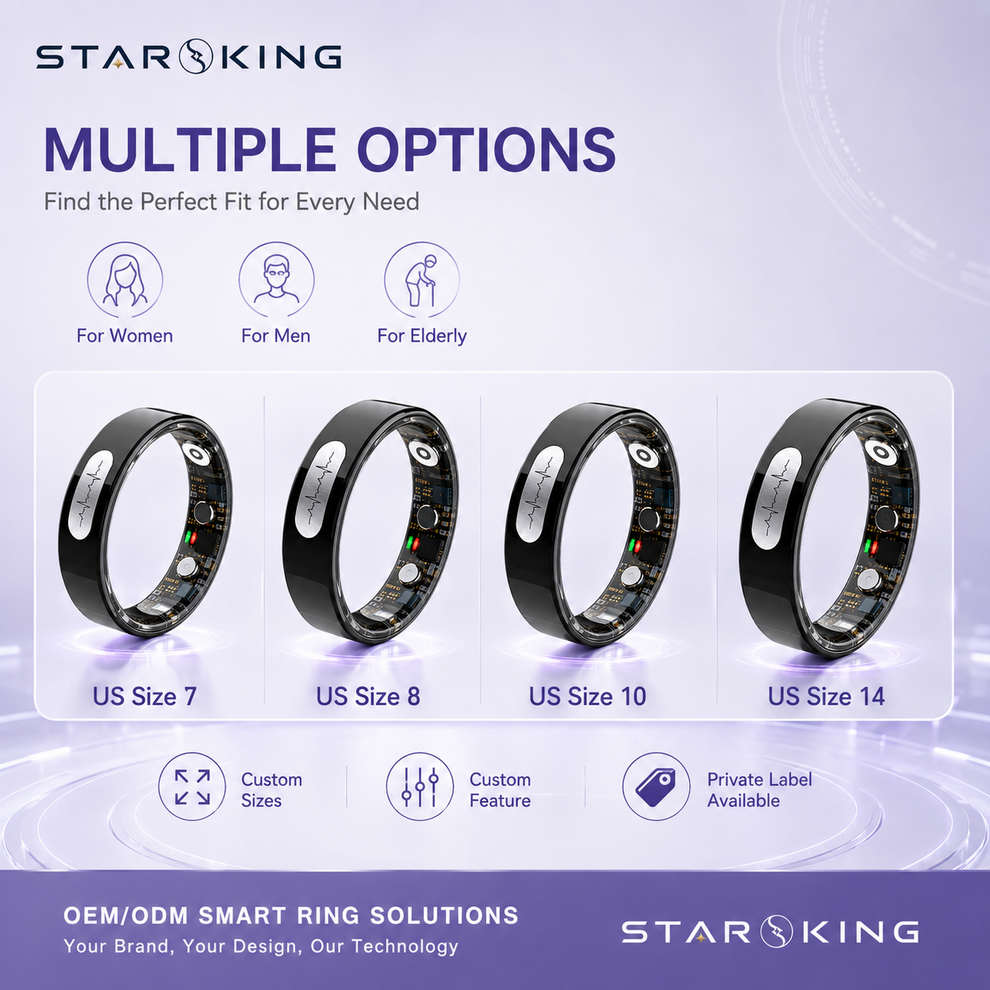
| Design ownership | Supplier | Supplier | Buyer or shared |
| Customization depth | Branding, packaging, app skin | Features, colors, watch faces, app | Industrial design, firmware, hardware |
| Typical MOQ | Lowest | Moderate | Highest |
| Time to market | Fastest | Moderate | Longest |
| Differentiation | Limited | Moderate | Highest |
| Best for | First launch, demand testing | Scaling startups | Funded brands with clear IP |
Many startup brands begin with private label or light ODM to validate demand, then move toward deeper customization as volume grows. If you are at that evaluation stage, it is reasonable to open a conversation about which customization options are realistic at your expected volume using the sample request channel.
Common Mistakes and Buyer Red Flags
- Comparing unit prices only. A lower unit price with higher freight, packaging, or testing costs can be more expensive overall.
- Accepting certification claims without documents. Ask for reports that reference your exact model and revision.
- Ignoring firmware ownership. If you cannot update the app or firmware, roadmap control sits with the supplier.
- Skipping the sample test plan. Informal testing hides battery and pairing issues that appear at scale.
- Undefined quality level. Without an agreed AQL and inspection plan, disputes become subjective.
- Unclear tooling ownership. If you pay for tooling, confirm in writing who owns it and whether it can be transferred.
Red flags include reluctance to allow third-party inspection, refusal to share test documentation, vague answers about who manufactures the product, and pressure to pay a large deposit before sample approval. Buyers should also be cautious when a supplier cannot describe what happens if a component changes mid-production.
Practical Buyer Checklist
- Written product brief with target price, channel, and non-negotiable features.
- Production model selected: private label, ODM, or OEM.
- Three or more suppliers scored on the same criteria.
- Samples tested against a documented plan, with results recorded.
- MOQ structure confirmed per model, color, and packaging.
- Landed cost model built, including testing and freight.
- Compliance documentation requested and reviewed for your specific model.
- Lead times, milestones, and warranty written into the agreement.
- Packaging, logo, and app branding requirements specified.
- Inspection method and acceptable quality level agreed in writing.
FAQ
What is the minimum order quantity for smart watches OEM production?
MOQ depends on the model, customization depth, and packaging. Private label programs often have lower entry quantities than full OEM projects, and MOQ can sometimes be reduced through shared tooling or standard modules. Request the MOQ structure per model and per packaging configuration rather than a single number.
How long does it take to launch a private label smart watch?
Timelines vary widely with customization depth. Private label with standard packaging is usually the fastest, while new tooling and custom firmware extend the schedule. Ask for a milestone-based plan covering samples, pre-production approval, mass production, and shipping.
Do smart watches need FCC certification for the U.S. market?
Devices with Bluetooth or other intentional radiators generally require equipment authorization under FCC rules, but the exact requirement depends on the product configuration. Buyers should verify applicability with the manufacturer and an accredited test lab, and request reports that reference their specific model and hardware revision.
What battery documentation should I request?
For lithium battery products, UN38.3 test summaries and MSDS documentation are commonly requested for transport. Some marketplaces and retailers ask for additional information. Confirm which documents the manufacturer can provide and whether they cover your exact battery and configuration.
Can I customize the app and watch faces?
Many ODM and private label programs support app branding, onboarding screens, and watch face libraries. The available scope depends on whether the supplier develops firmware in-house or licenses a platform. Clarify this early, because it affects both cost and your product roadmap.
Who owns the tooling if I pay for it?
Ownership should be defined in the purchase agreement. If you fund tooling, confirm in writing whether you own it, whether it can be transferred to another manufacturer, and what conditions apply. [STAR KING TO CONFIRM: tooling ownership and transfer terms].
How should I compare suppliers when prices differ?
Compare landed cost and scope, not headline unit price. Normalize specifications, testing responsibility, packaging, lead time, and warranty. A higher quote that includes compliant documentation and defined quality control may be cheaper once hidden costs are included.
Conclusion
Launching smart watches as a startup brand is a sequencing problem more than a sourcing problem. Define the product, choose the right production model, evaluate suppliers with a consistent scorecard, test samples against a written plan, model landed cost, verify compliance documentation, and lock the production schedule into your agreement. Each step reduces a specific risk, and together they turn a crowded supplier market into a manageable decision.
It also helps to study how wearable applications shape feature priorities. The application overview at Remote Health Wearables is a useful reference when your roadmap includes health monitoring features, and the broader blog library at STAR KING resources covers related sourcing and compliance topics.
STAR KING CTA
If you are evaluating smart watches OEM partners for a U.S. launch, the next practical step is to review sample options against your specification list. Request product samples to compare build quality, app behavior, and packaging before you commit to MOQ. Share your target features and volume so the team can confirm which customization options and documentation are available for your configuration: Request product samples.
Discuss Your Smart Wearable OEM/ODM Project
Planning a smart ring, smart watch, smart band, AI glasses, AI translator, or AI voice mouse project? Contact STAR KING to discuss product positioning, sample testing, customization scope, certification requirements, lead time, and quotation details.

Team Star King
Scan WhatsApp QR code