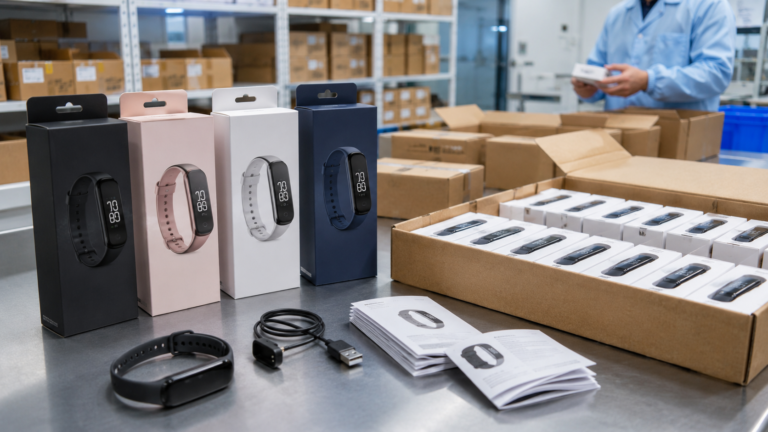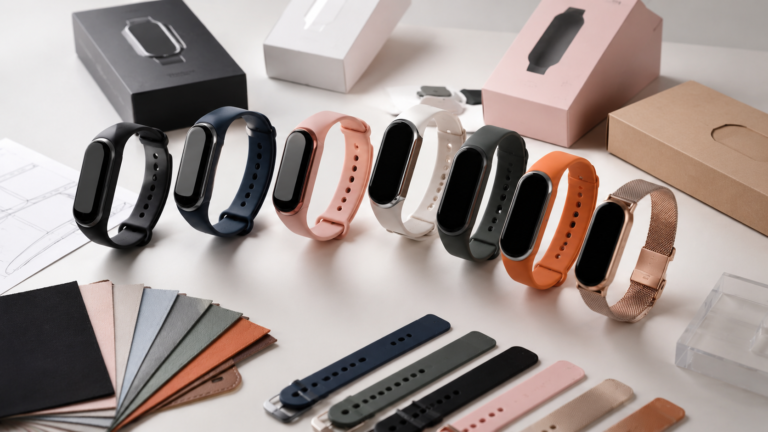

smart band manufacturer: 7 Checks to Select a Smart Band Manufacturer for EU EdTech in 2026
7 Checks to Select a Smart Band Manufacturer for EU EdTech in 2026
Choosing a smart band manufacturer for EU education programs is different from sourcing consumer wearables. Schools, universities, and training providers need devices that support classroom engagement, student wellness, and reliable charging cycles, while procurement teams must also satisfy CE marking, RoHS, REACH, WEEE, and battery shipping rules. A useful supplier should be able to show how each requirement is met at the product level, not only send a catalog. This guide gives you seven selection checks, a buyer checklist, and a red-flag list drawn from how EdTech buyers actually evaluate smart band manufacturers in 2026.
Table of Contents
Table of Contents
Short Answer: How Should EU EdTech Buyers Choose a Smart Band Manufacturer?
EU EdTech buyers should evaluate a smart band manufacturer on seven factors: demonstrated OEM/ODM capability, verifiable EU compliance (CE-RED, RoHS, REACH, WEEE), battery documentation, data privacy for student users, spec alignment with school use cases, quality and testing evidence, and realistic MOQ/lead-time planning. Ask for configuration-specific documentation and sample testing before signing. STAR KING can support customized smart band programs for education buyers; specific certifications and MOQ ranges should be confirmed in writing per SKU.
Table of Contents
- 1. Why Smart Bands Are Moving Into EU EdTech Procurement
- 2. What Is a Smart Band Manufacturer Actually Supplying to EdTech Buyers?
- 3. Check 1: Verify OEM/ODM and Private Label Capability
- 4. Check 2: Map EU Compliance Before You Talk About MOQ
- 5. Check 3: Review Battery Data and Shipping Documentation
- 6. Check 4: Confirm Data Privacy and App Governance Fit for Student Users
- 7. Check 5: Match Device Specs to Real Classroom Use Cases
- 8. Check 6: Audit Quality Control and Product Testing
- 9. Check 7: Align MOQ, Lead Time, and Total Landed Cost
- Key Takeaways
- Smart Band Supplier Comparison: Quick Decision Table
- Common Mistakes and Buyer Red Flags in Smart Band Sourcing
- Practical Buyer Checklist for EU EdTech Smart Band Sourcing
- FAQ
- Conclusion
Key Takeaways
- Smart band manufacturers are increasingly evaluated on documentation quality, not just per-unit price.
- EU EdTech buyers must confirm CE-RED, RoHS, REACH, and WEEE status per configuration, not per brand.
- Battery documentation (UN38.3 test summary, MSDS) is typically required before air freight.
- MOQ, tooling, firmware, and app terms drive true landed cost more than headline FOB price.
- Sample testing and pilot deployment reduce the risk of an expensive rollout failure.
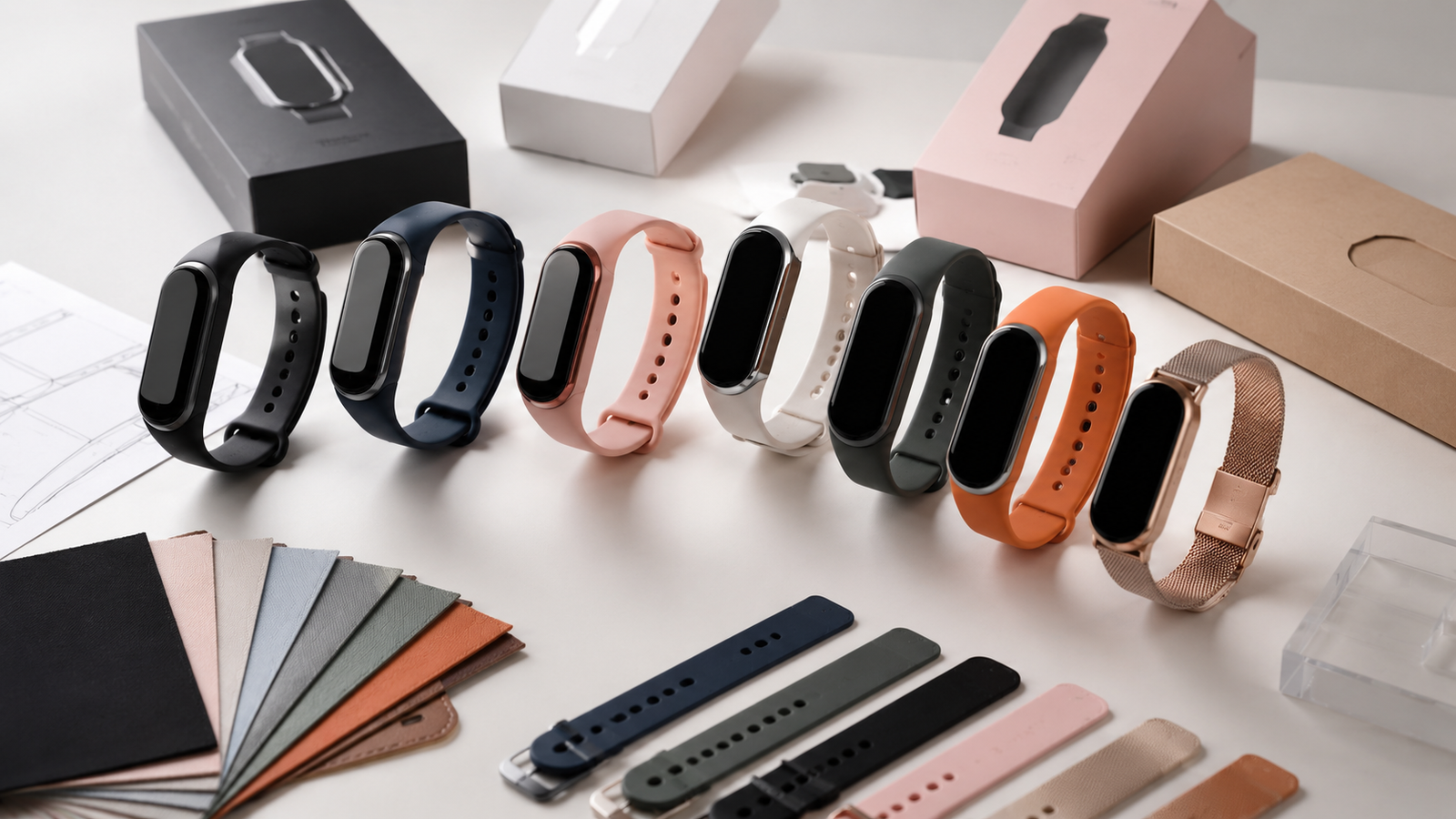
Key Facts for Buyers
| Topic | Why It Matters for EU EdTech Buyers | Typical Evidence to Request |
|---|---|---|
| CE-RED compliance | Required for radio-enabled smart bands sold in the EU | EU Declaration of Conformity, RED test report |
| RoHS / REACH | Restricted substances in electronics and wrist materials | RoHS test report, REACH statement |
| WEEE registration | End-of-life electronics obligations in EU member states | Registration number or importer-of-record plan |
| Battery safety | Air shipping and student safety risk | UN38.3 summary, MSDS, IEC 62133 if applicable |
| GDPR alignment | Student and staff health/activity data | Data flow diagram, DPA, app hosting location |
| Quality control | Classroom durability and warranty exposure | IQC/OQC report, waterproof and drop test evidence |
| MOQ and lead time | Budget, pilot size, and school calendar fit | Written MOQ tiers, tooling schedule, sample timeline |

1. Why Smart Bands Are Moving Into EU EdTech Procurement
Smart bands have shifted from consumer fitness accessories to teaching and wellness tools. In EU education environments, universities use them in sports science and health curricula, K-12 and vocational programs deploy them for movement and activity tracking, and corporate training providers use them in workplace wellness pilots. Their small form factor, longer battery life than most smart watches, and lower price point make them a practical device for programs that issue hardware to students or trainees.
At the same time, EU procurement rules for electronics and personal data have become stricter. Radio equipment sold in the EU must meet the Radio Equipment Directive, electronics must comply with RoHS, and products that handle the personal data of minors face GDPR obligations. For EdTech buyers, the supplier selection stage is where most compliance risk is either solved or created.
If you are still comparing device categories, see our overview of smart bands versus other wearable form factors before shortlisting suppliers.
2. What Is a Smart Band Manufacturer Actually Supplying to EdTech Buyers?
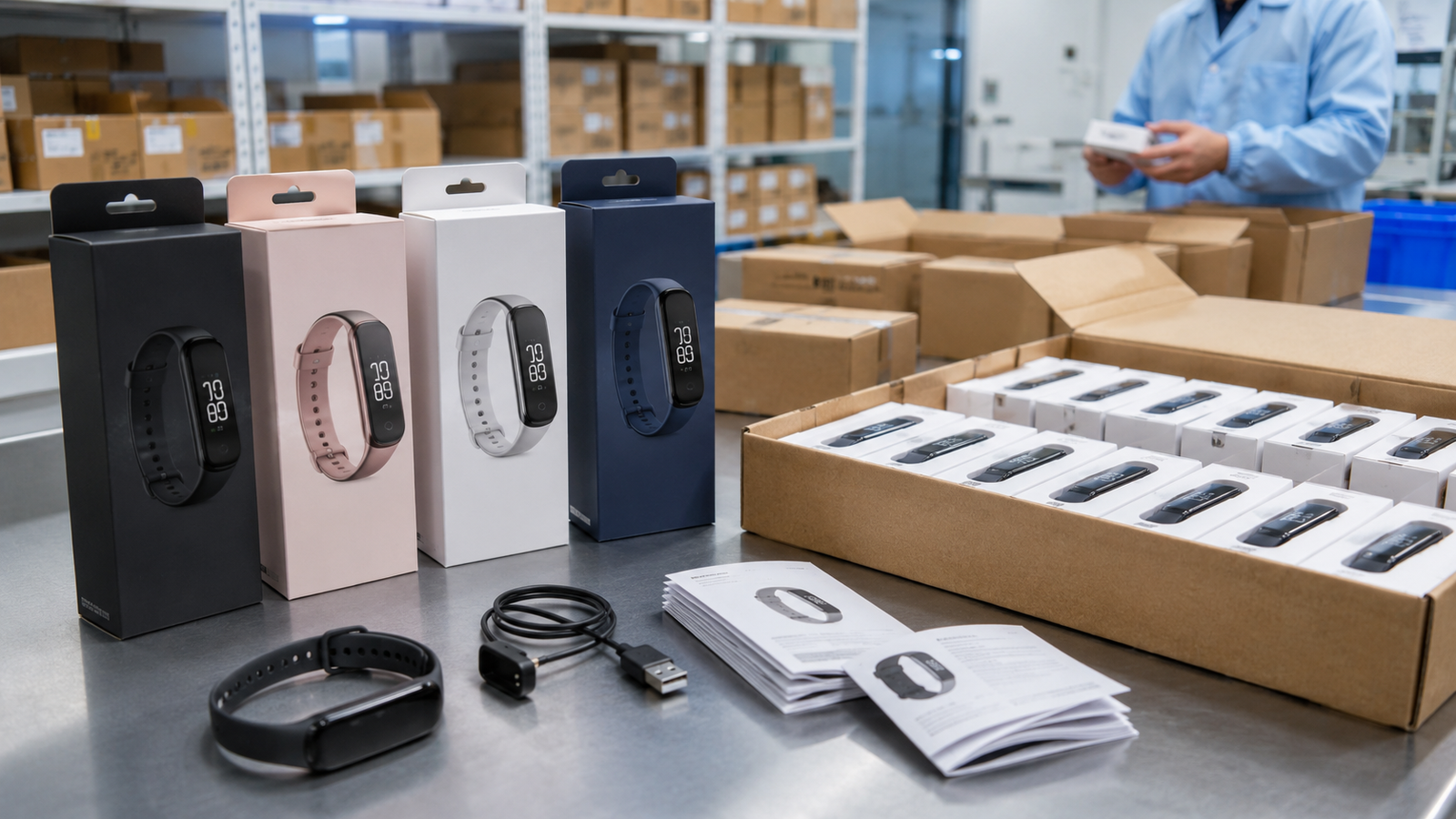
A smart band manufacturer for EdTech buyers typically supplies a package that goes beyond the wrist unit. It usually includes hardware assembly, firmware, a companion app, packaging, compliance documentation, and post-sale support such as spare parts and warranty processes. A supplier that only quotes a device price and cannot describe firmware behavior, app customization, or packaging compliance is usually a trading layer rather than a manufacturer.
When buyers ask us how to evaluate this package, we describe four layers:
- Hardware layer: display, sensors (heart rate, SpO2 where supported), battery, charging method, strap material, water resistance rating.
- Firmware layer: activity algorithms, sync intervals, notification behavior, OTA update policy.
- App and data layer: iOS/Android app, account model, data storage, export options, EU hosting questions.
- Commercial layer: MOQ, tooling ownership, packaging, labeling, lead time, warranty terms.
Education buyers should expect a smart band manufacturer to explain all four layers in writing, even at the RFQ stage.
3. Check 1: Verify OEM/ODM and Private Label Capability
OEM, ODM, and private label are not interchangeable. OEM usually means the buyer brings a design and the factory manufactures it. ODM usually means the factory offers a platform that can be customized. Private label usually means the buyer applies their brand to an existing product with limited changes. EdTech buyers often need a blend: an existing band platform with custom app branding, packaging, and a locked firmware configuration.
Ask specific questions:
- Can you support logo and packaging customization? Show examples of past products.
- Can you modify app name, icon, login screen, and onboarding text?
- Can firmware behavior be adjusted, such as disabling notifications or limiting syncing?
- Who owns tooling if new molds or jigs are created?
- What is the minimum order quantity for custom versus standard configurations?
For a broader view of OEM/ODM structures, review the private label OEM/ODM solution page. STAR KING can engage as an OEM/ODM partner; customization scope and MOQ per configuration are [STAR KING TO CONFIRM].
4. Check 2: Map EU Compliance Before You Talk About MOQ
Compliance is the fastest way to expose a weak supplier. A smart band with Bluetooth is radio equipment under the EU Radio Equipment Directive (RED), which requires a CE mark and an EU Declaration of Conformity. The European Commission publishes guidance on the Radio Equipment Directive. Buyers should also verify RoHS for hazardous substance limits and, where applicable, REACH for materials in straps and coatings. Electrical and electronic equipment placed on the EU market also falls under WEEE obligations, which typically rest with the importer or producer placing the item on the market.
Ask the supplier to confirm, per SKU:
- CE-RED test status and the identification of the testing lab.
- RoHS and REACH documentation scope (which parts and materials).
- Battery testing status, including UN38.3 for transport.
- WEEE registration path or whether the buyer becomes the responsible producer.
- Which labels and languages are required on packaging for your target member states.
Avoid blanket statements such as “all our products are CE certified.” Certification depends on the configuration, radio module, and market. Buyers should verify documents against the exact unit that will ship.
5. Check 3: Review Battery Data and Shipping Documentation
Smart bands contain lithium batteries, which makes logistics a procurement issue, not a warehouse issue. Air freight typically requires a UN38.3 test summary and a lithium battery MSDS, and conditions depend on battery size, packaging, and carrier policy. The U.S. Federal Aviation Administration provides public guidance on lithium batteries in transport that is widely referenced alongside IATA rules. Buyers should mark battery documentation as a hard gate in supplier selection.
Ask for:
- UN38.3 summary report for the exact cell or pack configuration.
- MSDS covering the shipping configuration.
- Battery cycle life and expected performance after one academic year.
- Charging method safety features, such as over-voltage and temperature protection.
- Evidence of battery aging or long-term testing where available.
If a supplier cannot produce battery documents before an order, treat that as a red flag rather than a paperwork delay.
6. Check 4: Confirm Data Privacy and App Governance Fit for Student Users
EdTech deployments collect activity and wellness data, sometimes from minors. Under GDPR, the controller and processor roles, lawful basis, and data retention rules must be defined. Buyers should ask the smart band manufacturer how data is stored, whether the app supports EU hosting, whether data can be deleted on request, and whether the app requires personal accounts for students.
Also evaluate:
- App permissions and whether location data is required.
- Consent flows in the app, in the languages used by your learners.
- Data export formats for administrators and instructors.
- Access control so staff see only aggregated or role-appropriate data.
- Firmware OTA policy, including whether updates can be scheduled outside classroom hours.
If the supplier cannot describe data flow, this is a governance risk that no price discount can offset. Buyers in healthcare-adjacent programs should also read how remote monitoring use cases are handled in the remote health wearables application page.
7. Check 5: Match Device Specs to Real Classroom Use Cases
Spec sheets are easy to compare and easy to misread. A band that suits a sports science lab is not the same as a band issued to first-year students for general wellness. Build a short use-case matrix before shortlisting suppliers, and grade each candidate band against it.
| Use Case | Priority Specs | Practical Trade-off |
|---|---|---|
| Sports science lab | Heart rate accuracy, interval sampling, data export | Higher sampling can shorten battery life |
| General student wellness | Step, sleep, basic activity tracking, comfort | Simpler sensors reduce cost and data risk |
| Vocational training | Durability, water resistance, easy charging | Rugged casings may add weight and cost |
| Workplace wellness pilots | App branding, admin dashboard, reporting | Analytics depth may require custom app work |
| Large-scale rollout | MOQ tiers, packaging, labeling, spares plan | Custom packaging often raises MOQ |
Ask the supplier to show the accuracy, battery, and water resistance evidence behind each claim, and how the band behaves after 12 months of daily use in a school setting.
8. Check 6: Audit Quality Control and Product Testing
Quality control is where supplier claims become verifiable. Ask the smart band manufacturer to describe incoming quality control (IQC), in-process checks, and outgoing quality control (OQC). For wearables, the tests that matter most are waterproof testing, drop testing, aging testing, and charging cycle testing. Buyers should expect pre-shipment inspection evidence or the option to appoint a third-party inspector.
Key questions:
- What is the defect rate threshold that triggers rework or replacement?
- How are display and touch panel defects screened?
- How is water resistance verified on the production line?
- What is the aging test protocol before packaging?
- Who signs off OQC, and what report is sent to the buyer?
Also ask how warranty claims are handled, including whether replacement units are shipped from EU stock or from the factory. If your program includes sleep or recovery measurement, compare how the algorithms are validated with the notes in our sleep and recovery application guide.
9. Check 7: Align MOQ, Lead Time, and Total Landed Cost
MOQ and lead time determine whether a supplier can realistically support a pilot and then scale. Education buyers often start with a small pilot cohort before a full rollout, so the supplier’s MOQ structure must allow a pilot volume that still makes commercial sense.
Ask for a written schedule covering:
- MOQ for standard configuration versus customized packaging or app changes.
- Sample lead time and whether samples are charged or credited.
- Tooling lead time if a new mold is required.
- Mass production lead time after deposit and sample approval.
- Certification timeline if CE-RED test reports are not already available for the SKU.
Calculate total landed cost, not FOB price. Landed cost typically includes freight, insurance, duty, VAT, EU WEEE registration, and any last-mile fulfillment into schools. For more context, review the sourcing and compliance resources we maintain for imports.
If you need help translating your pilot plan into a procurement timeline, share your target start date and volume with our team, and we can outline customization options for smart bands.
Smart Band Supplier Comparison: Quick Decision Table
| Selection Check | Weak Signal | Strong Signal |
|---|---|---|
| OEM/ODM capability | Cannot explain customization scope | Written scope, examples, sample plan |
| EU compliance | Blanket CE claims without documents | SKU-level CE-RED, RoHS, REACH evidence |
| Battery data | No UN38.3 or MSDS before order | Documents provided at RFQ stage |
| Data privacy | Unclear app data flow | Data flow diagram, DPA, hosting options |
| Spec fit | One-size-fits-all catalog | Use-case matrix with test evidence |
| Quality control | No QC reports | IQC/OQC reports, third-party inspection allowed |
| MOQ and lead time | Verbal-only promises | Written tiers, tooling and sample schedules |
Common Mistakes and Buyer Red Flags in Smart Band Sourcing
- Treating certification as a brand-level statement. Documents must match the exact SKU.
- Ignoring app and firmware ownership. If the supplier controls the app, you may depend on them for future updates.
- Assuming all sensors behave the same. Heart rate and SpO2 accuracy vary by algorithm and sensor module.
- Skipping pilot testing. Classroom deployment surfaces charging, comfort, and durability issues that sample hands-on testing may not reveal.
- Underestimating landed cost. Freight, VAT, WEEE, and last-mile delivery often exceed initial estimates.
- No spare parts plan. Charging cables and straps fail more often than the band itself.
- Verbal MOQ promises. Always confirm MOQ and lead time in a signed document.
Practical Buyer Checklist for EU EdTech Smart Band Sourcing
| Item | Question to Ask | Evidence to Request |
|---|---|---|
| Supplier type | Are you a manufacturer or a trading company? | Factory profile, production capability statement |
| Customization | What can you customize: logo, packaging, app, firmware? | Written customization scope, sample plan |
| EU compliance | What is the CE-RED, RoHS, REACH status for this SKU? | DoC, test reports, responsible person details |
| Battery | Can you provide UN38.3 and MSDS? | Battery documents for exact configuration |
| Privacy | Where is app data stored and how is it deleted? | Data flow diagram, DPA draft |
| Specs | Can you provide test evidence for accuracy, battery, and water resistance? | Test reports or sample testing plan |
| Quality | What QC steps run before shipment? | IQC/OQC reports, inspection policy |
| Commercials | What is the MOQ for standard and customized versions? | Written MOQ tiers and lead-time schedule |
| After-sales | How are warranty and spare parts handled? | Warranty terms, spare parts list |
FAQ
What certifications should an EU EdTech buyer require from a smart band manufacturer?
At minimum, confirm CE-RED status, RoHS, and REACH documentation for the exact SKU, and battery transport documents such as UN38.3 and MSDS. WEEE responsibility should also be clarified, since it typically falls on the importer or producer placing the device on the EU market. Buyers should verify documents rather than rely on summary claims.
Is a smart band considered radio equipment under EU rules?
If it includes Bluetooth or other wireless communication, it is generally treated as radio equipment under the Radio Equipment Directive and requires a CE mark and conformity documentation. Buyers should confirm which radio module is used and that the test report references that module.
What MOQ should an EdTech buyer expect for a customized smart band?
MOQ depends on the level of customization. Standard configurations often have lower minimums, while custom packaging, new tooling, or app changes typically raise the MOQ. STAR KING can discuss MOQ tiers per configuration; exact numbers are [STAR KING TO CONFIRM].
Can a smart band app be customized for a school environment?
App customization is often possible for branding, onboarding screens, and certain feature toggles. The depth of customization, hosting location, and data controls vary by platform and should be confirmed in writing. Buyers should request a demo account before approving app work.
How long does sample development usually take?
Sample lead time typically depends on whether the sample uses an existing platform or requires new tooling. Simple private label samples are usually faster than custom tooling samples. Buyers should request a written sample schedule and clarify whether sample costs are credited against mass production.
How should buyers compare landed cost between smart band suppliers?
Compare FOB price alongside freight, insurance, duty, VAT, WEEE registration, packaging, and last-mile fulfillment. A lower FOB price can produce a higher landed cost if compliance support or shipping documents are missing.
What quality tests matter most for classroom smart bands?
Waterproof testing, drop testing, aging testing, and charging cycle testing are usually the most relevant for school use. Buyers should also review the defect rate threshold and the pre-shipment inspection process before placing a production order.
Conclusion
Selecting a smart band manufacturer for EU EdTech programs is a documentation and process exercise as much as a hardware comparison. The strongest suppliers answer compliance, battery, privacy, quality, and MOQ questions directly, support a pilot, and provide written terms before an order. Use the seven checks and the buyer checklist above to structure your RFQ, and shortlist suppliers that can be verified at the SKU level rather than the brand level. For background on how smart bands fit broader wearable programs, explore our smart bands product range and continue sourcing research in our blog.
Next Step
Share your target EU markets, pilot volume, and required customization, and we will help you confirm the right Smart Band configuration for your EdTech program.
Discuss Your Smart Wearable OEM/ODM Project
Planning a smart ring, smart watch, smart band, AI glasses, AI translator, or AI voice mouse project? Contact STAR KING to discuss product positioning, sample testing, customization scope, certification requirements, lead time, and quotation details.

Team Star King
Scan WhatsApp QR code