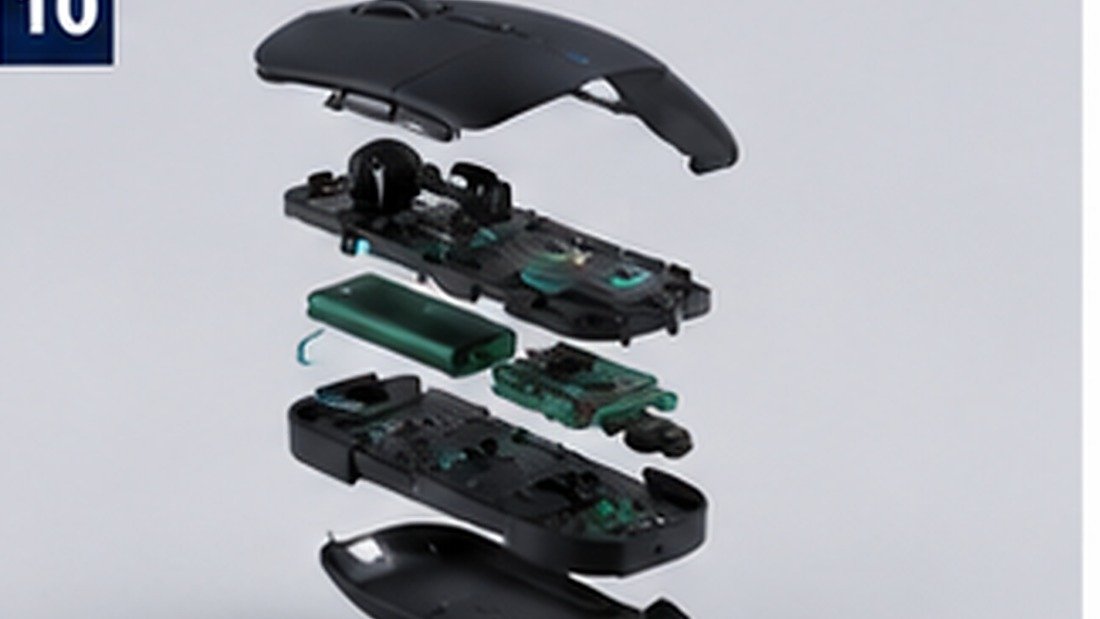
AI Voice Mouse Supplier Selection in the Middle East: 7 Checks for Private-Label Brands
AI Voice Mouse Supplier Selection in the Middle East: 7 Checks for Private-Label Brands
AI voice mouse supplier selection is the process of verifying a hardware manufacturer’s ability to deliver a voice-control mouse that matches your brand, your target market, and your compliance and delivery requirements. This guide walks private-label brands selling in the Middle East through seven practical checks — from Arabic voice-input behavior and firmware stack to MOQ, sample testing, packaging, UAE and Saudi import paperwork, and after-sales support. Each check includes a verification method and the risk it removes, so you can compare suppliers on evidence rather than presentation decks.
Table of Contents
Table of Contents
Table of Contents
- Direct Answer
- Key Takeaways
- Key Facts for Buyers
- What Is an AI Voice Mouse, and Why It Matters in the Middle East
- The Middle East Supplier Landscape for AI Hardware
- 7 Checks for AI Voice Mouse Supplier Selection
- 1. Arabic and Multilingual Voice Input: Does It Actually Work?
- 2. Firmware, Driver, and App Development Depth
- 3. OEM and Private-Label Customization Options
- 4. MOQ, Pricing Structure, and Total Landed Cost
- 5. Sample Testing and Validation Process
- 6. Quality Control and Certifications for Middle East Import
- 7. Lead Time, Packaging, and After-Sales Support
- Supplier Comparison and Decision Matrix
- Common Mistakes and Buyer Red Flags
- Practical Buyer Checklist
- FAQ
- Conclusion
Direct Answer
To evaluate AI voice mouse suppliers for Middle East private-label programs, run a structured selection process: (1) verify live Arabic and multilingual voice input on your target platforms, (2) confirm firmware and app customization depth, (3) map OEM and private-label options, (4) request tiered MOQ and pricing with landed-cost estimates, (5) test pre-production samples, (6) review QC and certification documentation qualified for your target country, and (7) lock in lead time, packaging, and after-sales terms in writing. Confirm every certification item against your exact product configuration and destination market before committing to a purchase order.

Key Takeaways
- Arabic voice input quality varies significantly across supplier platforms — test it live, not from a spec sheet.
- Ask for firmware ownership and app-development terms early; customization is where many AI hardware OEM programs stall.
- MOQ, price breaks, and lead time should be confirmed as written tier tables, not verbal estimates.
- Certification requirements depend on the product configuration and destination market; buyers should verify rather than assume.
- Packaging and documentation should be bilingual or RTL-adjusted for Gulf markets where required by your channel.
- Samples and pre-shipment inspection protect you from firmware, battery, and material surprises at scale.

Key Facts for Buyers
| Item | What to Verify | Who Confirms |
|---|---|---|
| Arabic voice input | Recognition quality for MSA and Gulf dialect on Windows, macOS, and mobile app | Supplier demo + your own sample test |
| Firmware ownership | Update path, source access, and versioning | Supplier engineering contact |
| MOQ | Tiered quantities and price breaks | Supplier quotation |
| Samples | Pre-production unit with your logo and packaging mock | Supplier sample order |
| QC reports | Incoming, in-process, and pre-shipment inspection scope | Supplier QA + optional third party |
| Certification | Coverage per configuration and destination market | Supplier compliance & your customs broker |
| Lead time | Sample lead time and mass-production lead time | Supplier production planner |
| Warranty and spare parts | Defect policy, DOA handling, spare-parts availability | Supplier after-sales contact |

What Is an AI Voice Mouse, and Why It Matters in the Middle East
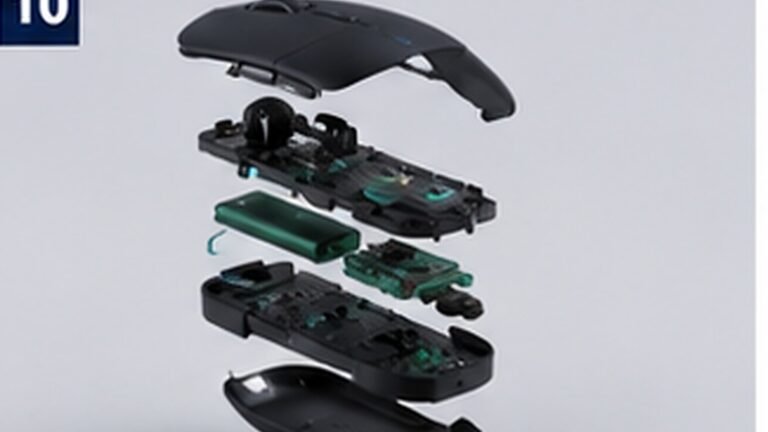
An AI voice mouse is a computer pointing device that integrates a microphone and voice-processing pipeline, so the user can dictate text, execute commands, and trigger AI-assisted actions with voice instead of — or alongside — keyboard input. Depending on the model, the voice processing may run through a companion desktop application, a cloud-based speech-to-text engine, or an on-device component, and it may support multiple languages, real-time translation, or voice-to-text workflows.
For Middle East private-label brands, three factors make this category commercially interesting. First, multilingual use is normal, not niche: offices, schools, and homes frequently operate in Arabic and English side by side, so a voice mouse that handles both language families has a broader addressable market than one built only for Latin-script input. Second, the category is still in an early adoption curve in the region, which means private-label differentiation — brand, packaging, language support, bundled software — can carry more weight than it does in mature accessory categories. Third, the buyer population is business-heavy: distributors, e-commerce sellers, corporate procurement teams, and education technology companies buy in volume, so supplier selection quality directly shapes margin and returns.
If you are mapping your broader hardware catalog, it helps to see how voice-input devices sit alongside categories such as AI office productivity hardware, where the buying logic (compatibility, software, support) is similar.
The Middle East Supplier Landscape for AI Hardware
Most AI voice mouse programs for Middle East brands are sourced through OEM/ODM manufacturers in China, because the category depends on a tightly integrated combination of microphone arrays, firmware, and companion software. That model is well established in consumer electronics sourcing; the U.S. International Trade Administration’s Country Commercial Guides are a useful starting point for understanding import and market-entry requirements in specific Gulf markets, but they do not replace verifying product-level compliance with qualified specialists.
In practice, private-label brands face a spectrum of supplier types:
- Trading companies that resell finished voice mice with logo printing only — fast but shallow customization.
- OEM assemblers that can apply your brand, packaging, and some firmware theming but rely on third-party software stacks.
- ODM manufacturers with in-house industrial design, firmware, and app teams — slower to onboard but capable of differentiation.
Your selection decision should start with which tier matches your roadmap. If you plan to build a voice mouse line that includes Arabic-first input, brand-specific shortcuts, and a companion app with your logo, the ODM tier is the realistic fit. If you simply need a logo on an off-the-shelf unit for a pilot, an OEM assembler may be enough — but plan for a later migration if the product sells.
7 Cheks for AI Voice Mouse Supplier Selection
1. Arabic and Multilingual Voice Input: Does It Actually Work?
This is the single check that most often separates a viable Middle East program from an expensive lesson. Ask the supplier to demonstrate, on video and then on your own sample, the following:
- Dictation of Modern Standard Arabic (MSA) sentences in a desktop app.
- Recognition of common Gulf dialect phrases in practical settings.
- Switching between Arabic and English without restarting the software.
- Accuracy in a room with typical office background noise, not a silent studio.
- Behavior when the microphone array is used from a normal desk distance.
Reason to check: Voice recognition accuracy is a function of the speech engine, the microphone hardware, and the acoustic tuning — three things that vary by supplier. Verification method: request a live demo using your own test sentences, then repeat the test on a sample unit before committing to volume. Risk removed: returns, poor reviews, and channel rejection driven by unusable Arabic input.
2. Firmware, Driver, and App Development Depth
Voice mice are software-dependent hardware. A supplier that cannot articulate its firmware update path, driver signing approach, and companion-app development capability will struggle to support your brand for more than one product cycle.
Ask for:
- Firmware version history and the update mechanism (over-the-air, desktop utility, or service tool).
- Whether the companion app is developed in-house, licensed, or outsourced.
- How custom shortcuts, hotkeys, or brand-specific voice commands are implemented.
- Whether firmware customization is available and under what commercial terms.
See how similar customization questions are handled for private-label OEM/ODM programs before you finalize your supplier shortlist.
3. OEM and Private-Label Customization Options
Define the exact customization scope you want and ask each supplier to price it separately. Typical layers include:
- Logo customization — printed, laser-etched, or embossed on the housing.
- App customization — brand colors, splash screen, language defaults, onboarding.
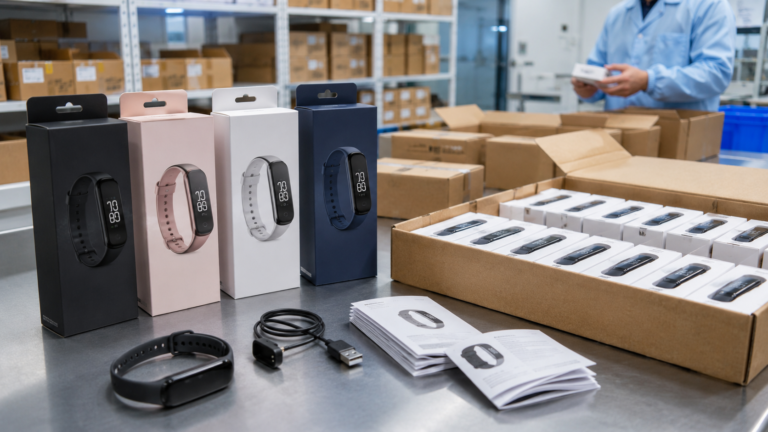
- Packaging customization — retail box, insert, multilingual manual, barcode and label files.
- Language support — Arabic-first defaults, right-to-left UI where relevant.
- Accessory set — cable, dongle, carry pouch, quick-start card.
Verification method: request a written customization matrix with cost and lead-time impact per line. Risk removed: mid-project scope disputes and unplanned tooling or design fees.
4. MOQ, Pricing Structure, and Total Landed Cost
MOQ for an AI voice mouse depends on the customization depth. Logo-only runs generally require lower minimums than programs with new tooling, custom firmware, or a branded app. Ask for a tiered table — for example, MOQ and two or three higher brackets — and require it in writing.
Price is only one input. Build a landed-cost model that includes:
- Unit price at each MOQ tier.
- Customization, tooling, and sample fees.
- Packaging and label costs.
- Freight to your destination port or warehouse.
- Duty and VAT treatment in your target market.
- Certification testing and any local registration fees.
Because duty and tax rules vary by country and change over time, treat any figure a supplier gives you as an estimate and confirm it with your customs broker.
5. Sample Testing and Validation Process
Samples are where supplier claims become evidence. Request pre-production samples that carry your logo and packaging mock, then run a structured test:
- Arabic and English dictation accuracy at desk distance.
- Compatibility on Windows, macOS, and your target mobile app where applicable.
- Latency between speech and on-screen text.
- Battery or power behavior during a full working day.
- Click, scroll, and sensor performance after a week of daily use.
- Build feel and finish against your retail positioning.
Document every test result in a scoring sheet and send it back to the supplier. A supplier that responds with engineering explanations and fixes is usually a better long-term partner than one that only apologizes.
6. Quality Control and Certifications for Middle East Import
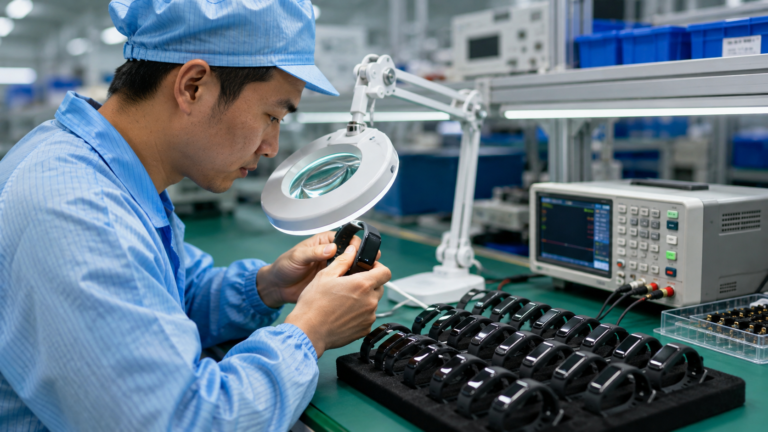
Ask for the supplier’s quality-control flow — incoming inspection, in-process checks, and pre-shipment inspection — and review sample reports. Third-party inspection before shipment is a reasonable safeguard for a first order.
On certification: requirements depend on the product configuration and the destination market. A voice mouse is a computer peripheral, but if it includes a rechargeable battery, wireless connectivity such as Bluetooth, or an external power adapter, additional considerations may apply. The FCC’s equipment authorization pages at fcc.gov explain how radio-frequency devices are certified for the U.S. market, which is useful context for understanding the supplier’s testing documentation even when your market is the Gulf. Europe’s CE marking framework is summarized at europa.eu.
For Middle East markets, ask your supplier to list which certificates they hold per module, and confirm with your importer or customs broker which documents your destination requires. Do not assume that any certificate covers every configuration; configuration changes often change the testing scope.
If your catalog also includes wearables, compare how compliance documentation is handled for smart ring OEM programs, where battery and wireless testing follow a similar logic.
7. Lead Time, Packaging, and After-Sales Support
Lead time is a planning commitment, not a marketing number. Ask for two distinct figures: sample lead time and mass-production lead time after deposit and artwork approval. Then ask how holidays and capacity planning typically affect those numbers.
Packaging deserves its own review. For Gulf channels, confirm whether retail packaging and manuals should be bilingual, and whether barcodes, origin marking, and importer information meet your retailer’s requirements. RTL layout adjustments inside the app or on the insert are worth testing early.
After-sales terms should cover defect rate thresholds, dead-on-arrival handling, warranty duration, and spare-parts availability for the product’s expected service life. If the supplier cannot state these in a written policy, that is a signal about how a future quality dispute will be handled.
Supplier Comparison and Decision Matrix
| Criterion | Weak Signal | Strong Signal | Evidence to Request |
|---|---|---|---|
| Arabic voice input | Claims only | Live demo + sample result | Recorded demo, sample test sheet |
| Firmware/app depth | Generic licensed app | In-house firmware and app | Version log, app screenshots |
| Customization | Logo only | Matrix with pricing | Written customization list |
| MOQ and pricing | Verbal estimate | Tiered written table | Quotation PDF |
| Samples | Stock unit only | Pre-production with your logo | Sample invoice and photos |
| QC and compliance | “We are certified” | Per-configuration certificates | QC report, certificate list |
| Lead time | One vague number | Sample vs. production split | Planning sheet |
| After-sales | No written policy | Defect, DOA, and spare-parts terms | Written support policy |
Common Mistakes and Buyer Red Flags
- Accepting a translated spec sheet as proof. Machine-translated manuals and specs often hide command errors, unit mistakes, and missing language support. Ask for the original and have it reviewed.
- Skipping the sample stage to save time. A week of sample testing typically costs far less than a container of units with unusable Arabic input.
- Ignoring software ownership. If the companion app is licensed from a third party, your ability to customize it later may be limited.
- Assuming one certificate covers all variants. Configuration changes — battery, wireless module, adapter — can change the testing scope.
- Confirming everything by chat. Verbal MOQs and lead times are not commitments. Ask for written confirmation.
- Underestimating packaging language requirements. Retail buyers in the region may require bilingual or Arabic-primary materials.
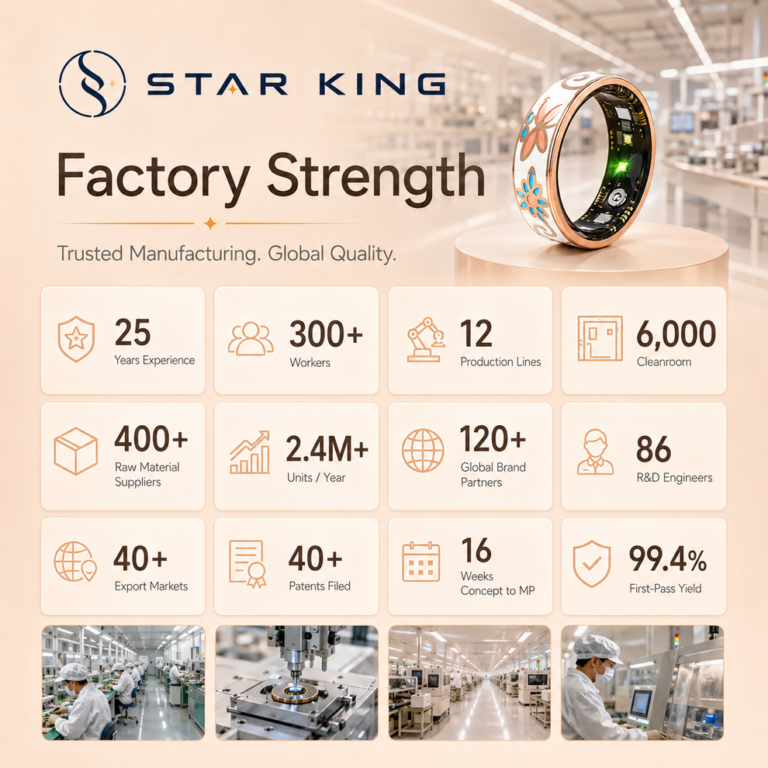
If you are at the shortlist stage, it is reasonable to ask each candidate to complete the same sample and documentation package, then score the results side by side. Programs like STAR KING’s AI voice mouse OEM/ODM offering are built around exactly this kind of evaluation cycle, which makes direct comparison more practical. You can also review comparable sourcing logic in STAR KING’s resources blog.
Practical Buyer Checklist
| # | Check | Evidence Required | Owner |
|---|---|---|---|
| 1 | Arabic and English voice input verified live | Demo video + sample test | Product team |
| 2 | Firmware and app customization scope defined | Written matrix | Product + engineering |
| 3 | Logo, packaging, and language customization priced | Quotation breakdown | Procurement |
| 4 | MOQ tiers and landed-cost model ready | Tier table + broker input | Finance |
| 5 | Pre-production samples tested and scored | Completed test sheet | QA |
| 6 | QC flow and certificates reviewed per configuration | QC report + certificate list | Compliance |
| 7 | Lead time, warranty, and spare-parts terms confirmed | Written policy | Supply chain |
FAQ
What should private-label brands check first when selecting an AI voice mouse supplier?
Start with Arabic and multilingual voice input quality, because it is the hardest feature to fix after tooling and firmware are locked. Test it live and on a sample before comparing price.
Does an AI voice mouse require special certification for Middle East markets?
It depends on the configuration and destination market. Wireless modules, rechargeable batteries, and external adapters may each trigger different testing or documentation requirements. Buyers should verify with their importer or customs broker rather than rely on a general claim.
What MOQ is typical for a private-label AI voice mouse?
MOQ varies with customization depth. Logo-only programs generally sit at lower minimums than programs that include custom firmware, tooling, or a branded companion app. Ask for tiered MOQ and pricing in writing.
Can the supplier customize the companion app for my brand?
Some can. Ask whether the app is developed in-house or licensed, and request a written scope covering branding, language defaults, shortcut configuration, and update responsibility.
How long does sampling and production usually take?
Sample lead time and mass-production lead time are separate commitments. Ask for both in writing, and ask how holiday periods and capacity planning affect the production number.
What are common red flags during supplier selection?
Vague verbal MOQs, no firmware ownership explanation, certificates that cannot be mapped to a specific configuration, and no written after-sales policy are the most common early warning signs.
Should packaging and manuals be bilingual for Gulf markets?
It depends on your channel and retailer requirements. Many buyers in the region prefer bilingual or Arabic-primary materials, and RTL layout adjustments should be tested before mass production.
Conclusion
AI voice mouse supplier selection for Middle East private-label programs is ultimately a verification exercise. The suppliers worth your time are the ones who can demonstrate Arabic input quality, explain their firmware and app stack, quote MOQ and customization in writing, submit samples for real testing, document quality and compliance per configuration, and commit to lead time and after-sales terms. Score each candidate on the same evidence and let the comparison, not the sales deck, decide the shortlist. The checks above are designed to be reusable across your next AI hardware sourcing cycle, so treat this framework as a repeatable process rather than a one-off evaluation.
Next Step
Ready to compare specifications, request samples, or discuss a private-label AI voice mouse program for your market? Start with a focused supplier conversation: Request a quotation or discuss your OEM/ODM project with our sales team. Bring your target market, expected volumes, and language requirements, and we can outline the customization options and documentation you will need.
Discuss Your Smart Wearable OEM/ODM Project
Planning a smart ring, smart watch, smart band, AI glasses, AI translator, or AI voice mouse project? Contact STAR KING to discuss product positioning, sample testing, customization scope, certification requirements, lead time, and quotation details.

Team Star King

Scan WhatsApp QR code