Smart Ring OEM for Importers: 7 Critical Checks Before You Sign
Smart Ring OEM for Importers: 7 Critical Checks Before You Sign
A smart ring OEM is a manufacturer that builds smart rings to your brand specification under an OEM, ODM, or private-label agreement. For importers preparing to issue an RFQ, the seven checks that protect your margin and your timeline are: supplier capability, product specifications, MOQ and cost drivers, sample validation, certification and compliance, tooling and IP ownership, and packaging plus lead time planning. This guide is written for importers comparing smart ring manufacturers and preparing a RFQ package they can send to qualified OEM smart ring suppliers.
Table of Contents
Table of Contents
Table of Contents
- Direct Answer: What Should Importers Verify First?
- Key Takeaways
- Key Facts for Buyers
- OEM vs ODM vs Private Label: Decision Table
- Check 1: Supplier Capability and Manufacturing Model
- Check 2: Product Specifications and Feature Trade-offs
- Check 3: MOQ, Tooling, and Cost Drivers
- Check 4: Sample Testing and Validation
- Check 5: Certification and Target-Market Compliance
- Check 6: Tooling, Firmware, and IP Ownership
- Check 7: Packaging, Branding, and Lead Time Planning
- Practical RFQ Buyer Checklist
- Common Mistakes and Buyer Red Flags
- FAQ: Smart Ring OEM for Importers
- Conclusion: Move From RFQ to Pilot Order
Direct Answer: What Should Importers Verify First?
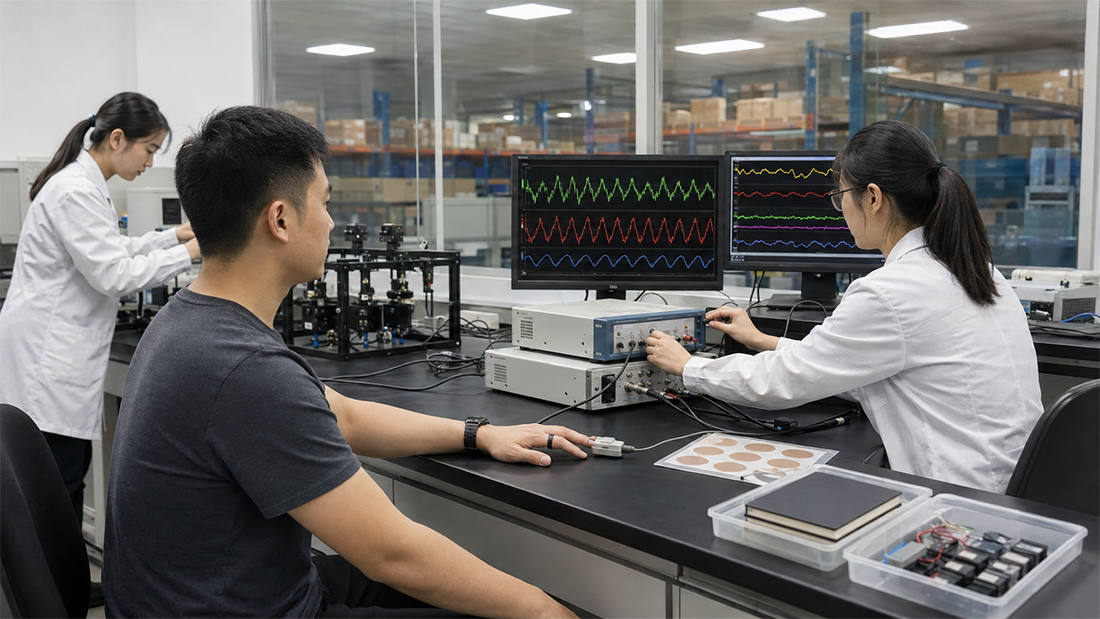
Before sending a smart ring RFQ, importers should confirm that the supplier can manufacture to your brand specification, that certification requirements for your target markets are understood, and that MOQ, tooling, and lead time are clearly quoted. A smart ring OEM supplier should be able to provide a sample roadmap, a compliance matrix, and a written quotation with cost drivers separated. If a quotation arrives without these items, treat it as a preliminary estimate rather than a production commitment.
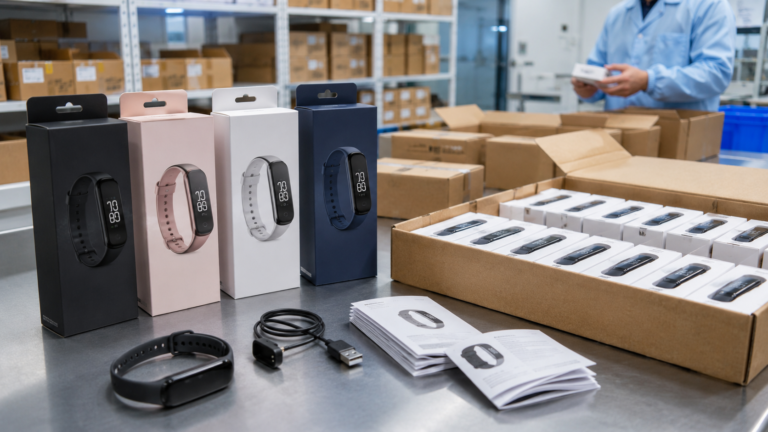
Placement: Insert a photo of a smart ring set with a quotation sheet, USB charging dock, and product sample box on a sourcing desk. Caption: “Preparing a smart ring OEM RFQ for importers: sample, quotation, and compliance documents.”
Importers searching for smart ring OEM quotes usually fall into one of three buying situations: launching a private-label wearable brand, adding smart rings to an existing electronics catalog, or expanding a health and fitness line. Each situation changes what you should weigh first. New brands should prioritize MOQ flexibility and sample support; established distributors should prioritize certification readiness and repeat-order lead times.
Key Takeaways
- Match the manufacturing model to your stage. OEM offers brand control but higher tooling; ODM reduces lead time; private label is fastest for a first SKU.
- MOQ is negotiable only after tooling and component costs are separated. Ask for a cost breakdown, not a single number.
- Certification is product- and market-specific. Do not assume a supplier’s catalog certificates cover your exact model or destination.
- Sample validation should include battery safety, app pairing, and charge cycle testing before you approve mass production.
- Tooling and IP ownership must be written. Clarify who owns the mold, the app account, and the firmware source if you change suppliers.
- Lead time planning should include battery shipping documentation, because lithium cells add customs steps in many markets.

Key Facts for Buyers
| Item | Typical Range / Note | What Importers Should Confirm |
|---|---|---|
| MOQ (private label) | Often lower than full OEM | Whether branding is logo-only or full packaging |
| MOQ (OEM custom) | Depends on tooling and components | Tooling amortization and per-unit cost at 1x / 3x / 5x MOQ |
| Certification | Market-specific | Certificates for your exact model, not a similar SKU |
| Battery shipping | UN38.3 + MSDS often requested | Who prepares the documents and when |
| Sample lead time | Weeks, not days | Sample fee, refund policy, and revision rounds |
| Mass production lead time | Depends on components and capacity | Buffer strategy for peak season and Chinese New Year |
| App / firmware | Often supplier-owned | White-label app options and data handling terms |
These are planning ranges only. Actual values depend on the supplier, the ring size set, sensor package, and target markets. Buyers should verify every number with [STAR KING TO CONFIRM].
OEM vs ODM vs Private Label: Decision Table
Choosing between OEM, ODM, and private label is the first commercial decision in smart ring sourcing. The table below maps each model to the importer profiles it fits best.
| Model | What You Control | Tooling / Development | Best For |
|---|---|---|---|
| OEM | ID, firmware features, sensor selection, packaging | Higher; new mold and firmware work | Brands with defined specs and volume plans |
| ODM | Branding, packaging, selected firmware features | Lower; existing platform adapted | Distributors and e-commerce sellers testing a category |
| Private Label | Logo, packaging, app branding | Lowest; existing product with cosmetic changes | Startup brands and pilot orders |
| Full Custom | Everything, including new tooling | Highest; industrial design and tooling from zero | Established brands with funding and forecast |
If you are still weighing models, review private-label OEM/ODM options before locking a specification, because the model you choose changes MOQ, sample cost, and tooling ownership.
When ODM Beats OEM for a First RFQ
For a first order, ODM usually wins on speed: you get a working platform, a tested app, and a lower sample fee. OEM wins when the ring is central to your brand and the sensor or form factor must be unique. Importers who plan a long-term wearable line often start with ODM and migrate to OEM on the second or third generation.
Check 1: Supplier Capability and Manufacturing Model
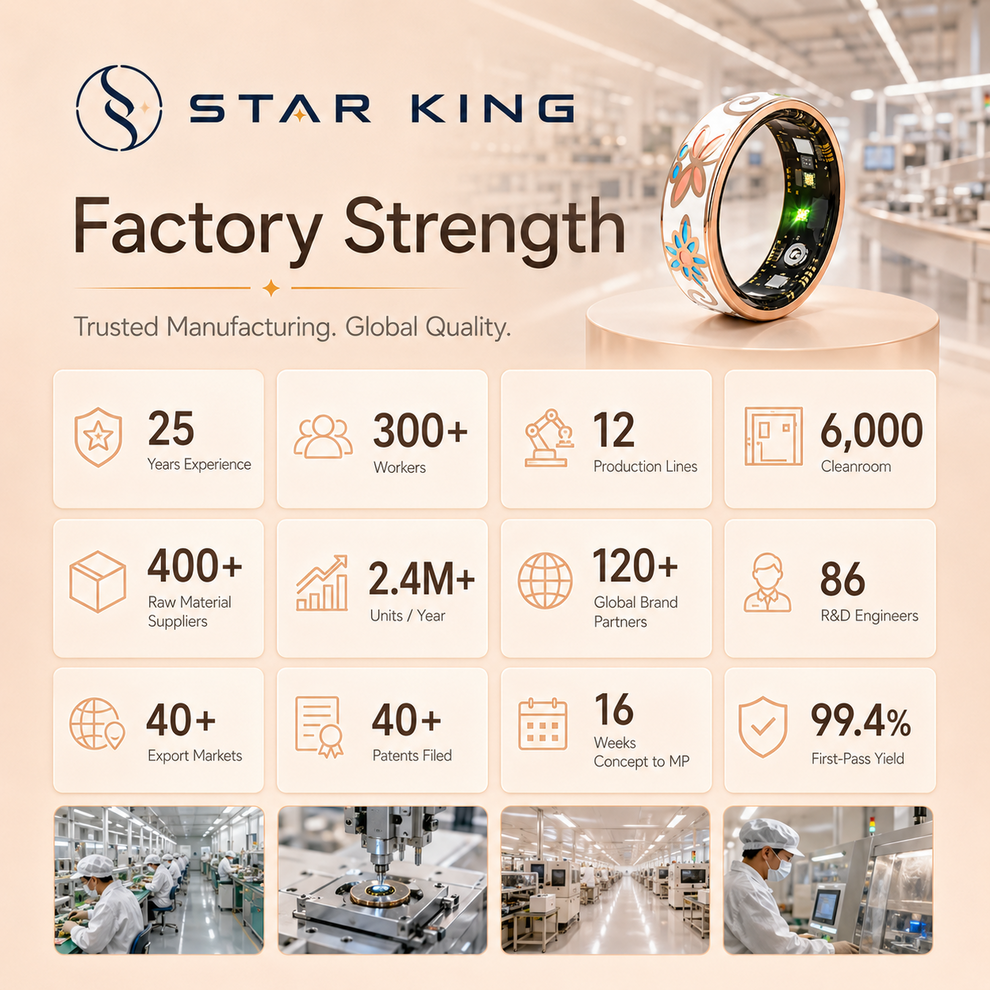
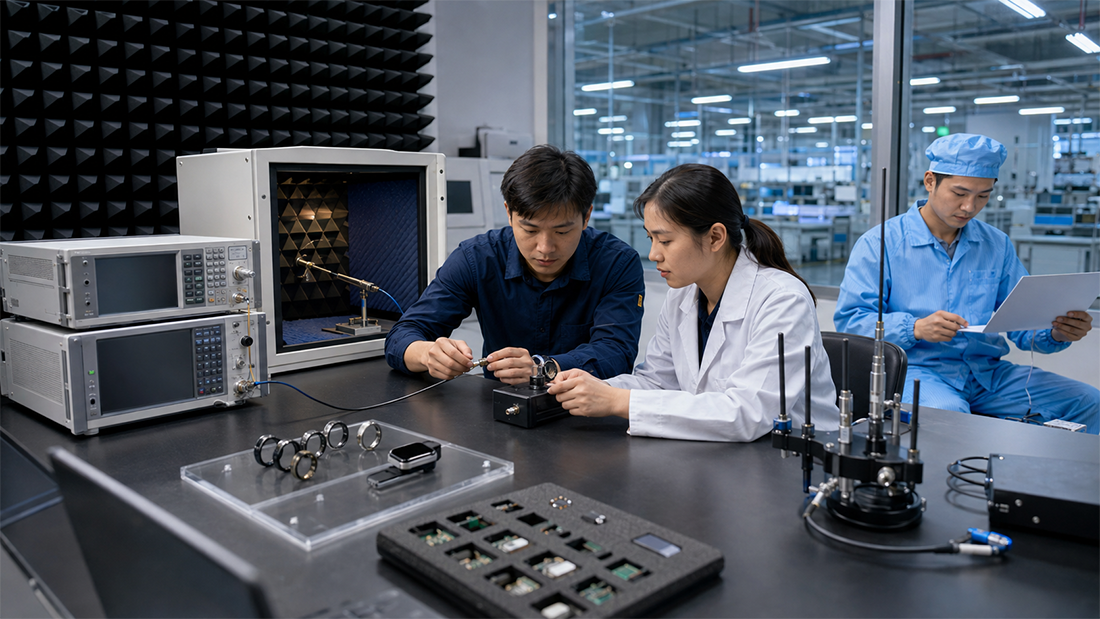
Supplier verification is not a single document; it is a pattern of evidence. Ask for factory profile data, production process flow, and the specific lines used for smart rings. A supplier that builds many wearable categories may allocate different teams to rings, watches, and bands; confirm who owns ring assembly and testing.
Placement: A screenshot-style graphic of a supplier evaluation checklist with sections for capability, certification, and MOQ. Caption: “Supplier evaluation checklist for smart ring OEM importers.”
Documents Importers Should Request
- Business license and factory profile
- Production process flow for the specific ring model
- List of in-house vs outsourced processes
- Equipment list for assembly, aging, and waterproof testing
- Reference SKUs currently in production (specs only, no client names required)
Verify claims with a third-party inspection or a factory visit before large deposits. For broader sourcing methodology, see STAR KING sourcing resources.
Check 2: Product Specifications and Feature Trade-offs
Smart ring specifications look similar in catalogs but differ in ways that affect returns. The most common trade-offs are size, battery life, sensor package, and app integration. Importers should map each feature to a customer promise before approving a spec sheet.
| Spec | Trade-off | Buyer Implication |
|---|---|---|
| Ring size range | More sizes = higher MOQ and inventory | Size kits improve fit but add cost |
| Battery life | Longer life may mean larger battery or fewer sensors | Match claims to real usage, not lab best case |
| Sensor package | More sensors = higher BOM and data complexity | Only include sensors you can support in the app |
| Water resistance | Higher rating needs sealing process control | Verify with waterproof testing reports |
| App pairing | Third-party app vs white-label app | White-label keeps the brand experience consistent |
Feature decisions cascade into certification and cost. A more complex sensor package may increase test time and require additional documentation. Confirm the final BOM before requesting a quotation, and compare suppliers on the same specification to keep pricing comparable.
How Buyers Should Evaluate a Spec Sheet
Read a spec sheet as a risk document, not a marketing sheet. Every claim should have a test method behind it: charge cycles, waterproofing protocol, app compatibility versions, and operating temperature. If a supplier cannot name the test method, treat the claim as unverified.
Check 3: MOQ, Tooling, and Cost Drivers
MOQ determines your cash exposure, and it is driven by tooling, component minimums, and packaging. Importers should ask for a quotation that separates these items instead of a single unit price.
Cost Breakdown to Request
- Ring body and shell material cost
- Battery and charging module
- Sensor and PCB assembly
- Firmware and app licensing (if applicable)
- Tooling amortization
- Packaging and logo printing
- Testing and certification allocation
- Freight and battery document preparation
When these are separated, you can compare suppliers fairly and see which line item drives the difference. A low unit price with hidden tooling charges is not cheaper after the first order.
MOQ Planning Factors
Component suppliers often set their own minimums. A ring using a specialized sensor may carry a higher MOQ than one using a widely available module. If your first order is small, ask whether the supplier offers a pilot MOQ and what the per-unit premium is. This is common practice in wearable OEM and is a reasonable negotiation point.
If you are comparing MOQ structures across suppliers, request a sample and a written quotation so the cost drivers are visible before you commit. Request a smart ring OEM quotation.
Check 4: Sample Testing and Validation
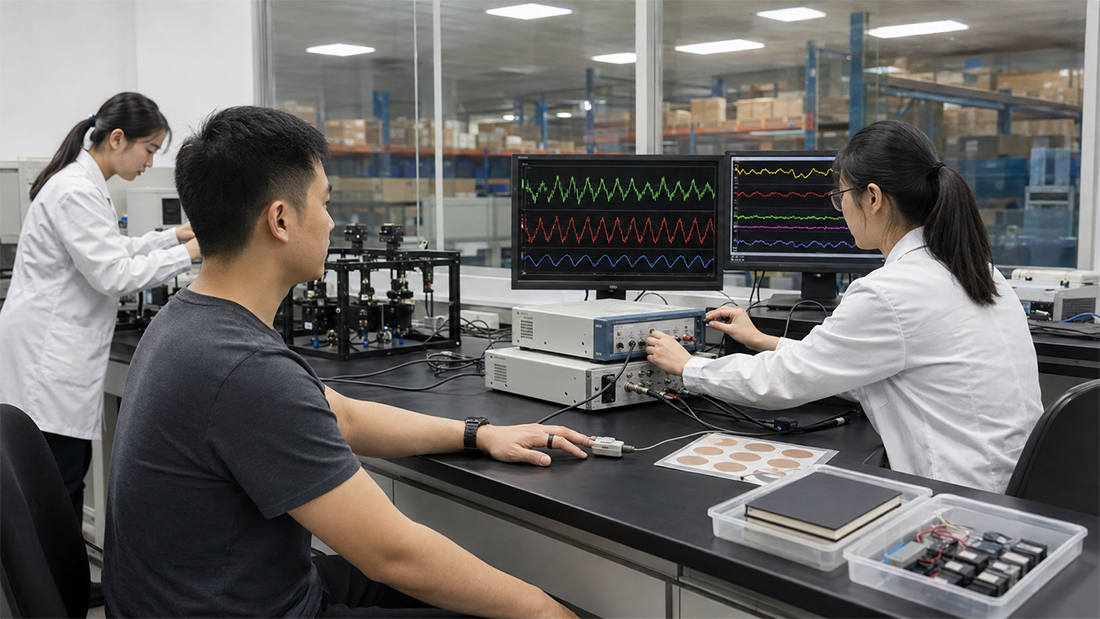
Samples are the cheapest risk control in smart ring procurement. A sample review should test function, fit, battery, app pairing, and packaging in the same sequence your customers will experience.
Recommended Sample Test Sequence
- Unbox and inspect packaging and logo print quality
- Charge to full and record charge time
- Pair with the app and run firmware update
- Test sensors against a reference device or known baseline
- Run full charge/discharge cycles and log battery behavior
- Perform a waterproof or splash test per the claimed rating
- Recharge and check for heating or pairing drift
Document every sample with photos and test notes. If you order samples from multiple suppliers, use the same test script so the comparison is fair. Importers who skip sample documentation often repeat the same questions at mass production.
For applications such as sleep and recovery tracking, sample testing should also verify how the app presents data, because display quality affects reviews and returns.
Check 5: Certification and Target-Market Compliance
Certification requirements depend on the product configuration, radio modules, battery, and destination market. Importers should not assume that a catalog certificate covers a new model or a different country. Ask for certificates that name the exact model and the issuing laboratory.
Certification Matrix to Request
| Market | Common Requirements | Buyer Note |
|---|---|---|
| United States | FCC rules for radio devices; battery shipping documents | Verify the FCC ID and model match |
| European Union | CE marking directives; RoHS; battery and WEEE rules | Confirm which directives apply to your SKU |
| Global shipping | UN38.3 test report; MSDS | Required by many carriers for lithium batteries |
| Japan / Korea | Local radio and telecom approvals | May require additional testing |
For radio devices, review the applicable rules directly: the FCC RF exposure guidance and the EU CE marking framework are useful starting points. Battery safety and transport documents typically follow UN standards; the IATA Dangerous Goods Regulations are commonly referenced by air carriers.
Health features on consumer wearables are generally wellness features, not medical devices. Importers should avoid medical claims unless the product has the appropriate regulatory clearance, and should confirm labeling with a compliance professional.
Check 6: Tooling, Firmware, and IP Ownership
Ownership determines what happens if you change suppliers. The ring mold, the app account, the firmware, and the brand assets should all have a written owner.
Items to Define in the Agreement
- Who owns the tooling and under what conditions it can be transferred
- Whether tooling cost is amortized into unit price or paid upfront
- Who owns the firmware source and update rights
- Which app account hosts your branded experience
- Data handling responsibilities for user health data
- What happens to the tooling at contract end
Importers who pay for tooling should receive documentation of ownership and a transfer clause. If the supplier uses a shared platform, ask whether the app can be white-labeled and whether user data belongs to you or the supplier.
Check 7: Packaging, Branding, and Lead Time Planning
Packaging affects cost, damage rates, and retail presentation. Lead time planning must also include battery documentation and freight booking, which are often the slowest steps.
Packaging and Branding Checklist
- Retail box structure, print, and finish
- Logo placement on ring, charger, cable, and manual
- Language requirements for target markets
- Serial numbers, barcodes, and compliance labels
- Insert card for app download and warranty
- Master carton labeling and pallet configuration
Lead Time Planning
Build a timeline backwards from your launch date: mass production, quality inspection, battery document preparation, freight booking, customs clearance, and warehouse receipt. Add buffer for peak season and supplier holidays. If your channel requires a fixed on-sale date, order samples early and confirm production slots in writing.
For importers building a broader wearable line, compare the ring roadmap with smart ring product options and adjacent categories so the app and packaging strategy stays consistent across SKUs.
Placement: A flat-lay of retail box, ring, charger, and manual with a private-label logo area highlighted. Caption: “Private-label smart ring packaging and branding options for importers.”
Practical RFQ Buyer Checklist
Use this checklist before you send an RFQ or approve a quotation.
- Manufacturing model chosen: OEM, ODM, private label, or full custom
- Spec sheet locked with test methods named
- Cost breakdown requested line by line
- MOQ and pilot MOQ confirmed in writing
- Sample test script prepared and documented
- Certification matrix mapped to target markets
- Tooling and IP ownership clause reviewed
- Packaging and branding requirements listed
- Lead time plan with battery document steps
- Warranty, spare parts, and after-sales terms agreed
Common Mistakes and Buyer Red Flags
Common Mistakes
- Comparing unit prices without comparing the BOM
- Accepting catalog certificates as proof for a new model
- Approving a spec sheet that uses lab-best-case battery claims
- Skipping sample documentation and repeating tests later
- Leaving tooling ownership undefined
- Ignoring battery shipping documents until the freight booking stage
- Assuming a wellness feature is a medical feature
Buyer Red Flags
- No written quotation with separated cost lines
- Certificates that do not name the exact model
- Unwillingness to provide samples or a sample fee policy
- Vague answers about tooling ownership
- No clear process for firmware updates or app support
- Pressure to pay a large deposit before sample approval
- No documentation for lithium battery transport requirements
FAQ: Smart Ring OEM for Importers
What is a typical MOQ for a private-label smart ring?
MOQ depends on whether you customize only the logo and packaging or change the hardware. Logo and packaging changes usually carry a lower MOQ than a new mold or sensor configuration. Ask for both a pilot MOQ and a standard MOQ so you can plan a first order and a repeat order.
Can I use my own app with an OEM smart ring?
Some suppliers offer white-label app options, while others require their standard app. Firmware and app customization availability depends on the platform. Confirm whether the app account, user data, and update rights belong to you or the supplier before signing.
Which certifications do I need to import a smart ring?
Requirements depend on the radio module, battery, and destination market. Common documents include FCC-related approvals for the United States, CE marking for the European Union, RoHS, UN38.3, and MSDS. Buyers should verify the exact list for their SKU and market with a compliance professional.
How long does production take after the deposit?
Production time depends on component availability, tooling status, and factory capacity. Add time for pre-shipment inspection, battery document preparation, and freight booking. Importers should confirm production slots in writing and plan buffer for peak seasons.
Who owns the mold if I pay for tooling?
Ownership should be defined in the agreement. If you pay for tooling, ask for documentation of ownership, a transfer clause, and the conditions under which the mold can be moved. Do not rely on verbal assurances.
Are smart ring health features medical devices?
Consumer wearable health features are generally wellness features unless the product has specific regulatory clearance. Importers should avoid medical claims and confirm labeling requirements for their target markets.
What should I check on the first sample?
Test packaging, charge time, app pairing, firmware update, sensor output, full charge cycles, and waterproofing where claimed. Use the same test script for every supplier so sample results are comparable.
Conclusion: Move From RFQ to Pilot Order
Smart ring OEM sourcing rewards preparation. Importers who separate manufacturing models, lock a spec sheet, request a cost breakdown, document samples, and map certification to each market avoid the most expensive mistakes. Start with a small pilot order, verify quality and lead time, then scale. Download your checklist, align it with your launch plan, and keep every commercial term in writing.
Ready to Compare Smart Ring OEM Options?
Share your target markets, expected volume, and customization scope. STAR KING can discuss an OEM/ODM project, arrange samples, and prepare a quotation with visible cost drivers so you can evaluate it against other suppliers.
Request a smart ring OEM quotation or ask about smart ring product options before your next RFQ.
Discuss Your Smart Wearable OEM/ODM Project
Planning a smart ring, smart watch, smart band, AI glasses, AI translator, or AI voice mouse project? Contact STAR KING to discuss product positioning, sample testing, customization scope, certification requirements, lead time, and quotation details.

Team Star King
Scan WhatsApp QR code