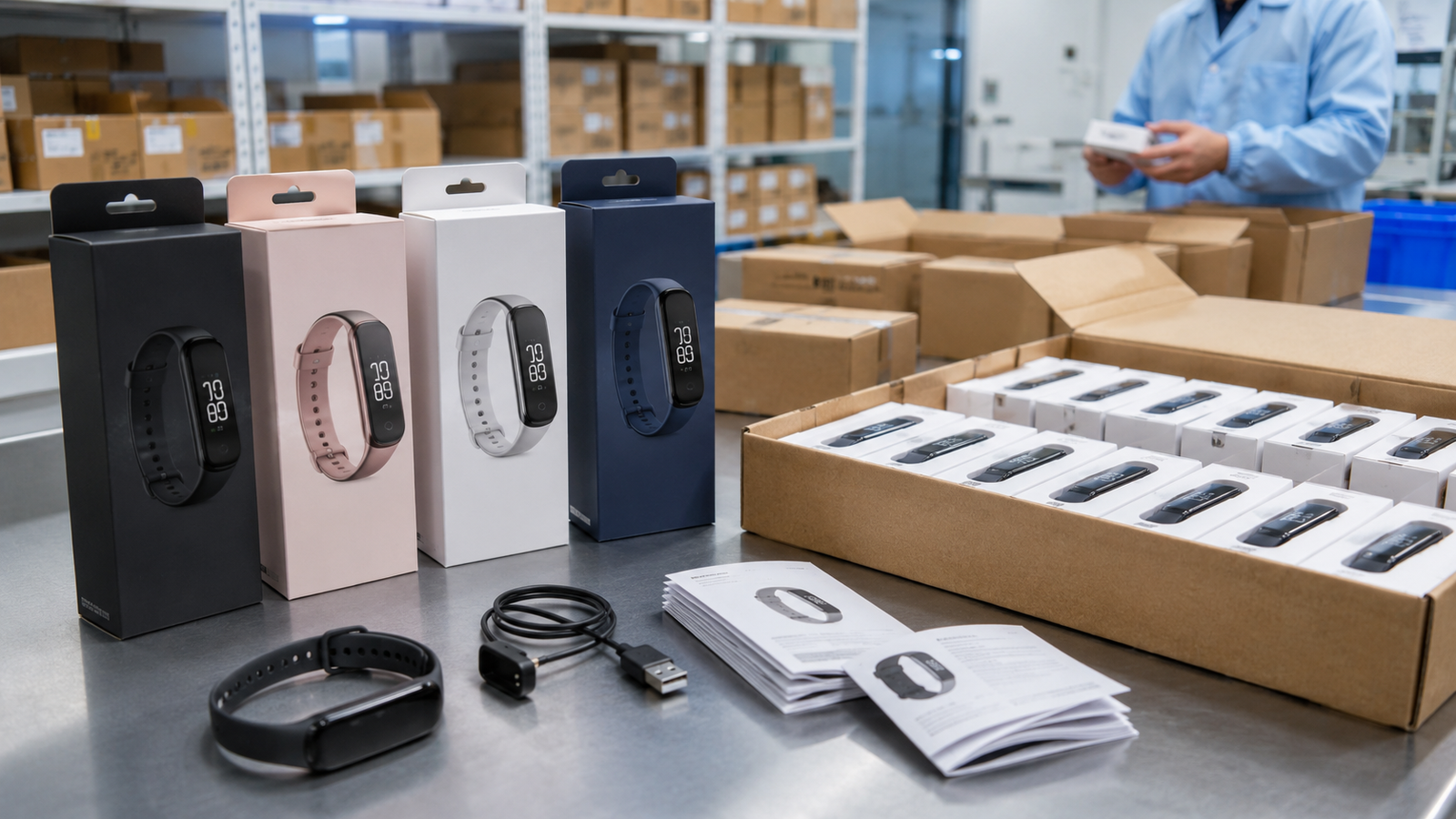
AI smart glasses suppliers: AI Smart Glasses for UK Retail Chains: 7 Critical Supplier Checks Before You Commit in 2026
AI smart glasses suppliers buyers need a supplier evaluation process that checks product fit, OEM/ODM capability, compliance documents, quality control, pricing, lead time, and after-sales support before placing a bulk order.
Table of Contents
Table of Contents
AI Smart Glasses for UK Retail Chains: 7 Critical Supplier Checks Before You Commit in 2026
AI smart glasses suppliers: Direct Answer: How Should a UK Retail Chain Choose an AI Smart Glasses Supplier?
For UK retail chains, choosing a supplier of AI smart glasses for UK retail programs should follow a documented evaluation process: confirm the target use case (live translation, audio, camera, or heads-up display), verify product specs against your shelf strategy, confirm CE and UKCA documentation, agree on MOQ and lead time in writing, and run an inspection protocol before the first bulk shipment. STAR KING supplies AI smart glasses through OEM/ODM and Private Label programs and can support UK-bound buyers from sample to mass production.
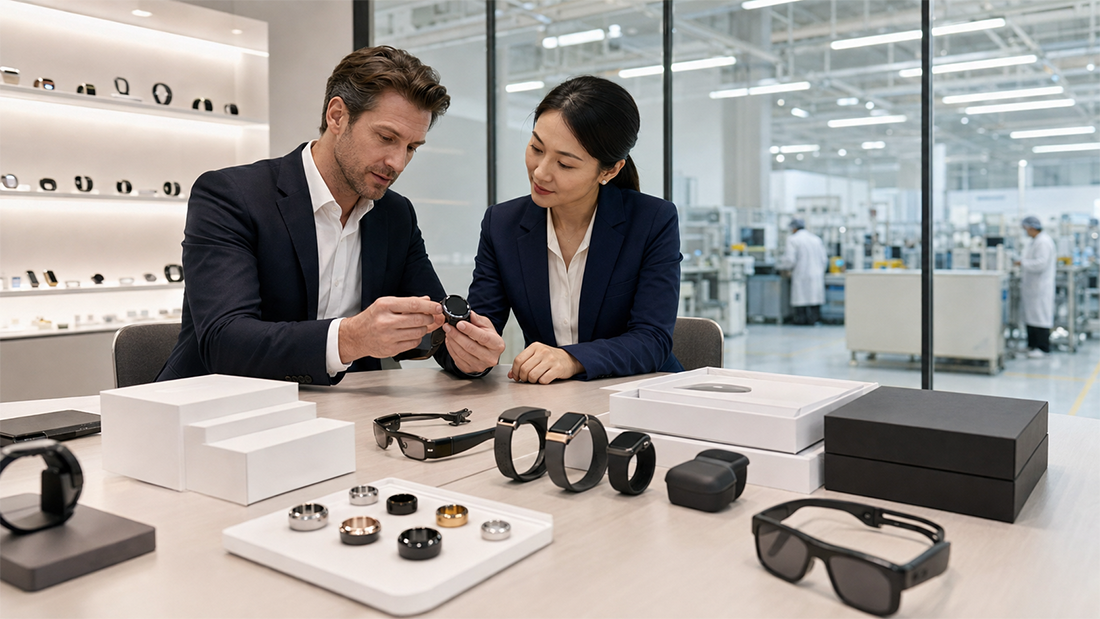
Table of Contents
- Introduction: Why UK Retail Chains Are Adding AI Smart Glasses in 2026
- Short Answer: The 7 Supplier Checks at a Glance
- Key Takeaways
- Key Facts for Buyers
- Check 1: Clarify the Use Case and Retail Channel
- Check 2: Evaluate AI Smart Glasses Specifications and Trade-offs
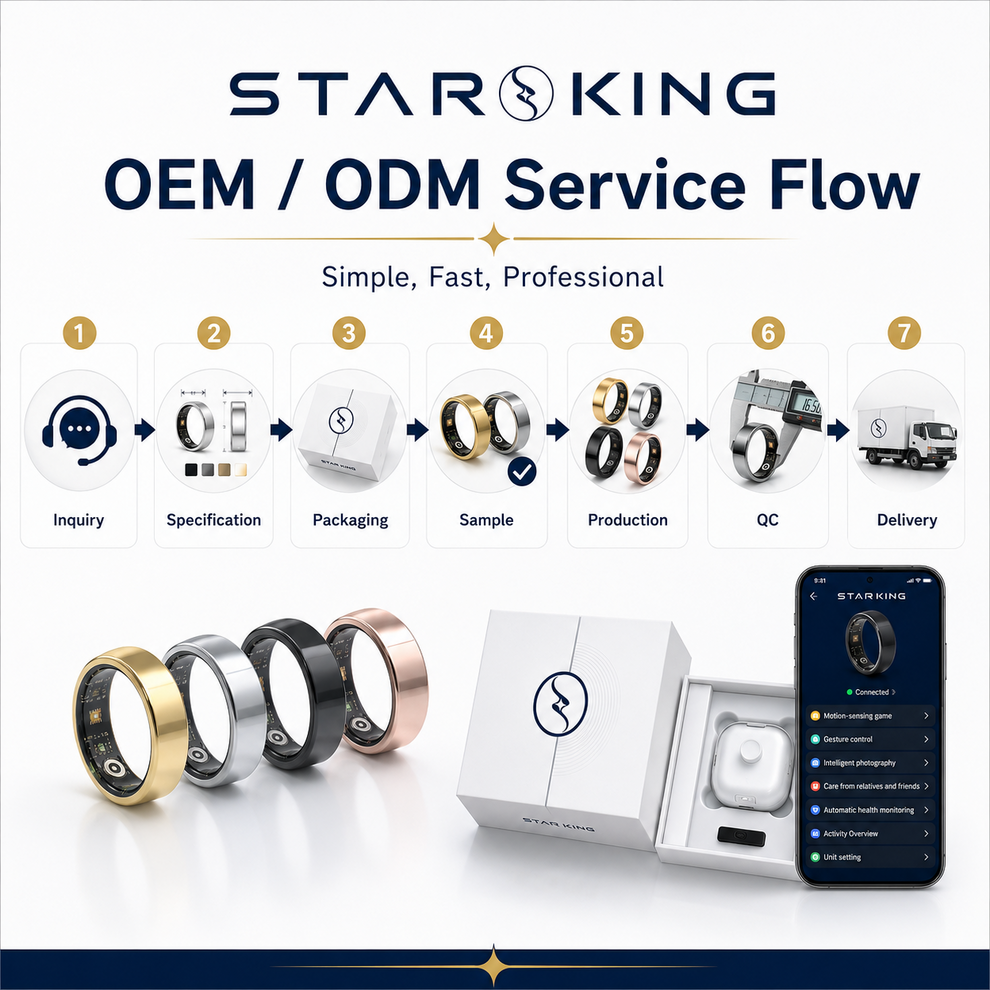
- Check 3: Confirm OEM, ODM, and Private Label Scope
- Check 4: Understand MOQ, Tooling, and Pricing Levers
- Check 5: Verify CE, UKCA, and Battery Compliance
- Check 6: Audit Lead Time, Capacity, and Stock Planning
- Check 7: Test Samples, Packaging, and After-Sales Support
- Common Mistakes UK Retail Buyers Make
- Practical Buyer Checklist
- FAQ
- Conclusion
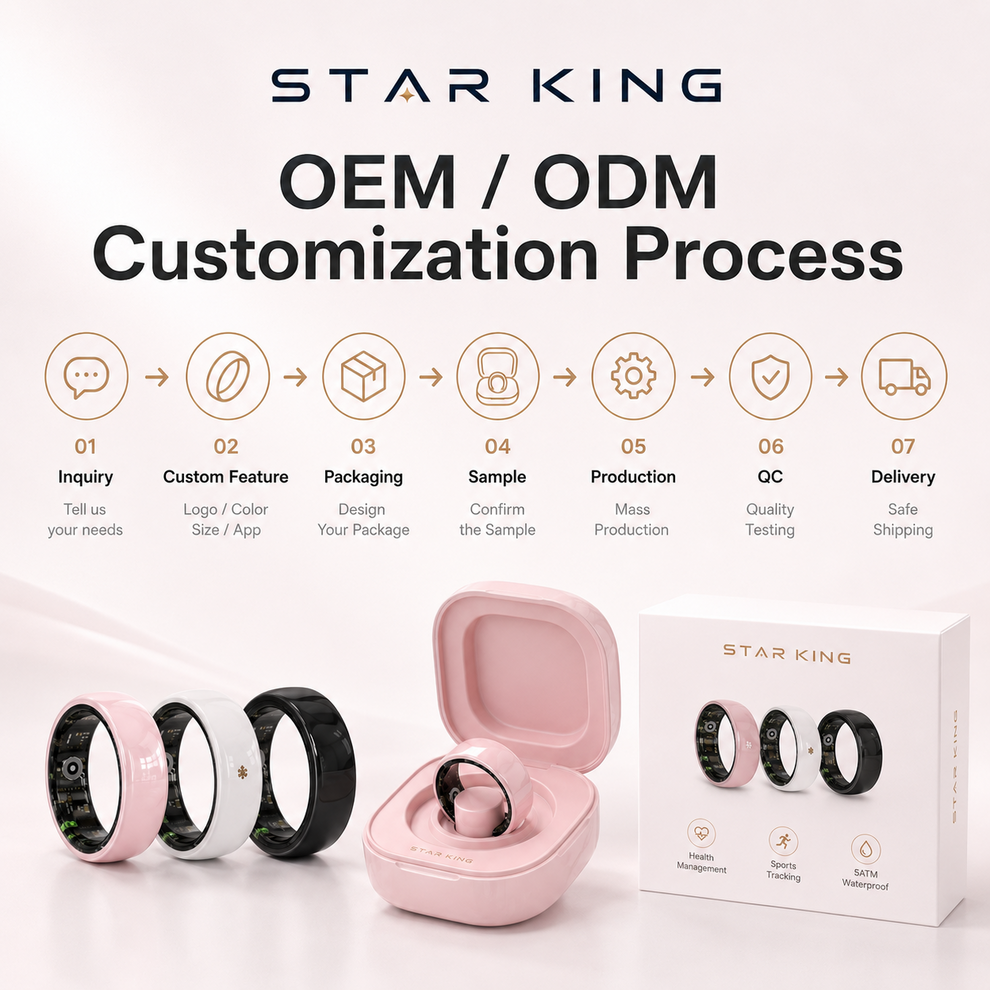
Introduction
AI smart glasses have moved from novelty demos to shelf-ready consumer hardware, and UK retail chains are now using them to test new conversion drivers in consumer electronics, travel, and premium gifting categories. The challenge is that the category is young, supplier claims vary widely, and the operational requirements differ from standard wearable sourcing. This guide gives UK buyers a structured supplier-selection framework covering AI smart glasses for UK retail: use case, specs, OEM/ODM scope, MOQ, certification, lead time, and testing.
It is written for retail chains, not consumers, so each check has a procurement consequence. Where a claim cannot be verified in advance, we use conservative language and mark it for confirmation. Where compliance depends on your specific configuration, we tell you to verify with your QA and legal teams.
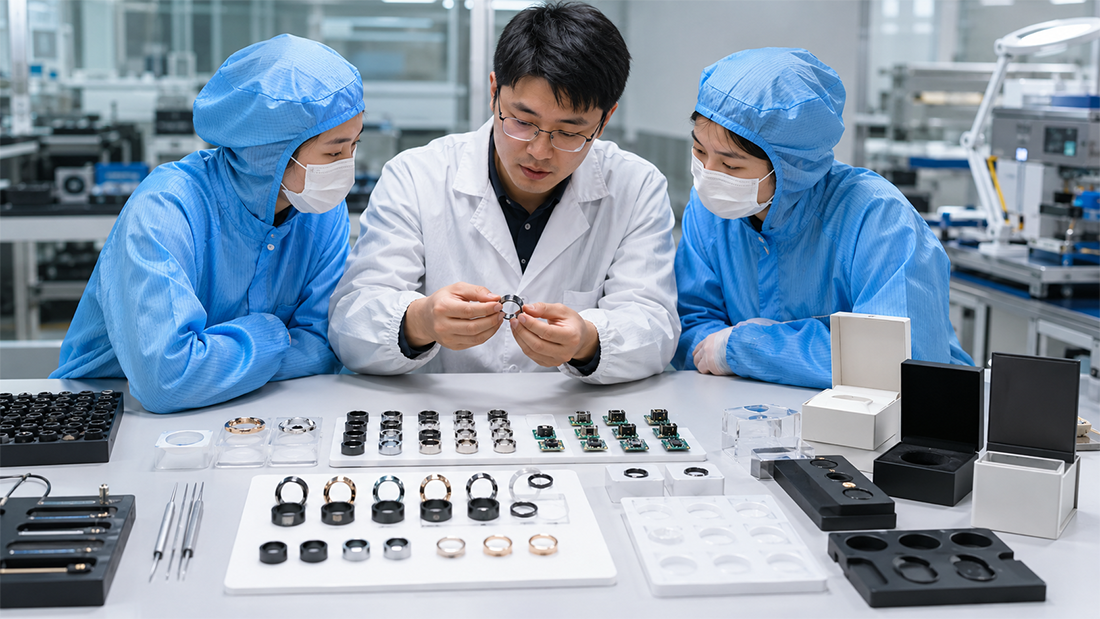
Short Answer: The 7 Supplier Checks at a Glance
The 7 supplier checks for AI smart glasses for UK retail are: (1) define the use case and channel; (2) validate the specification and trade-offs; (3) agree on the OEM, ODM, or Private Label scope; (4) model MOQ, tooling, and pricing; (5) confirm CE, UKCA, and battery documentation; (6) audit lead time, capacity, and stock planning; and (7) run sample, packaging, and after-sales validation. Each check maps to a contract clause, an inspection step, or a documented decision, so supplier selection becomes evidence-based rather than pitch-based.
Key Takeaways
- Use case definition determines the product tier, price band, and shelf placement.
- AI smart glasses specs rarely trade one-for-one; battery, audio quality, display, and weight interact.
- OEM, ODM, and Private Label are commercial models, not product features — clarify what changes and what does not.
- MOQ typically scales with customization depth: logo only vs. firmware vs. new tooling.
- CE and UKCA documentation should be treated as configuration-specific, not portfolio-wide.
- Battery shipping rules for lithium-based devices affect UK import routing and labeling.
- Pre-shipment inspection and after-sales spares planning protect retail margin.
Key Facts for Buyers
| Buyer Question | What to Verify | Where Verification Fits |
|---|---|---|
| Does the product fit my channel? | Use case, price band, display story | Merchandising and category review |
| Can the supplier support Private Label? | Logo, packaging, firmware, app branding | Commercial negotiation |
| What is the MOQ? | Per model and per customization level | Purchase order planning |
| Are CE and UKCA available? | Per product configuration and target market | QA and legal sign-off |
| How long is lead time? | Sample, mass production, and shipping windows | Seasonal and promo planning |
| What if units fail? | Warranty terms, spares, RMA process | After-sales contract |
Check 1: Clarify the Use Case and Retail Channel
AI smart glasses for UK retail are not a single product. They are a product family with different sensors, audio systems, display options, and price points. Before contacting suppliers, define the use case and the retail channel.
Use Cases UK Retailers Commonly Test
- Real-time translation and travel: AI smart glasses positioned for travelers and multilingual communication, often bundled with app-based subscription services.
- Audio-first smart glasses: Open-ear audio with voice assistant, positioned as a lifestyle alternative to earbuds.
- Camera and content capture: Photo/video capture aimed at creators and social users.
- Heads-up display: Basic information overlay for navigation or notifications.
Each use case pulls a different specification set. A translation-focused model prioritizes microphone arrays and low-latency processing. An audio model prioritizes speaker cavity and long-wear comfort. A camera model prioritizes sensor resolution and storage. The retail channel matters too: a flagship store demo has different requirements from an online-exclusive listing, and a gift SKU has different packaging expectations from a prosumer launch.
Check 2: Evaluate AI Smart Glasses Specifications and Trade-offs
Spec sheets are sales tools. Buyers should read them as trade-off documents. For AI smart glasses for UK retail, the following trade-offs determine cost, margin, and returns rate.
Specification Trade-off Table
| Specification | Typical Trade-off | Buyer Consequence |
|---|---|---|
| Battery capacity | Higher capacity increases weight and size | Affects comfort complaints and return rate |
| Display brightness | Brighter displays consume more power | Affects outdoor use cases and battery life claims |
| Speaker output | Added volume increases power draw | Affects audio positioning vs. earbuds |
| Onboard storage | Higher storage raises unit cost | Affects camera SKU price band |
| AI feature set | Cloud AI features depend on app and connectivity | Affects data policy, support load, and app experience |
| Frame materials | Premium finishes raise cost and tooling | Affects perceived value on display |
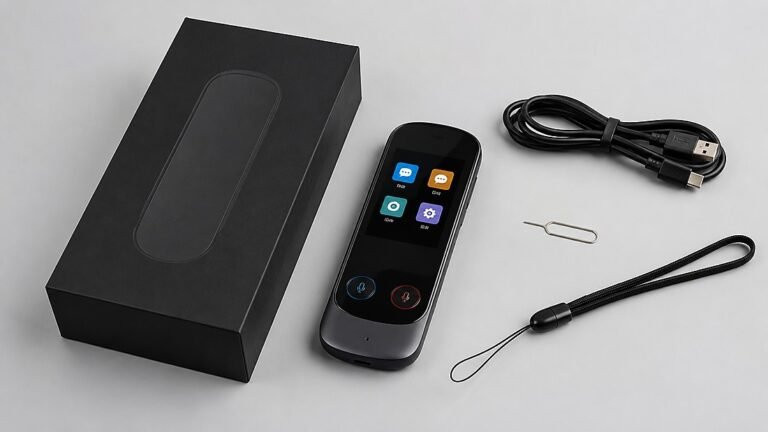
Ask suppliers which specification variants exist and which are fixed. A supplier that can explain trade-offs clearly is usually better prepared for QA and after-sales support. STAR KING can share configuration options for AI smart glasses; exact specifications should be confirmed against your target price band and use case. [Insert image: AI smart glasses product in retail display, alt text: AI smart glasses for UK retail on store shelf]
Check 3: Confirm OEM, ODM, and Private Label Scope
OEM, ODM, and Private Label are often used interchangeably in sales conversations, which creates cost and timeline misunderstandings. In practice, they describe how much of the product and brand you own.
Model Comparison
| Model | What Changes | What Stays | Typical Use |
|---|---|---|---|
| Private Label | Logo, packaging, basic app branding | Core hardware and firmware | Fast market entry with existing hardware |
| OEM Light | Firmware splash, app skin, booklets | Most internal hardware | Brand differentiation without tooling |
| OEM Full / ODM | Hardware, firmware, app, tooling | Supplier engineering framework | Differentiated SKUs and IP positions |
Buyers should ask: who owns the tooling? Who owns the app? Who owns the brand assets? What happens if we terminate the program? These questions should be answered in the commercial agreement, not verbally. For UK retail chains, Private Label is often the fastest path; full ODM is a longer program requiring prototyping, design freeze, and verification cycles.
Check 4: Understand MOQ, Tooling, and Pricing Levers
MOQ exists because every customization step adds setup, testing, and changeover cost. The four most common pricing levers for AI smart glasses are customization depth, packaging, volume, and payment terms.
MOQ Logic for AI Smart Glasses
- Logo-only Private Label: lower MOQ typically applies because no tooling changes are needed.
- Firmware or app customization: MOQ may increase because of development amortization.
- New tooling or industrial design: MOQ increases significantly due to tooling cost recovery.
- Custom packaging and accessories: MOQ depends on print and secondary supplier minimums.
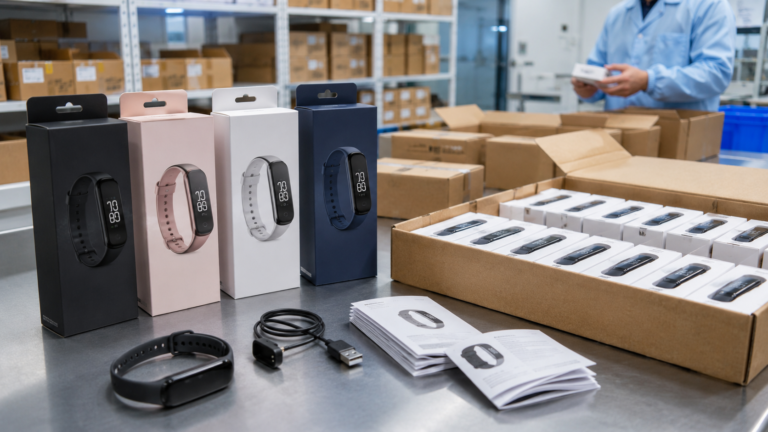
Do not negotiate price before the customization scope is frozen. A supplier can only quote accurately once the bill of materials, packaging, and app scope are defined. Buyers should also model landed cost in the UK, not just ex-works price. Landed cost includes freight, import duty, VAT treatment, insurance, and first-mile retail distribution. Ask for a landed-cost model, not a unit price alone. STAR KING provides quotation support for volume programs; MOQ values may vary by model and customization level and should be confirmed in writing. [Insert image: AI smart glasses OEM packing line, alt text: AI smart glasses for UK retail OEM packing and QC]
Check 5: Verify CE, UKCA, and Battery Compliance
UK retail chains face two layers of compliance: product compliance and shipping compliance. For the UK market, CE marking and UKCA marking requirements depend on the product category and current regulations, and buyers should verify with their legal and regulatory teams. AI smart glasses often contain radios (Bluetooth, Wi-Fi) and lithium-based batteries, which means additional requirements may apply.
Documentation Buyers Should Request
- Declaration of Conformity for the specific configuration.
- Radio equipment test documentation where applicable.
- Battery test documentation such as UN 38.3 for lithium cells and packs.
- Safety data sheet (MSDS) where relevant.
- RoHS and REACH statements where relevant.
Do not accept a certificate for a different configuration. AI smart glasses may ship in multiple SKUs, and compliance documentation should match the SKU being imported. Buyers should also confirm labeling requirements, e-waste obligations, and packaging recycling rules that may apply in the UK. See the official UK government guidance on UKCA marking and the placing manufactured goods on the market in Great Britain guidance for the current position. On battery shipping, refer to the IATA Dangerous Goods Regulations framework used by air carriers. Consult the FCC equipment authorization page if you also plan US distribution.
Check 6: Audit Lead Time, Capacity, and Stock Planning
Lead time in AI hardware is not a single number. It is a chain: sample lead time, tooling lead time (if applicable), mass production lead time, quality inspection window, and shipping transit time. UK retail buyers planning seasonal or promotional launches should map each stage to a calendar date and a buffer.
Lead Time Planning Table
| Stage | What It Includes | Planning Note |
|---|---|---|
| Sample | Sample build, testing, shipping | Budget at least one full iteration |
| Tooling | Mold design, trial, correction | Only if custom enclosure is required |
| Mass production | Component procurement and assembly | Component lead times vary by market |
| Inspection | Pre-shipment inspection | Should precede final payment |
| Shipping | Air or sea, customs clearance | Battery goods may require special routing |
Ask suppliers how capacity is allocated across customers and how they handle component shortages. Any capacity claim should be confirmed in the contract with a delivery schedule and remedies. STAR KING production lead time and capacity should be confirmed for the specific model and order volume. [STAR KING TO CONFIRM]
Check 7: Test Samples, Packaging, and After-Sales Support
Sample testing is the cheapest risk reduction available to a buyer. Retail chains should test not only the product but the entire unboxing and support experience, because returns in AI hardware are driven by setup confusion, app pairing issues, and unmet battery expectations.
Sample Test Protocol
- Functional test: pairing, translation, audio, camera, display.
- Battery test: real-world endurance versus claimed endurance.
- Comfort test: multi-hour wear by staff of different head sizes.
- App test: installation, account setup, firmware update.
- Packaging test: drop, print accuracy, retail shelf readiness.
- Support test: manual clarity, QR codes, warranty registration.
After-sales planning should cover warranty terms, spare parts, RMA procedures, and firmware update commitments. Ask whether spare parts are available for the expected product life cycle, and whether replacement units can be shipped in retail-ready condition. After-sales terms should be signed off in the supply agreement. For related sourcing questions, our smart retail and e-commerce solutions page covers channel-oriented delivery models.
Common Mistakes UK Retail Buyers Make
- Treating AI features as static. AI features often depend on the app, cloud services, and firmware roadmap. Confirm who maintains them after launch.
- Accepting a portfolio certificate. A certificate for one SKU does not automatically cover another.
- Ignoring lithium shipping classification. Battery documentation affects routing, carrier acceptance, and customs.
- Skipping pre-shipment inspection. Retail-ready packaging is part of the product, not a separate task.
- Failing to define after-sales ownership. Warranty cost is a margin issue, not a customer service formality.
Buyer Red Flags
| Red Flag | Why It Matters |
|---|---|
| Supplier cannot list SKU-level certification | Indicates documentation gaps for UK import |
| MOQ quoted without customization scope | Suggests the quote is not stable |
| No sample testing loop | Increases launch risk and return rate |
| Vague app or firmware roadmap | Affects long-term value and support cost |
| No after-sales spares commitment | Affects shelf life and customer satisfaction |
Practical Buyer Checklist
- Use case and retail channel documented.
- Target price band and margin model agreed.
- Spec variants compared side by side.
- OEM/ODM/Private Label scope defined in writing.
- MOQ, tooling, and payment terms confirmed.
- CE/UKCA and battery documentation requested per SKU.
- Lead time mapped to a launch calendar.
- Sample test protocol executed and recorded.
- Packaging and manual reviewed pre-production.
- Warranty, spares, and RMA terms signed.
FAQ
How long does it take to source AI smart glasses for UK retail from a new supplier?
Expect a sample cycle, a negotiation cycle, and a production cycle. If tooling is required, add design and correction time. The exact timeline depends on the configuration and should be confirmed with the supplier in writing.
What is a typical MOQ for AI smart glasses?
MOQ varies by model and customization level. Logo-only Private Label usually carries a lower MOQ than custom tooling or full ODM programs. Treat all MOQ figures as configuration-specific.
Does CE marking automatically cover UKCA requirements?
No. UK and EU market rules have diverged in several areas, and requirements depend on product category and current regulations. Buyers should verify with their legal and regulatory teams.
What battery documentation should I request?
Request UN 38.3 test summaries for lithium cells and packs, plus an MSDS where relevant. Carriers may also require additional shipping declarations.
Can I request branded packaging and a custom app skin?
Yes, in most Private Label programs. The scope, development time, and MOQ impact should be defined before quoting.
How should I handle after-sales for AI hardware?
Agree on warranty length, spare parts availability, RMA process, and firmware update commitments in the supply agreement, and test the support workflow during the sample stage.
What external references should a UK buyer read before importing?
Start with the UK government guidance on UKCA marking and placing goods on the market in Great Britain, the IATA Dangerous Goods Regulations framework for battery shipping, and the relevant radio equipment guidance for your product category.
Conclusion
AI smart glasses for UK retail are a sourcing decision, not a trend decision. Retail chains that define the use case, validate specifications, lock customization scope, confirm SKU-level compliance, map lead time, and test the unboxing and support experience are better positioned to protect margin and shelf reputation. The 7 supplier checks in this guide turn a complex category into a documented process.
Next Step
If you are evaluating AI smart glasses for a UK retail program, request product samples or a quotation and share your target use case, price band, and volume estimate. STAR KING can support OEM/ODM and Private Label scope discussions and provide configuration options for your compliance review. Request a quotation or discuss an OEM/ODM project, or explore our AI smart glasses product page and our B2B sourcing blog for related guides.
Discuss Your Smart Wearable OEM/ODM Project
Planning a smart ring, smart watch, smart band, AI glasses, AI translator, or AI voice mouse project? Contact STAR KING to discuss product positioning, sample testing, customization scope, certification requirements, lead time, and quotation details.

Team Star King

Scan WhatsApp QR code