
Private Label Drone Soccer: A Complete Sourcing Guide for Brand Owners
Private Label Drone Soccer: A Complete Sourcing Guide for Brand Owners
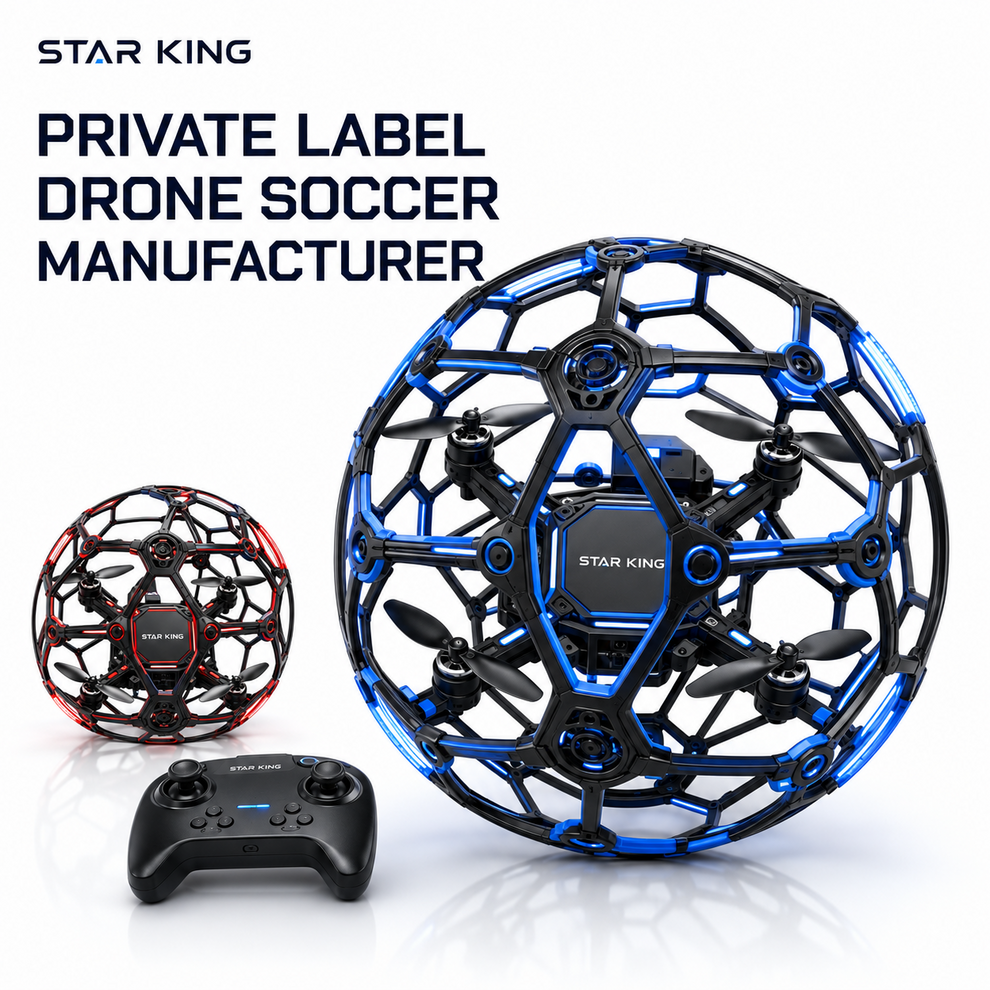
Drone soccer is emerging as a fast-growing sport in education, entertainment, and team-building markets worldwide. For private-label brands, sourcing drone soccer products offers a unique opportunity to enter a niche yet expanding segment. This guide walks through the key considerations—from product specifications and OEM/ODM options to certification, sampling, and mass production—so you can make informed decisions and avoid common pitfalls.
Key Takeaways
- Drone soccer combines competitive gameplay with STEM education, making it attractive for schools, sports leagues, and corporate events.
- Private-label brands can differentiate through branding, packaging, and optional software customization.
- MOQ typically ranges from 500–2,000 units depending on complexity and customization level.
- Certification requirements vary by target market; CE, FCC, RoHS, and UN38.3 are commonly required.
- Sample testing is critical to validate flight performance, durability, and safety before mass production.
Understanding Drone Soccer Products
What Is Drone Soccer?
Drone soccer is a team sport where players pilot small, agile drones equipped with protective cages to strike an opponent’s goal while defending their own. The drones are typically lightweight, durable, and designed for indoor or outdoor play. The sport is gaining traction in educational curriculums, recreational leagues, and even competitive tournaments.
Key Product Variations
When sourcing drone soccer for private label, you’ll encounter several configurations:
- Ready-to-Fly (RTF) Kits: Complete sets with drones, controllers, batteries, charging hubs, and goal sets. Ideal for beginners and schools.
- Drone-Only Units: For buyers who want to source accessories separately or already have compatible equipment.
- Customized Designs: Options for different cage colors, LED patterns, and branding on the drone body.
OEM vs. ODM: Which Model Fits Your Brand?
Understanding the difference between OEM and ODM is crucial for private-label sourcing.
| Factor | OEM (Original Equipment Manufacturing) | ODM (Original Design Manufacturing) |
|---|---|---|
| Design Ownership | Yours or modified from existing design | Manufacturer’s existing design with modifications |
| Customization Level | High (hardware, firmware, app) | Moderate (colors, logos, packaging) |
| Development Time | Longer (3–6 months) | Shorter (1–3 months) |
| MOQ | Higher (1,000–2,000 units) | Lower (500–1,000 units) |
| Investment | Higher (tooling, NRE fees) | Lower |
Most private-label brands start with an ODM approach to bring products to market faster with lower initial costs. As your brand grows, you can transition to OEM for more differentiation.
Key Procurement Decision Factors
1. MOQ and Pricing
MOQ for drone soccer products typically starts at 500 units for ODM and 1,000 units for OEM. Factors affecting MOQ include:
- Color & branding customization: Simple logo printing has lower MOQ than custom mold colors.
- Packaging complexity: Custom boxes with inserts raise MOQ.
- Firmware or App customization: Requires minimum volume to justify development costs.
Price per unit decreases as quantity increases. For example, an RTF drone soccer kit might cost $25–$40 at 500 units and drop to $18–$30 at 5,000 units, depending on specifications.
2. Product Specifications to Evaluate
- Drone size and weight: Must comply with local regulations (e.g., below 250g in many regions to avoid registration).
- Battery type and safety: LiPo batteries with UN38.3 certification. Consider hot-swappable designs.
- Motor type: Brushed vs. brushless. Brushless motors offer longer life and better performance but increase cost.
- Flight time: Typically 8–15 minutes per battery. A multi-battery kit extends play time.
- Cage design: Durability and impact resistance are critical for soccer gameplay.
- Controller frequency: 2.4GHz is standard; ensure compatibility with target market radio regulations.
3. Certification and Compliance
Certification requirements depend on your target market. Common certifications for drone soccer include:
- CE (Europe): Mandatory for drones sold in EU. Covers safety, EMC, and radio.
- FCC (USA): Required for wireless devices. Note that drones under 250g may still need FCC for the controller.
- RoHS: Required for EU market, often also requested by other regions.
- UN38.3: Required for lithium batteries for air transport.
- MSDS: Material Safety Data Sheet for batteries.
- EN 71 / ASTM F963: If marketed as a toy for children, additional toy safety standards may apply.
Buyers should verify with their manufacturer which certifications are included in the base price and which require additional fees. Some regions may require local testing or certification by notified bodies.
4. Sample Testing and Validation
Always request samples before committing to mass production. Key aspects to test:
- Flight stability and responsiveness: Test in both indoor and outdoor conditions.
- Durability: Drop test from 1-2 meters. The cage should withstand impacts without breaking.
- Battery life and charging: Verify real-world flight time and charger safety.
- Controller ergonomics: Especially important if targeting young users.
- Packaging robustness: Ensure protection during shipping.
Document the test results and compare with the supplier’s specifications. Use an inspection checklist to ensure consistency between samples and mass production units.
Common Mistakes and Red Flags for Private-Label Drone Soccer Sourcing
- Assuming one certification fits all: A model with CE alone may not meet FCC or local requirements. Always confirm country-specific certifications.
- Overlooking battery regulations: Lithium batteries are restricted in air cargo. Choose a manufacturer who understands IATA regulations and can provide proper documentation.
- Skipping mold costs in OEM: Custom molds for drone body or cage can cost $5,000–$20,000. Factor into total investment.
- Ignoring software/firmware customization: If you plan to offer a branded app or firmware features, discuss scope and costs early.
- Low-quality packaging: Retailers and schools expect unboxing experience. Invest in decent packaging to support brand perception.
Practical Buyer Checklist for Private-Label Drone Soccer
- Define target audience (schools, sports leagues, corporate teams) and required certification.
- Request quotes from at least three suppliers, specifying ODM vs. OEM preferences.
- Ask for a product datasheet including flight time, battery specs, weight, and materials.
- Request certification documents (CE, FCC, RoHS, UN38.3) for the specific model.
- Order 5–10 samples for functional testing and to evaluate build quality.
- Check supplier’s production capacity and lead time: typical lead time is 30–60 days after sample approval.
- Discuss warranty terms: common practices include 6–12 months for electronics.
- Confirm packaging design process: how many rounds of revision? Are dielines provided?
Frequently Asked Questions
1. What is the typical MOQ for private-label drone soccer kits?
MOQ usually starts at 500 units for ODM and 1,000 units for OEM. Some manufacturers offer lower MOQ for basic customization like logo printing.
2. How long does it take to develop a custom drone soccer product?
For ODM (existing design with minor changes), expect 1–3 months. OEM with new tooling can take 3–6 months from design to mass production.
3. What certifications are mandatory for importing drone soccer into the EU?
CE marking covering R&TTE/Radio Equipment Directive, EMC, and safety. Additionally, RoHS and UN38.3 for batteries. EN 71 may apply if classified as a toy.
4. Can I customize the drone’s appearance beyond logo and color?
Yes, OEM options include custom mold shapes, LED patterns, and cage designs. However, this requires tooling investment and higher MOQ.
5. How do I ensure consistent quality between sample and production?
Request a pre-production sample after mold/tooling approval. Use a pre-shipment inspection (PSI) service or internal checklist to verify critical parameters.
6. What is the average cost of developing a custom drone soccer kit?
Development costs vary widely. Basic ODM customization may start from $500–$2,000 for changes; full OEM development can exceed $20,000 including tooling. Always request a detailed quote.
7. Do I need to worry about drone registration?
Many countries (e.g., USA, EU) require registration for drones over a certain weight (250g). Design your product to stay under that limit if possible, or ensure compliance with local regulations.
Conclusion
Private-label drone soccer offers a promising entry into the growing sports-tech market. By carefully evaluating OEM/ODM models, understanding certification requirements, and conducting thorough sample testing, you can launch a competitive product with confidence. Partner with an experienced manufacturer like STAR KING to streamline the process from concept to delivery.
Ready to start your private-label drone soccer project? Request product samples and a customized OEM/ODM quote from STAR KING today.