smart rings for education technology: 7 Proven Steps to Source Smart Rings for Education Technology Buyers in 2026
7 Proven Steps to Source Smart Rings for Education Technology Buyers in 2026
Smart rings for education technology are compact wearables that can support student wellness, staff productivity, and campus safety programs when integrated correctly. For education technology buyers, the main sourcing challenges are finding a reliable OEM/ODM partner, verifying compliance for school environments, and managing MOQs and lead times without overspending. This guide gives you seven proven steps to evaluate and purchase smart rings for education technology in 2026, based on real B2B procurement criteria.
Table of Contents
Table of Contents
Table of Contents
- Step 1: Define Your Education Use Case Before You Request Quotes
- Step 2: Evaluate Suppliers with a Structured Scorecard
- Step 3: Choose Between OEM, ODM, and Private Label Models
- Step 4: Clarify Specifications and Feature Trade-offs
- Step 5: Manage MOQ, Pricing, and Lead Time Variables
- Step 6: Verify Quality Control and Compliance for Education Markets
- Step 7: Plan Packaging, Logistics, and Post-Sale Support
- FAQ: Smart Rings for Education Technology

Short Answer
To source smart rings for education technology, first define your use case, then evaluate suppliers using a structured scorecard, select an OEM/ODM or private label model, and verify compliance for your target markets. Focus on MOQ, lead time, and total landed cost. Always request samples and pre-shipment inspection before mass production. STAR KING provides smart ring manufacturing and customization; buyers should confirm exact capabilities directly.

Key Takeaways
- Education technology buyers should prioritize suppliers with experience in wearable customization and compliance documentation.
- OEM/ODM and private label options offer different levels of control, cost, and speed to market.
- MOQ and pricing depend on ring size, sensor configuration, battery, and packaging.
- Compliance with FCC, CE, RoHS, and battery safety standards is essential for school and campus deployments.
- A buyer checklist helps reduce risk and ensures all requirements are met before mass production.
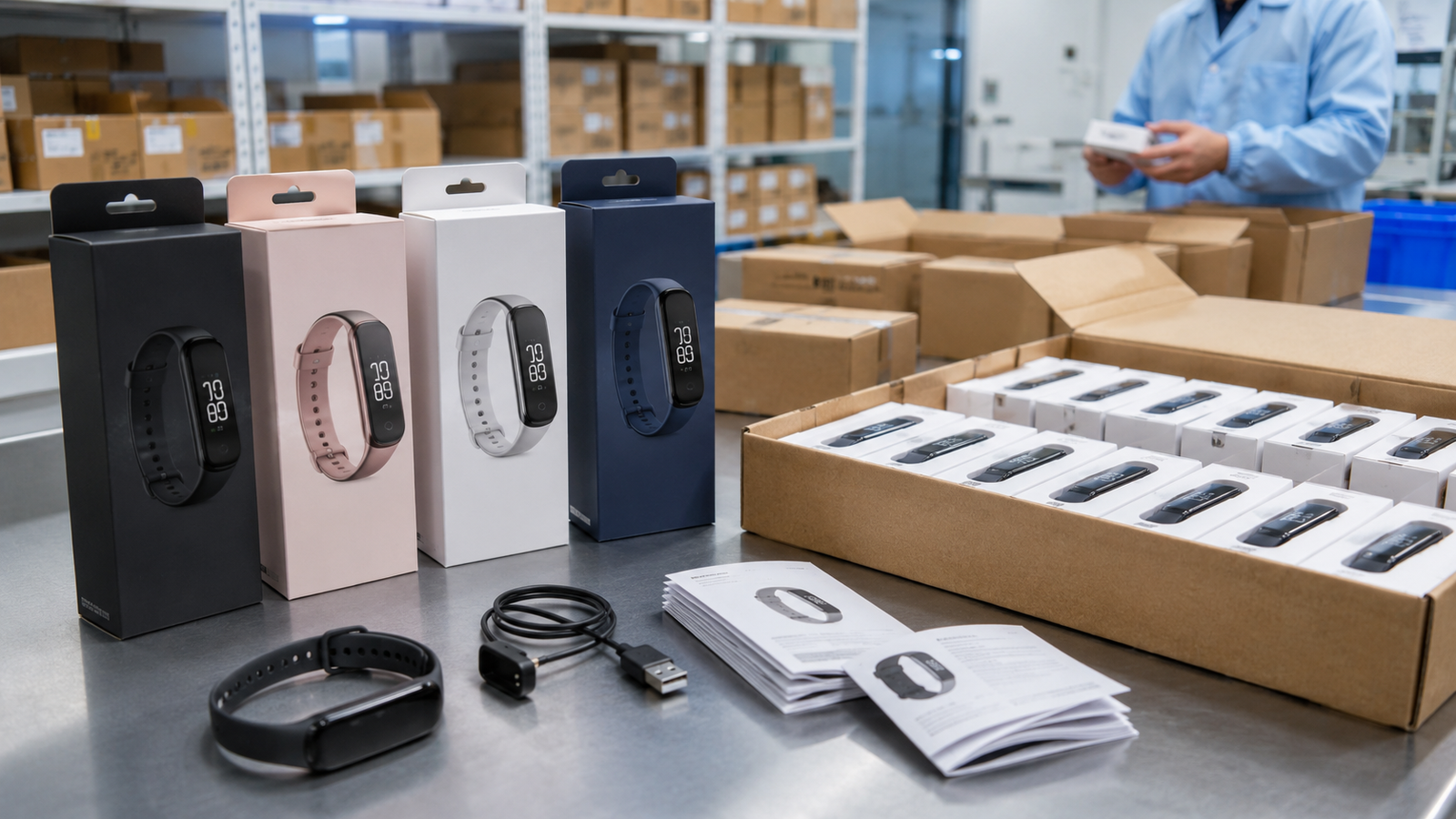
Key Facts for Buyers
| Factor | Typical Range / Consideration |
|---|---|
| MOQ | Often 500–1,000 units for custom models; may be higher for full OEM. |
| Lead Time | 30–60 days after sample approval, depending on customization and order volume. |
| Certifications | CE, FCC, RoHS, UN38.3 (battery) may be required; verify per product and market. |
| Customization | Logo, packaging, app branding, firmware adjustments possible with OEM/ODM. |
| Target Price | Varies by features; $15–$40 per unit at mid-volume, but confirm with supplier. |

Step 1: Define Your Education Use Case Before You Request Quotes
Before contacting suppliers, clarify how smart rings will be used in your education technology program. Common applications include student wellness tracking, staff wellness initiatives, and campus safety alerts. Each use case affects required sensors, battery life, data privacy, and integration needs.
For example, a student wellness program may need heart rate and sleep tracking, while a staff wellness program might prioritize stress monitoring and activity tracking. If your program involves remote health monitoring, additional compliance considerations apply. You can explore relevant applications on our Corporate Wellness solutions page.
Document your must-have features, desired battery life, and any software integration requirements. This will help you compare supplier capabilities objectively.
Step 2: Evaluate Suppliers with a Structured Scorecard
Education technology buyers should use a scorecard to assess potential smart ring manufacturers. Key criteria include:
- Manufacturing experience: Years in wearable production, OEM/ODM track record.
- Technical capability: Sensor integration, firmware, app development.
- Quality systems: QC processes, testing equipment, certifications.
- Compliance support: Ability to provide CE, FCC, RoHS, UN38.3 documentation.
- Communication: Responsiveness, English proficiency, project management.
- Scalability: Capacity to handle pilot orders and mass production.
Request a sample and a detailed quotation from each shortlisted supplier. Verify their claims with third-party audits or references if possible. A reliable partner like STAR KING can guide you through this process; you can see their smart rings product page for baseline specifications.
Step 3: Choose Between OEM, ODM, and Private Label Models
The sourcing model you choose impacts cost, control, and time to market. Here is a comparison:
| Model | Description | Best For | Customization Level |
|---|---|---|---|
| OEM | You provide design and specs; manufacturer builds. | Brands with unique IP | High |
| ODM | Manufacturer designs and builds; you brand it. | Speed to market | Medium |
| Private Label | Existing product with your logo and packaging. | Low-cost entry | Low |
For education technology, ODM is often a practical choice because it balances customization with faster development. Private label works for pilot programs. OEM is suitable if you have specific hardware requirements. Learn more about our Private Label OEM/ODM solutions.
Step 4: Clarify Specifications and Feature Trade-offs
Smart ring specifications vary widely. Common features include heart rate monitoring, blood oxygen monitoring, sleep tracking, and step counting. Trade-offs often involve battery life vs. sensor accuracy, and size vs. battery capacity.
For education use, durability and comfort are important. Rings must withstand daily wear by students or staff. Water resistance (e.g., IP68) is often expected. Confirm sensor types (e.g., PPG) and data accuracy claims with the supplier. Note that consumer-grade wearables are not medical devices and should not be marketed as such.
If your program requires integration with existing platforms, ask about API availability and app customization. STAR KING offers firmware and app customization; discuss your needs during the quotation stage. You may also consider Health & Fitness Wearables solutions for broader options.
Step 5: Manage MOQ, Pricing, and Lead Time Variables
MOQ and pricing are critical for education technology buyers, especially for pilot programs. Typical MOQs for custom smart rings range from 500 to 1,000 units, but can be higher for full OEM. Pricing depends on order volume, customization, and component costs.
Lead time usually starts after sample approval and deposit. Standard production may take 30–45 days for ODM, and 45–60 days for OEM with custom tooling. Add shipping time based on your location. Always confirm these details in your purchase order.
To reduce risk, consider a phased approach: start with a pilot order, then scale. Discuss MOQ flexibility with your supplier early. STAR KING can outline MOQ and lead time based on your project; request a quote to get specifics.
Step 6: Verify Quality Control and Compliance for Education Markets
Quality control and compliance are non-negotiable for education deployments. Schools and institutions often require proof of safety and electromagnetic compatibility. Key certifications include:
- FCC: Required for devices sold in the US. See FCC official site for details.
- CE: Required for the EU. Refer to EU CE marking guidelines.
- RoHS: Restricts hazardous substances in electronics.
- UN38.3: Required for lithium battery transport. See IATA lithium battery guidance.
Certification requirements depend on product configuration and target market. Ask your supplier for test reports and certificates. Ensure they conduct pre-shipment inspection and aging testing. STAR KING follows quality control procedures; verify specifics for your order.
Step 7: Plan Packaging, Logistics, and Post-Sale Support
Packaging and branding are important for education technology programs. Custom packaging with your logo and instructions adds professional value. Consider whether you need retail-ready or bulk packaging.
Logistics for smart rings involves lithium batteries, so air shipping requires UN38.3 test reports and proper labeling. Work with a freight forwarder experienced in dangerous goods. For post-sale support, clarify warranty terms (typically 12 months), return policy, and spare parts availability. A supplier that offers ongoing support reduces long-term headaches.
Common Mistakes and Buyer Red Flags
- Skipping sample testing: Always test samples for fit, functionality, and battery life before committing to mass production.
- Ignoring compliance: Assuming a product is certified without seeing certificates can lead to customs seizures or recalls.
- Choosing on price alone: Low-cost suppliers may cut corners on quality or compliance.
- Vague specifications: Not defining sensor accuracy or battery life can result in unsuitable products.
- No IP agreement: Protect your design and branding with a clear contract.
Practical Buyer Checklist for Smart Rings for Education Technology
- Defined use case and required features.
- Shortlisted suppliers with scorecard evaluation.
- Chosen sourcing model (OEM/ODM/Private Label).
- Confirmed MOQ, unit price, and lead time.
- Sample approved and tested.
- Compliance documents verified (CE, FCC, RoHS, UN38.3).
- Quality control plan agreed (pre-shipment inspection, aging test).
- Packaging and branding requirements specified.
- Logistics and battery shipping arranged.
- Warranty and after-sales terms confirmed.
FAQ: Smart Rings for Education Technology
Q1: What is the typical MOQ for custom smart rings for education?
A: MOQ often starts at 500–1,000 units for custom models. It depends on the level of customization and supplier. Confirm with your chosen manufacturer.
Q2: Which certifications are required for smart rings used in schools?
A: Requirements vary by country. Common ones include FCC (US), CE (EU), RoHS, and UN38.3 for battery transport. Always verify with your supplier and local authorities.
Q3: Can smart rings be integrated with education apps?
A: Yes, many manufacturers offer API or SDK for app integration. Discuss your specific platform and data privacy needs early.
Q4: How long does production take after ordering?
A: Lead time typically ranges from 30 to 60 days after sample approval, depending on customization and order volume.
Q5: Are smart rings suitable for students?
A: Smart rings can be used for wellness and activity tracking, but they are not medical devices. Ensure age-appropriate design and data privacy compliance.
Q6: What should I check in a pre-shipment inspection?
A: Check functionality, battery performance, build quality, and packaging. Request a report from a third-party inspector if needed.
Q7: Can I get a sample before placing a bulk order?
A: Yes, most suppliers provide samples for a fee, which is often credited toward the bulk order. Always test samples thoroughly.
Conclusion
Sourcing smart rings for education technology requires careful planning and verification. By following these seven steps, you can select a reliable OEM/ODM partner, ensure compliance, and manage costs effectively. Remember to define your use case, evaluate suppliers rigorously, and always test samples. STAR KING offers smart ring manufacturing and customization; contact us to discuss your project.
STAR KING CTA
Ready to source smart rings for your education technology program? Request a quotation or discuss an OEM/ODM project with STAR KING. We can help you compare specifications, confirm certification requirements, and plan your order. Get a quote today.
Discuss Your Smart Wearable OEM/ODM Project
Planning a smart ring, smart watch, smart band, AI glasses, AI translator, or AI voice mouse project? Contact STAR KING to discuss product positioning, sample testing, customization scope, certification requirements, lead time, and quotation details.

Team Star King
Scan WhatsApp QR code