How to Choose a Beginner Drone Supplier in China for EU Distributors
How to Choose a Beginner Drone Supplier in China for EU Distributors
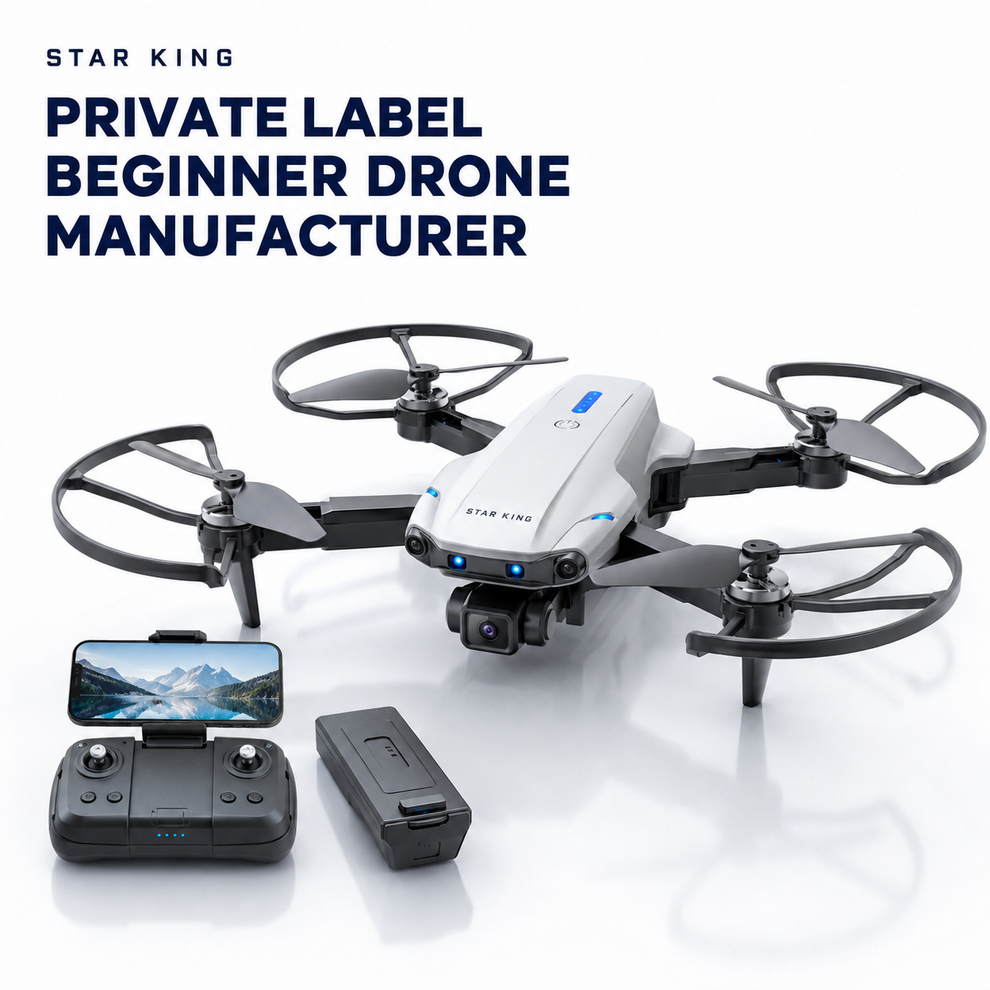
For EU distributors entering the drone market, selecting the right Chinese supplier for beginner drones is a critical decision. This guide provides a structured approach to evaluate manufacturers, ensuring product quality, regulatory compliance, and a reliable supply chain.
Key Takeaways
- Define your product requirements and target price point before engaging suppliers.
- Verify supplier credentials, including business licenses and existing certifications.
- Assess manufacturing capabilities, quality control processes, and customization options.
- Understand EU compliance requirements such as CE, RoHS, and battery regulations.
- Calculate total landed cost, not just unit price.
- Start with sample testing and pre-production checks.
- Plan for MOQ, lead times, and after-sales support.
Defining Your Product and Market Strategy
Before approaching any supplier, you must have a clear specification for your beginner drone line. Are you targeting first-time flyers, hobbyists, or educational buyers? Consider features like camera quality (e.g., 720p vs 4K), flight time (typically 5-15 minutes for beginner models), control range, and safety features like propeller guards and auto-hover.
Your market strategy will influence customization needs. If you plan to sell a private label drone, you’ll need a supplier who can handle logo placement, custom packaging, and possibly app firmware adjustments.
Identifying Potential Suppliers
China is the hub of drone manufacturing, especially in Shenzhen and Guangdong. You can find suppliers via trade fairs like Canton Fair, online platforms like Alibaba and Global Sources, or through industry referrals. However, not all suppliers are equally capable. Start by creating a longlist of 10-15 candidates and then filter them using the criteria below.
Evaluating Manufacturing Capabilities
When you contact a supplier, ask for their company profile, factory photos or videos, and details about their production lines. Specifically request information about:
- Production capacity for beginner drones (units per month).
- In-house capabilities: tooling, injection molding, SMT, assembly, and testing.
- Customization capabilities: color, logo, packaging, and firmware.
- Experience with exporting to the EU.
If possible, request a video call to see the production floor and discuss their quality control procedures. Many suppliers are willing to do this to build trust.
Assessing Quality Control Processes
Quality control is non-negotiable, especially for a product like a drone that must be safe and reliable. Ask about their inspection checkpoints: incoming materials, in-process QC, and final functional testing. Do they perform flight tests on each unit? What is their defect rate? While you cannot verify claims without samples, the thoroughness of their answers is indicative.
Additionally, ask if they use third-party inspections or if you can arrange your own pre-shipment inspection. A serious supplier will welcome this.
Understanding Compliance Requirements for the EU
EU distributors must ensure their drones meet all relevant regulations. Key compliance areas include:
- CE Marking: Over 90% of drones require CE marking under the Radio Equipment Directive (RED) and EMC Directive.
- RoHS: Restricts hazardous substances in electronics.
- Battery Regulations: The EU has specific requirements for lithium-ion batteries, including UN38.3 testing and transport regulations (AD/RID).
- WEEE: Registration for waste electrical and electronic equipment may be required.
Ask your supplier for copies of existing certificates for their beginner drone models. If they don’t have them, you may need to invest in testing and certification. Note that certification requirements depend on the specific configuration and target market; buyers should verify with a local compliance expert.
OEM/ODM and Private Label Options
One of the biggest advantages of sourcing from China is the flexibility of OEM/ODM manufacturing. With OEM, you simply resell the supplier’s existing drone with your logo. With ODM, you can modify the design, firmware, and packaging to differentiate your brand.
For EU distributors, private labeling is a common strategy to build a local brand. Clarify what customization is possible: logo on the drone body, controller, and packaging; custom colors; custom app UI; and even customized firmware to alter flight behaviors. Ensure the supplier offers a formal ODM agreement that protects your design and mold ownership.
MOQ and Lead Time Considerations
Beginner drone suppliers typically have MOQs ranging from 500 to 2,000 units, depending on the level of customization. Standard models may have lower MOQs, while private label customization could raise it. Clarify whether the MOQ applies per SKU and if you can mix colors or variations.
Typical lead times for production are 30-45 days after sample approval, plus shipping time. Factor this into your inventory planning.
Cost Analysis: Beyond Unit Price
When comparing quotes, do not focus solely on the unit price. Consider the total landed cost, which includes:
- Product cost per unit.
- Engineering and tooling fees (if any).
- Packaging costs (if customized).
- Freight costs (air or sea).
- Customs duties and import VAT in your country.
- Compliance testing and certification costs.
- Warehousing and distribution costs.
Use the table below to compare two hypothetical supplier quotes:
| Cost Component | Supplier A (Standard) | Supplier B (OEM Custom) |
|---|---|---|
| Unit Price (FOB) | $25.00 | $28.00 |
| Tooling/Setup Fee | $0 | $1,500 |
| Packaging Customization | $0.50/unit | $1.00/unit |
| Compliance (if needed) | Included | $2.00/unit |
| Freight (per unit, sea) | $2.50 | $2.50 |
| Import Duty (assume 2%) | $0.50 | $0.56 |
| Landed Cost per Unit | $28.50 | $34.06 |
As you can see, customization increases upfront costs, but may lead to higher retail margins due to differentiation.
Sample Testing and Product Validation
Before committing to a purchase order, request 2-5 samples for testing. Evaluate flight stability, camera quality, battery life, controller responsiveness, and build quality. Test the drone in various conditions. Also assess the charging time and available safety features.
Additionally, verify that the drone comes with a user manual in the languages of your target markets and that the packaging is suitable for retail display.
Common Mistakes and Red Flags When Sourcing from China
- Choosing the lowest price without vetting: It often leads to poor quality and higher return rates.
- Ignoring certification: You risk legal issues and reputational damage if your drones don’t comply.
- Underestimating shipping costs: Especially for large items like drones, air freight can be expensive.
- Not clarifying MOQ and lead times: Delays can hurt your launch plans.
- Failing to protect your IP: Without an NDA and proper contract, your design could be copied.
- Trusting uncorroborated claims: Verify certifications and factory audits independently.
Practical Buyer Checklist for Choosing a Beginner Drone Supplier
- [ ] Define your product specs and target price point.
- [ ] Shortlist 10-15 suppliers based on capability and reviews.
- [ ] Verify supplier credentials and request business licenses.
- [ ] Ask for a factory video or arrange a visit.
- [ ] Request samples and conduct thorough testing.
- [ ] Verify certification status for CE, RoHS, UN38.3, etc.
- [ ] Check MOQ, lead time, and payment terms (e.g., 30% deposit, 70% before shipment).
- [ ] Confirm after-sales support and spare parts availability.
- [ ] Assess total landed cost and pricing margins.
- [ ] Draft a contract covering IP, confidentiality, and acceptance criteria.
FAQ
What are the CE requirements for beginner drones in the EU?
Most drones require CE marking, which may involve compliance with the Radio Equipment Directive (RED), EMC, and low voltage directives (if applicable). They may also need to comply with the EU’s drone regulation (EU) 2019/947. It’s best to consult a conformity assessment body to confirm requirements for your specific product.
What is the typical MOQ for private-label beginner drones?
It varies by supplier and customization level. For standard models, MOQs may be as low as 500 units. For full private-label with custom packaging, the MOQ might be 1,000-2,000 units. Always clarify with each supplier.
Can I use a supplier’s existing certifications for my brand?
Generally, no. Certifications are often tied to the manufacturer and the specific model, not the seller. You may need to get your own certification or a supplier’s certificate may be accepted if the product is identical, but it’s best to verify with a regulatory expert.
How do I ensure quality if I cannot visit the factory?
You can request a pre-shipment inspection from a third-party agency like SGS, TÜV, or Intertek. Alternatively, ask the supplier to perform a video of the production and testing process, and ultimately, samples are your best assurance.
What are typical lead times for beginner drone orders?
Production usually takes 30-45 days after sample approval. Shipping to the EU by sea adds 30-40 days, while air freight is about 5-10 days. Plan accordingly.
Should I sign a contract with a Chinese drone supplier?
Absolutely. A contract should cover payment terms, delivery schedules, quality standards, confidentiality, and intellectual property ownership. Avoid verbal agreements.
How do I handle accessory and spare parts provision?
Ask the supplier to list available spare parts (e.g., propellers, batteries, controllers) and their prices. Establish a clear process for reordering to maintain customer satisfaction.
Conclusion
Choosing the right beginner drone supplier in China requires rigorous evaluation of capabilities, quality control, compliance, and total costs. By following the structured approach in this guide, you can mitigate risks and build a successful drone distribution business in the EU.
At STAR KING, we offer a range of OEM/ODM solutions for beginner drones, including custom branding, packaging, and firmware. Our team can support you with samples and detailed specifications to help you make an informed decision. Request a quotation or discuss your OEM/ODM project with us today.
hellohello