
Smart Ring Supplier Vetting: 12 Critical Checks for Private-Label Brands in 2026
Smart Ring Supplier Vetting: 12 Critical Checks for Private-Label Brands in 2026
Smart ring supplier vetting is the structured process private-label brands use to confirm that an OEM can build to your specification, document compliance for your target markets, and scale from samples to repeat production. It goes beyond price and samples to cover factory capability, certification path, quality systems, tooling ownership, and lead time. This guide gives private-label brands 12 critical checks — plus contracts, red flags, and a buyer checklist — to make a defensible supplier decision in 2026.
Table of Contents
Table of Contents
smart ring supplier vetting: Table of Contents
- Short Answer: What Should Private-Label Brands Check First?
- Key Takeaways
- Key Facts for Buyers
- 1. OEM vs ODM vs Trading Company
- 2. Factory Capability and Manufacturing Controls
- 3. Product Specification and Feature Trade-Offs
- 4. Sensor Configuration and Validation
- 5. App, Firmware, Cloud, and API Ownership
- 6. MOQ and Price Drivers
- 7. Sampling and Verification
- 8. Quality Control Systems
- 9. Certifications and Market Compliance
- 10. Battery and Shipping Safety
- 11. Lead Time and Production Planning
- 12. IP, Tooling, and Molds
- Supplier Comparison Matrix
- Common Mistakes and Buyer Red Flags
- Practical Buyer Checklist
- Frequently Asked Questions
- Conclusion
Short Answer: What Should Private-Label Brands Check First?
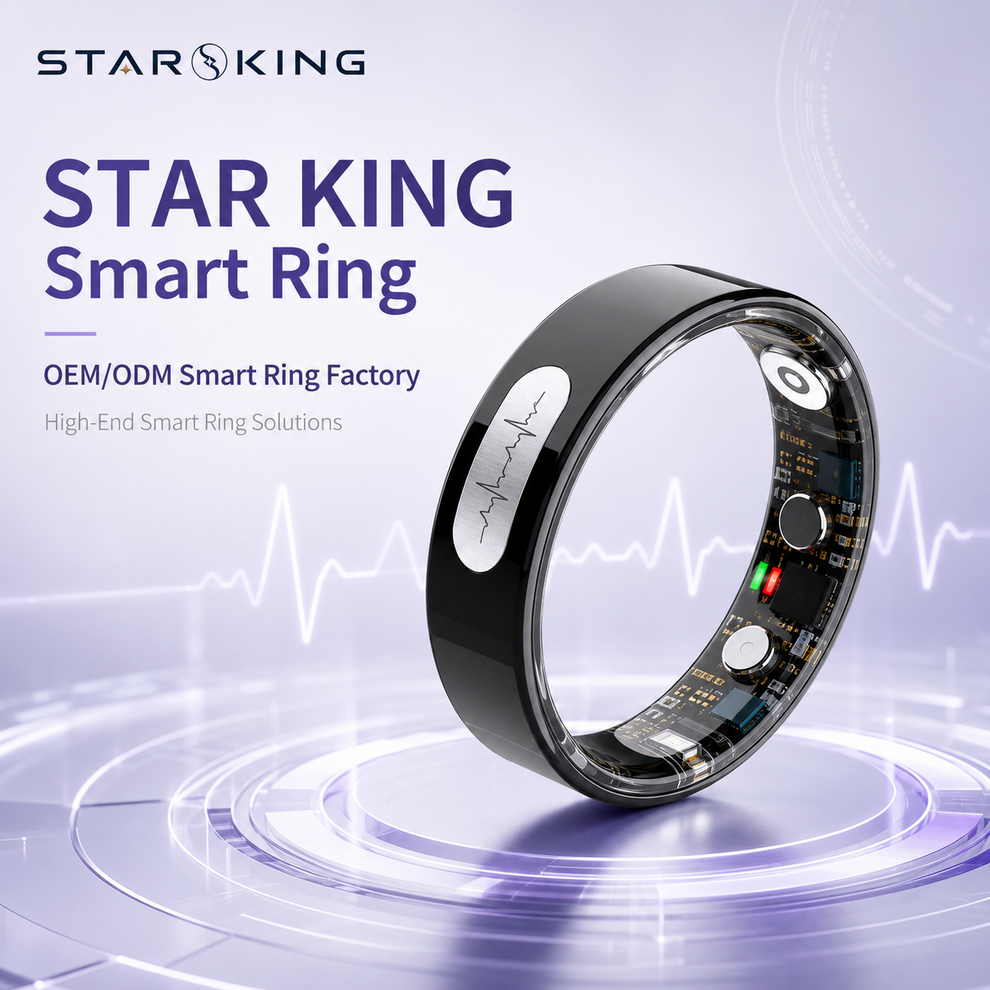
In smart ring supplier vetting, private-label brands should first confirm three things: (1) whether the supplier manufactures the ring body itself or only rebrands a finished module; (2) whether it can document the compliance path (for example CE, FCC, RoHS, UN38.3) for your target markets; and (3) how it handles firmware, app, and tooling ownership across contracts. Everything else — price, packaging, colors — depends on these three answers. If a supplier is vague about any of them, treat it as a risk before you request samples.
Key Takeaways
- Verify whether you are dealing with an OEM/ODM manufacturer or a trading intermediary before quoting.
- Ask for the compliance path per SKU and per market; certification needs typically depend on configuration and destination.
- Lock down firmware, app, cloud, and tooling ownership in writing — not in a verbal promise.
- MOQ and unit price are driven by housing, sensor set, battery, tooling, and packaging, not by a single headline number.
- Sample development should include a written test plan covering sensors, battery, waterproofing, and app pairing.
- Pre-shipment inspection and a documented defect standard reduce post-launch returns and marketplace risk.
- A reliable OEM will explain what it does not do as clearly as what it does.
Key Facts for Buyers
| Item | Typical Range / Reality | What Buyers Should Verify |
|---|---|---|
| Supplier type | OEM, ODM, or trading company | Factory audit scope, cage code, or plant documentation |
| MOQ | Often low for stock ODM, higher for custom tooling | [STAR KING TO CONFIRM] tiered MOQ by model and customization |
| Certification path | CE/FCC/RoHS/UN38.3/MDS often relevant | Per-SKU, per-market certificate or test report |
| Sample lead time | Varies by customization depth | Written timeline and sample fee policy |
| Mass production lead time | Depends on PO quantity and component supply | Contractual delivery dates and delay terms |
| QC | IQC, IPQC, OQC, pre-shipment inspection | Defect standard (AQL) and inspection scope |
| Tooling and mold | Ownership is contract-defined | Written ownership and transfer clause |
| App / firmware | Shared, licensed, or dedicated | Data ownership, hosting, and update SLA |
1. Confirm Whether the Supplier Is an OEM, ODM, or Trading Company
The single most common sourcing error is quoting a trading company that presents itself as a manufacturer. Ask directly: “Who owns the injection mold for the ring housing?” and “Who writes the firmware?” A genuine manufacturer can answer both with named processes and dates. A trading intermediary usually forwards the question to a third party.
For smart rings, the three common models are:
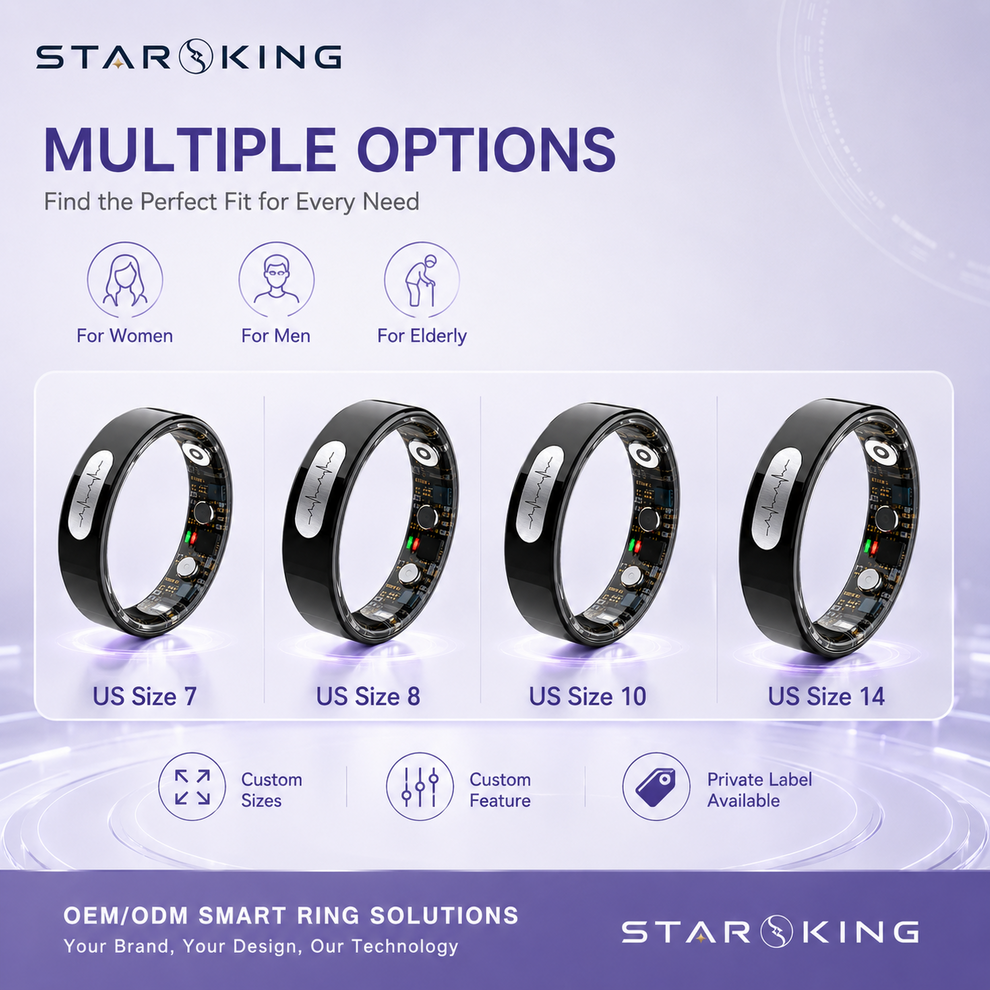
- ODM stock model: You select an existing design, apply your logo and packaging. Fast, low tooling cost, but limited differentiation.
- OEM customized model: You specify housing, sensor set, battery, firmware behavior, and packaging. Higher tooling and MOQ, but stronger brand ownership.
- Hybrid model: You take an existing platform and customize the ring, app, and packaging. Most common for private-label brands entering the category.
Background verification is not just commercial — energy and materials regulation can also be relevant to certain markets, and buyers should verify which rules apply before committing. For example, U.S. customs and consumer product rules are published by the Federal Trade Commission and by U.S. Customs and Border Protection. When in doubt about a supplier’s stated market access, ask for the actual test report — not a PDF screenshot.
2. Verify Factory Capability and Manufacturing Controls
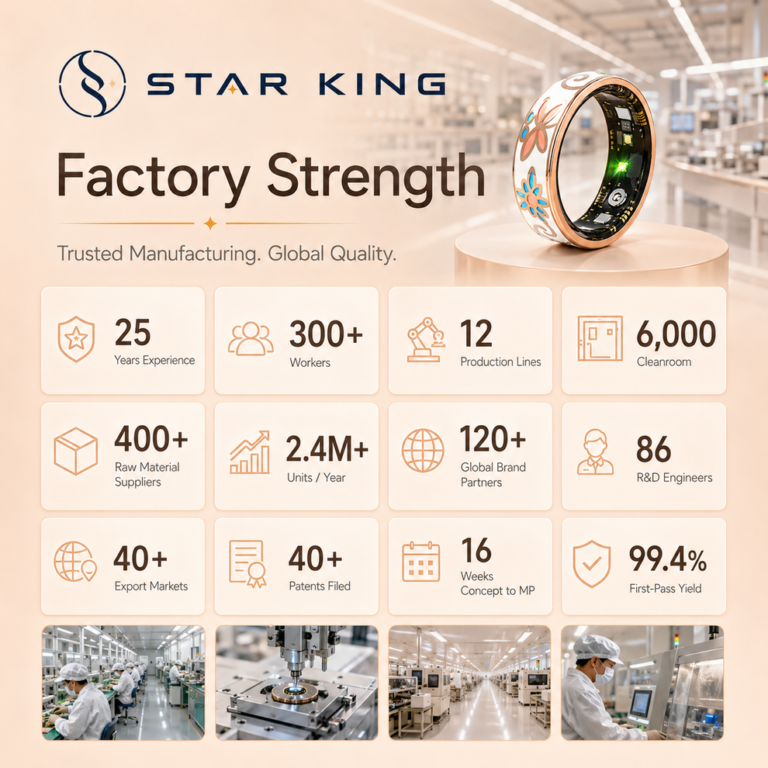
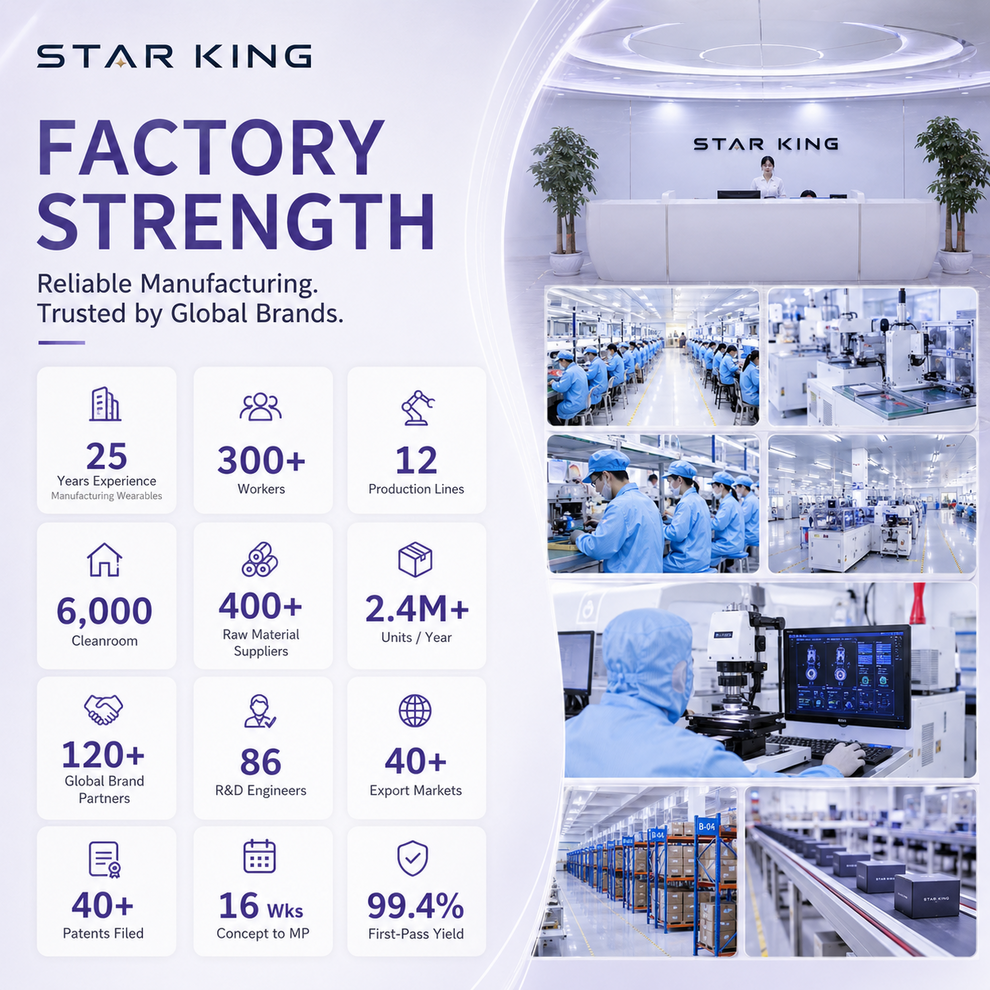
Smart rings are small, but the manufacturing line is not. A capable supplier should be able to describe the ring assembly process step by step. Typical steps include housing molding or CNC prep, sensor and battery placement, sealing, firmware flashing, functional test, cosmetic inspection, and packaging.
Ask for the following documents or answers:
- Which process steps are done in-house and which are outsourced?
- How is the ring sealed and tested for IP rating?
- How is firmware flashed and verified before sealing?
- How is battery capacity and cycle behavior monitored during production?
- What is the monthly capacity for the specific ring model, and how is it scheduled across customers?
[STAR KING TO CONFIRM] should be replaced with the confirmed in-house process list, monthly capacity, and quality-lab scope once verified with the STAR KING engineering team. Do not accept a verbal capacity claim without a written schedule commitment.
3. Review Product Specification and Feature Trade-Offs
Every smart ring is a set of deliberate trade-offs. The three that most affect a private-label program are battery life, feature scope, and form factor. More sensors or brighter displays consume power; a slimmer ring may reduce battery volume; adding cellular or GPS changes the certification and battery profile.
Before approving a specification, ask the supplier to map features against these constraints:
| Decision | What It Enables | What It Costs |
|---|---|---|
| Larger battery | Longer runtime between charges | Thicker ring, heavier feel |
| More sensor types | Broader health data story | More power draw, higher BOM, more calibration |
| Higher IP rating | Better water resistance story | More complex sealing and test |
| Advanced app features | Stronger subscription or app engagement | Higher firmware/app development cost |
For a broader view of the category, STAR KING’s smart rings product page shows the current hardware options and form factors that private-label brands can build from.
4. Confirm Sensor Configuration and Data Handling
Smart ring performance depends on sensor selection, firmware algorithms, and calibration. Buyers should never accept “accurate” as a specification. Instead, ask:
- Which sensor components are used, and from which supplier?
- Are health metrics computed on-device, in the app, or in the cloud?
- How is raw data stored, encrypted, and deleted?
- What is the documented sensor validation method?
Consumer wearables are not medical devices. Heart rate, blood oxygen, sleep, and activity metrics in a consumer smart ring are for wellness and general information, not diagnosis. Buyers should phrase marketing claims carefully and consult local advertising rules before publishing health claims. In the United States, the FDA medical device pages explain when a product crosses into regulated territory.
5. Clarify App, Firmware, Cloud, and API Ownership
The app is often the most underestimated part of a private-label smart ring program. A ring without a stable app has no retention. Before signing, define:
- Is the app white-label (fully branded), shared (multi-brand), or dedicated?
- Who hosts the cloud services, and in which region?
- Who owns user data, and what happens to it if the relationship ends?
- What is the firmware update schedule and who pays for updates?
- Is there an API or SDK for integration with your existing platform?
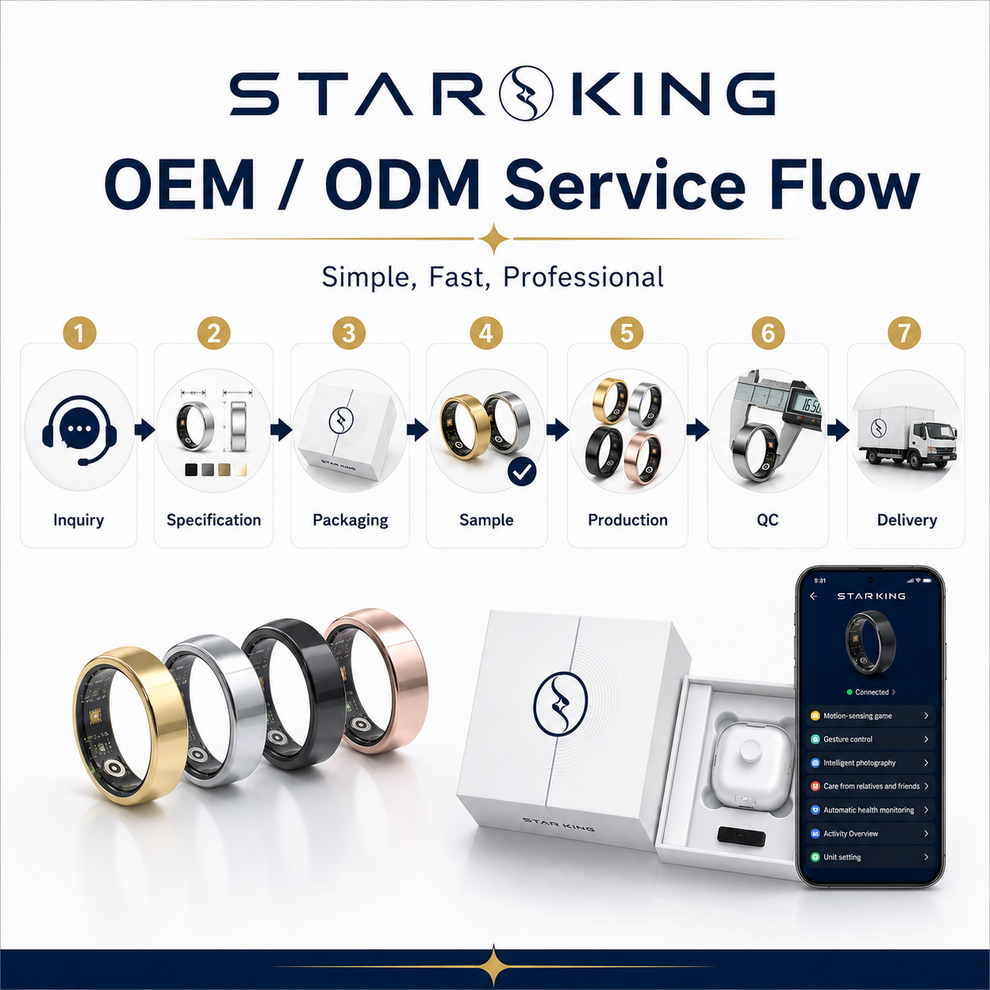
If you plan to integrate with a health platform, corporate wellness program, or retailer app, request the API documentation before the first production order. The private-label OEM/ODM solution page outlines the customization layers STAR KING supports across hardware, app, and packaging.
6. Understand MOQ and What Drives Unit Price
MOQ is not a single number — it is the output of several cost inputs. Buyers who ask “What is your MOQ?” without context usually get a number that later changes. Ask instead: “What is the MOQ for this configuration, and which items drive it?”
Typical price and MOQ drivers for smart rings:
- Housing tooling (new mold vs existing mold)
- Sensor set and component sourcing
- Battery type and capacity
- Charging method (dock, case, cable)
- Packaging structure and print complexity
- App and firmware customization (shared vs dedicated)
- Certification scope per market
[STAR KING TO CONFIRM] should be used to publish the actual MOQ tiers and price bands by model. Buyers should always request a written quotation that lists the assumptions: quantity bands, Incoterms, packaging, and certification responsibility.
7. Run Sample Verification Before Mass Production
Samples confirm whether the supplier can actually hit the specification. A useful sample evaluation goes beyond look and feel. Request a sample test plan that includes:
- Sensor accuracy check against a reference device
- Battery runtime and charging behavior
- App pairing, sync, and data history
- Water resistance / IP-rated exposure
- Drop and wear simulation
- Cosmetic standard under controlled lighting
Document each result. If a supplier cannot provide a written test report with the sample, the sample is a marketing asset, not a qualification tool. For buyers building a full wearable line, STAR KING’s health and fitness wearables solution shows how sampling and platform integration are typically staged.
8. Audit Quality Control Systems
Quality control in wearable manufacturing usually follows a three-gate model: incoming quality control (IQC), in-process quality control (IPQC), and outgoing quality control (OQC). Ask the supplier to describe each gate and the acceptance standard.
Specifically request:
- The defect classification standard (critical, major, minor)
- The AQL level used for OQC and pre-shipment inspection
- Whether a third-party pre-shipment inspection is permitted
- How returns and warranty claims are tracked and analyzed
A supplier that resists third-party inspection is a red flag. Inspection is standard practice and protects both sides. The ISO 2859-1 sampling standard is a common reference point buyers use when negotiating an AQL level.
9. Verify Certifications and Market Compliance
Certification requirements typically depend on the product configuration and the destination market. A ring sold in the EU may require CE-related compliance; a ring sold in the United States may need FCC equipment authorization if it includes radio functions; battery-powered devices often need UN38.3 test summaries for transport; and RoHS may apply to certain materials.
Buyers should never assume all suppliers’ products carry all certifications. Instead, request, per SKU and per market:
- Certificate or test report with the model number matching your SKU
- Test laboratory name and report date
- Validity and any scope limits
For official reference, consult the FCC equipment authorization procedures and the EU CE marking pages. Because rules change and product configurations differ, final compliance conclusions should be verified with the supplier and, where needed, with a qualified test lab or import advisor.
10. Check Battery Safety and Shipping Requirements
Smart rings contain lithium-based cells. That affects shipping documentation, packaging, and sometimes carrier selection. Ask whether:
- The battery supplier provides a UN38.3 test summary
- A safety data sheet (MSDS) is available where applicable
- The product is shipped as a standalone battery or installed in equipment
- Packaging carries the required transport labels
Lithium battery shipping rules are detailed and carrier-specific. Buyers should confirm the current requirements with the freight forwarder and check the IATA Dangerous Goods Regulations for air transport reference before booking the first shipment.
11. Plan Lead Time and Production Schedule
Lead time should be broken into sample lead time, tooling lead time, mass production lead time, and logistics lead time. Buyers who accept a single “30–45 days” answer lose the ability to plan launch dates.
Request a milestone schedule:
- Tooling start and sample approval date
- Mass production start and finish date
- Pre-shipment inspection date
- Booking, loading, and estimated arrival window
Component availability can change, so build a buffer into the launch plan and define what happens if a milestone slips. Clear delay terms protect the relationship during peak season.
12. Secure IP, Tooling, and Mold Ownership
Private-label programs often invest in tooling, industrial design, and firmware customization. Who owns those assets when the relationship ends? This should be written into the agreement, not assumed.
Key clauses to look for:
- Ownership of molds and tooling, and terms of transfer
- Ownership of custom firmware, app code, and design files
- Exclusivity of your design (can the supplier sell the same design to another brand?)
- Confidentiality and non-disclosure terms
- Post-termination access to spare parts and firmware updates
A supplier that refuses to discuss tooling ownership before an order is a serious red flag. For buyers entering the category for the first time, STAR KING’s wearables blog covers additional sourcing decisions such as packaging, certifications, and market entry.
Supplier Comparison Matrix
Use this matrix to score suppliers on the same criteria. Weight each row by importance to your program.
| Criteria | Supplier A | Supplier B | Supplier C | Weight |
|---|---|---|---|---|
| Manufacturer vs trading company | High | |||
| In-house manufacturing steps | High | |||
| Sensor and firmware transparency | High | |||
| App / API ownership clarity | High | |||
| MOQ flexibility by model | Medium | |||
| Sample test plan quality | High | |||
| QC gates and AQL standard | High | |||
| Certification documentation | High | |||
| Battery and shipping documentation | High | |||
| Lead-time milestone commitment | Medium | |||
| Tooling and IP terms | High | |||
| After-sales and spare parts | Medium |
Common Mistakes and Buyer Red Flags
These patterns show up repeatedly in private-label wearable sourcing. Treat each as a verification prompt, not an automatic rejection.
- Quoting without knowing your market: A supplier that quotes before asking about destination markets and channel cannot estimate compliance scope.
- “We can do any certification”: Certifications apply to specific configurations. Ask for the report number.
- No written sample test plan: If sampling is only visual, you are not qualifying the product.
- Unclear app model: Shared apps can limit branding and data ownership. Confirm before production.
- MOQ that changes after sampling: Ask for the MOQ and cost structure in writing at the quotation stage.
- Reluctance on third-party inspection: Standard practice; refusal is a warning sign.
- Vague tooling ownership: Ambiguity here creates disputes later.
- No spare parts or firmware plan: Long-term serviceability matters for retail and marketplace returns.
Practical Buyer Checklist
Run this checklist before issuing a purchase order.
- Supplier type and factory scope confirmed in writing
- In-house vs outsourced process steps mapped
- Specification finalized with battery, sensor, and IP trade-offs documented
- Sensor validation method and data handling explained
- App, firmware, cloud, and API ownership defined in contract
- MOQ and unit price assumptions listed in the quotation
- Sample test plan executed with written results
- QC gates and AQL level agreed
- Certification documents requested per SKU and per market
- UN38.3 and MSDS documentation requested where applicable
- Lead-time milestones and delay terms in the contract
- Tooling, mold, and design ownership clause signed
- Warranty, spare parts, and firmware update commitments documented
Frequently Asked Questions
What is the typical MOQ for a private-label smart ring?
MOQ varies with the model and customization depth. Stock ODM models usually require a lower quantity than a fully custom housing, and app or firmware customization can add its own minimum. Ask for a tiered MOQ table that separates the ring, the packaging, and the app work.
Do smart rings need FCC or CE certification?
If the ring includes radio functions such as Bluetooth, an equipment authorization path may apply in the United States; in the EU, CE-related compliance may apply. Requirements typically depend on the product configuration and the markets you plan to sell in, so buyers should verify with the supplier and confirm testing scope before launch.
Can I use my own logo and packaging?
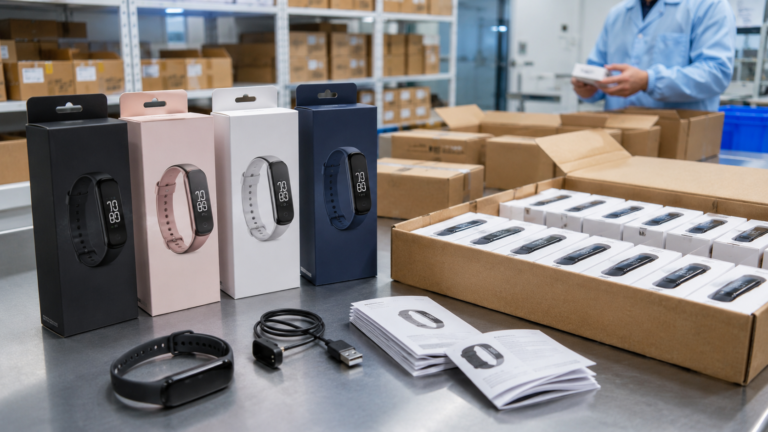
Yes, this is standard private-label customization. Logo application methods vary by ring material and finish, and packaging can range from printed retail boxes to fully custom structures. Confirm artwork files, print method, and packaging samples before mass production.
Who owns the app and the data?
That depends on the agreement. Apps may be shared, white-label, or dedicated. Data ownership, hosting location, and deletion rules should be written into the contract. If you plan to integrate with a platform, ask for the API documentation early.
How long does sample development take?
Sample lead time depends on how much you customize. A logo on a stock model is faster than a new housing with a customized app. Ask the supplier to confirm the sample schedule in writing, including artwork approval and shipping time.
What certifications should I request for lithium battery shipping?
For lithium battery-powered devices, UN38.3 test summaries and, where applicable, MSDS documentation are commonly requested. Shipping requirements vary by carrier and mode of transport. Buyers should confirm current rules with the supplier and freight forwarder before booking.
How do I verify that a supplier is a real manufacturer?
Ask process-level questions: who owns the mold, who writes the firmware, which steps are done in-house, and what the QC gates are. Request documentation that matches your SKU. If a supplier cannot answer process questions directly, treat it as a trading intermediary until proven otherwise.
Conclusion
Smart ring supplier vetting is a sequence of verifiable checks: supplier type, factory capability, specification trade-offs, sensor and data handling, app and firmware ownership, MOQ structure, sample testing, QC systems, certifications, battery shipping, lead time, and IP terms. Private-label brands that document each check before signing a purchase order reduce the risk of certification delays, quality claims, and post-launch returns. Price matters, but it is the last variable to compare — after capability and compliance are confirmed.
Ready to Qualify Your Smart Ring Supply Chain?
If you are preparing a private-label smart ring program, start with a structured supplier conversation. Share your target markets, channel, and customization scope with the STAR KING team, and request a quotation together with the compliance and MOQ assumptions you need to evaluate. You can also request product samples and review customization options before committing to tooling.
Request a quotation or discuss your private-label smart ring project with STAR KING.
Discuss Your Smart Wearable OEM/ODM Project
Planning a smart ring, smart watch, smart band, AI glasses, AI translator, or AI voice mouse project? Contact STAR KING to discuss product positioning, sample testing, customization scope, certification requirements, lead time, and quotation details.

Team Star King

Scan WhatsApp QR code