
B2B AI voice mouse supplier: How to Choose a B2B AI Voice Mouse Supplier in 2026: 7 Steps for Middle East Corporate Procurement Teams
October 17, 2026 · Team Star King
How to Choose a B2B AI Voice Mouse Supplier in 2026: 7 Steps for Middle East Corporate Procurement Teams
To choose a reliable B2B AI voice mouse supplier for Middle East corporate deployments in 2026, procurement teams should follow a structured seven-step process: confirm the exact voice-to-text and translation requirements, verify supplier manufacturing and quality systems, request samples that match the final configuration, validate firmware and app localization for Arabic and English, negotiate MOQ and lead times with landed cost in mind, clarify certification and battery-shipping rules, and lock in warranty and spare-part terms. This guide walks corporate buyers through each step with checklists, comparison tables, and red flags so you can compare suppliers on evidence rather than sales claims.
Table of Contents
Table of Contents
Table of Contents
- Direct Answer: What Should a Corporate Buyer Know First?
- Key Takeaways
- Key Facts for Buyers
- What Is an AI Voice Mouse and Why It Matters for Corporate Buyers
- Step 1: Define Voice, Translation, and Workflow Requirements
- Step 2: Map the Middle East Procurement Context
- Step 3: Shortlist B2B AI Voice Mouse Suppliers with Verifiable Capabilities
- Step 4: Request Samples and Run a Structured Pilot
- Step 5: Evaluate Firmware, App, and Localization Support
- Step 6: Negotiate MOQ, Lead Time, and Landed Cost
- Step 7: Confirm Certification, Battery Shipping, and After-Sales Terms
- Supplier Comparison Table
- Common Mistakes and Buyer Red Flags
- Practical Buyer Checklist
- FAQ
- Conclusion
Direct Answer: What Should a Corporate Buyer Know First?
A qualified B2B AI voice mouse supplier should be able to show, in writing, how the device captures voice, which languages it supports on-device versus in the cloud, what software accompanies the hardware, how firmware updates are delivered, and how units are tested before shipment. For Middle East corporate procurement, the practical starting point is a scoped pilot: define the languages and workflows you need, request samples in the target configuration, and agree on measurable acceptance criteria before committing to a bulk order.
Key Takeaways
- Define voice, translation, and workflow requirements before contacting any supplier; vague requirements lead to misaligned samples.
- Verify that the supplier can support Arabic, English, and any additional languages your teams use, including whether processing is on-device or cloud-based.
- Request samples that match the final production configuration, including firmware version, accessories, and packaging.
- Treat MOQ, lead time, and landed cost as a single planning exercise, including customs and battery-shipping considerations.
- Ask for certification documentation relevant to your destination markets, and verify claims rather than assuming coverage.
- Confirm warranty, spare-part, and firmware-support terms in the quotation or contract, not just in conversation.
Key Facts for Buyers
| Item | What Buyers Should Confirm | Why It Matters |
|---|---|---|
| Product category | AI voice mouse with voice input, dictation, and translation features | Determines software and language requirements |
| Core use case | Meeting transcription, multilingual communication, hands-free dictation | Shapes pilot design and acceptance criteria |
| Languages | Arabic, English, and any additional languages required | Affects firmware and cloud/on-device processing choices |
| Processing model | On-device, cloud, or hybrid voice processing | Impacts data handling, latency, and IT approval |
| Software | Companion app availability, OS support, update policy | Affects rollout and long-term maintenance |
| Certification | CE, FCC, RoHS, UN38.3, and any GCC-specific requirements | Needed for customs clearance and compliance sign-off |
| Battery | Lithium battery documentation and shipping classification | Required for air freight and customs |
| Commercial terms | MOQ, lead time, sample policy, warranty, spare parts | Determines total cost and rollout schedule |
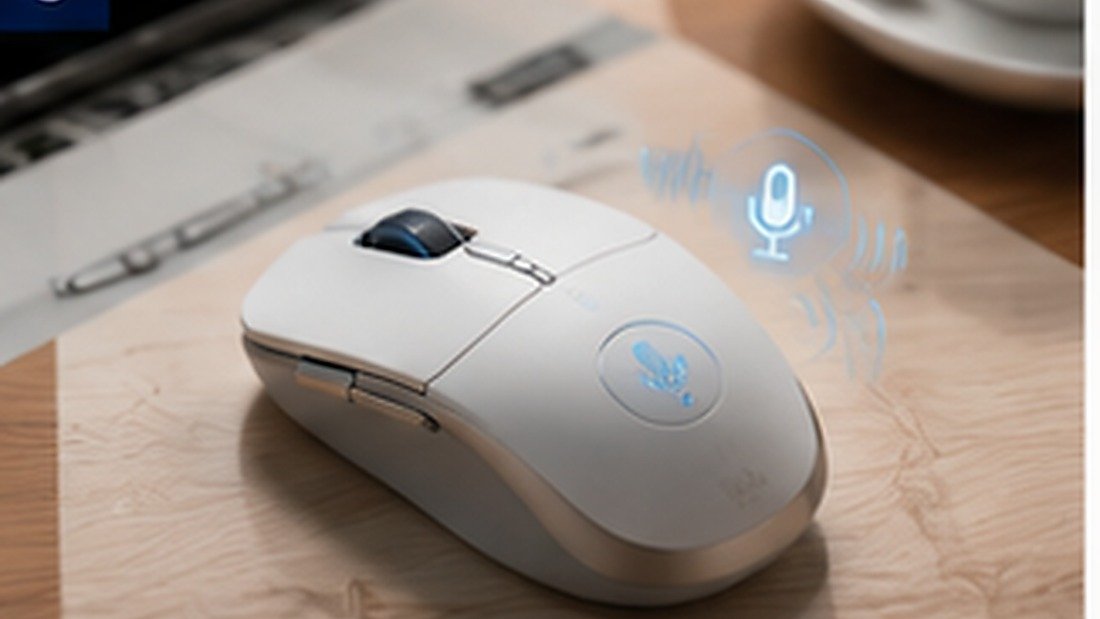
What Is an AI Voice Mouse and Why It Matters for Corporate Buyers
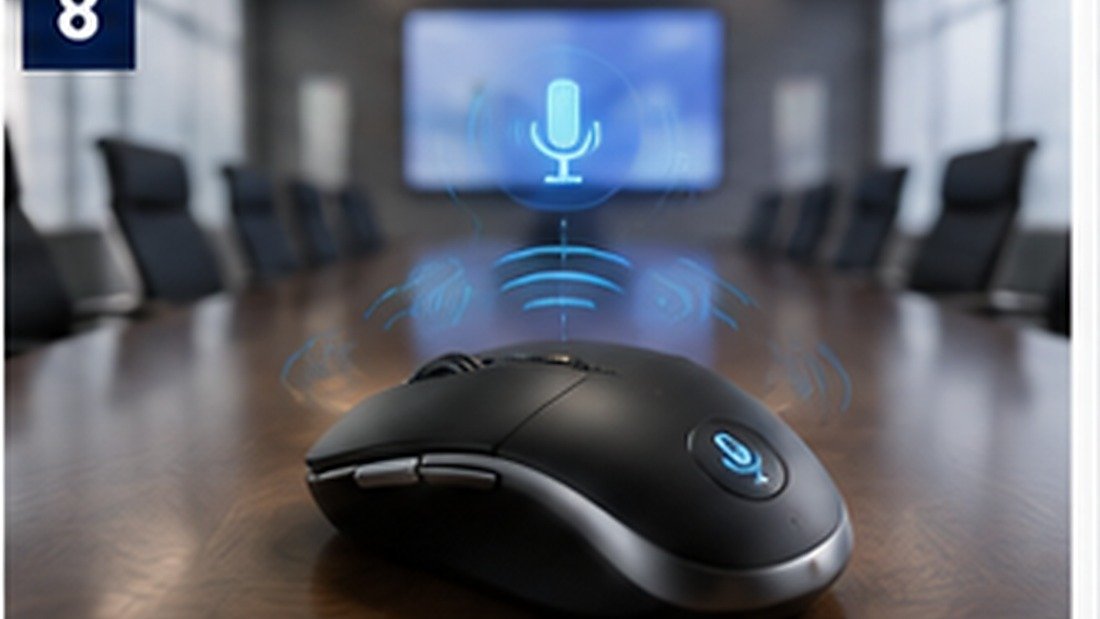
An AI voice mouse is a computer mouse that combines conventional pointing and clicking with voice input, dictation, and in many configurations real-time translation. Instead of switching between a keyboard, a separate microphone, and a translation app, users speak into the mouse and the associated software converts speech to text or translates it. For corporate buyers, the appeal is practical: multilingual teams, meeting-heavy roles, and accessibility requirements can all be supported by a single input device.
From a procurement perspective, an AI voice mouse is not simply a peripheral. It is a hardware-plus-software product, which means the supplier relationship covers the physical device, the companion application, firmware updates, and sometimes cloud services. That combination changes how you evaluate suppliers. A mouse manufacturer that only quotes plastic, sensor, and switch specifications may not be the right partner if you also need Arabic language support, an enterprise-friendly update process, and clear data-handling documentation.
Why Middle East corporate buyers are evaluating this category now
Organizations across the Gulf and wider Middle East frequently operate in more than one language. English is common in business documentation, while Arabic remains essential for government, legal, customer-service, and public-sector communication. Devices that reduce the friction of moving between languages can improve productivity in procurement, legal, HR, and customer-facing teams. For a corporate buyer, the question is not whether the device is interesting, but whether a specific supplier can deliver consistent units, localized software, and compliant documentation at the volume and price your organization requires.
Image suggestion: Insert a photo showing an office desk with a laptop, an AI voice mouse, and a user speaking during a meeting; caption it with the buyer’s core use case.
Step 1: Define Voice, Translation, and Workflow Requirements
Before you request quotations, write a short internal brief. Suppliers respond more accurately when requirements are specific, and your evaluation becomes more objective.
- Languages: Which languages must be supported? Is Arabic required for two-way translation, or only for dictation?
- Workflows: Meeting notes, email dictation, customer-service transcription, accessibility support, or a combination?
- Environments: Shared desks, private offices, call centers, or field use? Noise levels affect microphone expectations.
- IT constraints: Are cloud services allowed, or does the organization require on-device processing for certain data types?
- Volume: A realistic first-order quantity and a two-year forecast range.
- Deployment: Who configures devices, and how will updates be distributed across the fleet?
The output of this step is a one- or two-page requirement document that you can attach to your supplier inquiries. This single document will reduce back-and-forth and help you compare quotations on the same basis.
Step 2: Map the Middle East Procurement Context
Middle East procurement adds a few practical considerations that affect supplier selection.
Language and localization
Confirm that the software interface, not only the voice recognition, supports the languages your users need. An interface in English with Arabic dictation may be acceptable for some teams, but not for others. Ask suppliers to demonstrate the actual software during a live call rather than relying on brochures.
Data handling and IT review
If voice data is processed in the cloud, your IT or security team will likely ask where data is stored, how long it is retained, and whether it can be disabled. Suppliers that cannot answer these questions in writing are difficult to approve for enterprise deployment. Where data residency requirements exist, buyers should verify applicable local rules with qualified advisers.
Import and certification context
GCC markets often require documentation such as a Certificate of Conformity for certain product categories, and radio or wireless features may require additional approvals. Requirements typically depend on the exact product configuration and destination country, and buyers should verify current rules with a customs broker or compliance specialist. A supplier that provides organized documentation will make this process easier.
Step 3: Shortlist B2B AI Voice Mouse Suppliers with Verifiable Capabilities
When shortlisting a B2B AI voice mouse supplier, separate marketing statements from verifiable evidence. Ask every candidate for the same package of information so the comparison is fair.
- Company profile, main product lines, and whether they manufacture or trade.
- Relevant experience with AI hardware or voice-input devices.
- Quality management approach, inspection process, and typical defect-handling procedure.
- Software development capability or partnership model.
- Reference markets and typical customer types (without requesting confidential client names).
- Documentation samples: test reports, battery documentation, and conformity paperwork for comparable products.
STAR KING supplies smart wearables and AI hardware, including AI voice mouse products, with OEM/ODM and private-label support for international B2B buyers. Buyers evaluating this category can request technical documentation and sample configurations to compare against their own requirements.
Image suggestion: Insert an image of a supplier audit or factory discussion; the caption should reference evaluating a B2B AI voice mouse supplier.
Step 4: Request Samples and Run a Structured Pilot
Samples are the cheapest risk-reduction tool in hardware procurement. Treat them as a test, not a formality.
What to request
- Samples in the exact configuration you intend to order, including firmware version and accessories.
- Documentation of the shipping configuration and any battery-related paperwork.
- A short demonstration of the software, ideally with your own language combination.
- Written confirmation of what can be customized and what remains standard.
How to run the pilot
Define acceptance criteria before the pilot begins: recognition accuracy for your language pair in a realistic office environment, setup time per device, software stability over a set period, and user feedback from a representative group. Distribute devices to users who match your target profile, not only to IT staff. Record issues in a simple log so you can present findings to the supplier and to your internal stakeholders.
Step 5: Evaluate Firmware, App, and Localization Support
Software is where many AI voice mouse projects succeed or stall. Evaluate the following:
- Operating system support: Which versions of Windows and macOS are supported, and is the software maintained?
- Update mechanism: How are firmware and app updates delivered, and can they be managed centrally?
- Language coverage: Which languages are supported for dictation and translation, and how are accuracy limitations communicated?
- Customization: Can the supplier apply your logo, default settings, or packaging branding?
- Integration: Does the device work with your existing productivity tools, or does it require a separate workflow?
- Documentation: Is there a deployment guide suitable for your IT team?
If your organization uses AI-assisted office workflows, it is worth reviewing how the device fits into a broader AI office productivity solution. A single device rarely solves the entire workflow, and a supplier that understands the surrounding environment will usually give better support.
Step 6: Negotiate MOQ, Lead Time, and Landed Cost
MOQ, lead time, and landed cost interact, so plan them together. The lowest unit price is not always the best commercial outcome if it forces excess inventory or delays deployment.
MOQ
Ask how MOQ changes with customization. Standard configurations typically have lower MOQs than customized firmware, branding, or packaging. If your first order is below MOQ, ask whether a mixed order or a phased rollout is possible; STAR KING’s specific MOQ terms for the AI voice mouse are [STAR KING TO CONFIRM].
Lead time
Request a production schedule broken into sample approval, component procurement, assembly, testing, and packing. Ask what happens if a component is delayed and how the supplier communicates schedule risk.
Landed cost
Landed cost includes unit price, packaging, freight, insurance, duties, customs clearance, and any certification fees. Request a written cost breakdown so you can compare suppliers on total cost rather than unit price alone.
| Cost Element | What to Ask | Planning Note |
|---|---|---|
| Unit price | Price at several quantity tiers | Compare at the same configuration |
| Customization | Logo, packaging, firmware defaults | Confirm one-time tooling or setup fees |
| Freight | Air vs sea, battery handling | Lithium batteries affect air options |
| Duties and clearance | Applicable rates and documentation | Verify with a customs broker |
| Certification | Who arranges and who pays | Depends on destination market |
| After-sales | Warranty and spare parts | Budget for replacements |
If you are evaluating private-label or OEM options alongside standard models, the private label OEM/ODM solution overview is a useful reference for understanding how customization typically works.
Step 7: Confirm Certification, Battery Shipping, and After-Sales Terms
Certification
Certification needs depend on the product configuration and destination market. Common documentation for electronics includes CE marking for the European Economic Area, FCC rules for the United States, RoHS for restricted substances, and UN38.3 for lithium battery transport. Buyers should verify the exact requirements for each GCC country and confirm which certificates the supplier holds for the specific model, rather than assuming that a general statement covers all configurations. Suppliers should provide documentation for the exact SKU you plan to import.
Battery shipping
Devices with lithium batteries are subject to transport rules. UN38.3 test documentation and, where applicable, a Material Safety Data Sheet (MSDS) are commonly requested. Air carriers may apply additional packaging and labeling rules, and ocean freight timelines differ. Buyers should confirm the shipping method and documentation with the supplier and their freight forwarder before finalizing schedules.
After-sales and fleet support
Ask for the warranty period, the process for handling defective units, and the availability of spare parts such as cables, dongles, or replacement batteries. For enterprise deployments, a documented replacement process is often more valuable than a slightly lower unit price.
Supplier Comparison Table
| Evaluation Area | Evidence to Request | Strong Signal | Warning Signal |
|---|---|---|---|
| Manufacturing role | Factory profile, production process description | Clear explanation of what they make and what they outsource | Vague answers about own production |
| Software capability | Live demo, app documentation, update policy | Documented update process and language list | No clear answer on updates |
| Quality process | Inspection steps, test reports for comparable products | Defined pre-shipment inspection | No inspection documentation offered |
| Certification | Certificates for the exact SKU | Documentation organized by market | Claims without documents |
| Commercial terms | MOQ, lead time, cost breakdown | Written, itemized quotation | Price only, no schedule |
| After-sales | Warranty, spare parts, defect process | Written terms | Verbal assurances only |
Common Mistakes and Buyer Red Flags
Common mistakes
- Choosing a supplier on unit price alone without comparing landed cost.
- Approving samples that do not match the intended production configuration.
- Assuming language support based on a brochure rather than a live demonstration.
- Leaving firmware update and software support terms out of the contract.
- Ordering before confirming certification documentation for the destination market.
- Ignoring battery shipping requirements until freight is booked.
Buyer red flags
- Reluctance to provide any test documentation for comparable products.
- Inability to explain who develops and maintains the software.
- Inconsistent answers about MOQ or lead time between sales conversations.
- Pressure to place a large order before a pilot or sample evaluation.
- No written warranty or defect-handling process.
- Claims of certification coverage that cannot be matched to a specific model.
Practical Buyer Checklist
- Written requirement brief covering languages, workflows, volume, and IT constraints.
- Shortlist of 3-5 B2B AI voice mouse suppliers, each asked the same questions.
- Samples in final configuration, evaluated by representative users.
- Documented pilot results with acceptance criteria and issue log.
- Software demo covering Arabic and English, plus update policy in writing.
- Itemized quotation including MOQ, lead time, freight, duties, and certification fees.
- Certification and battery documentation for the exact SKU and destination market.
- Written warranty, spare-part, and defect-handling terms.
- Clear naming of who owns customized tooling, firmware, and branding assets, where applicable.
- Internal sign-off from IT, compliance, and finance before the bulk order.
If your organization is comparing devices across categories, for example voice-input peripherals alongside translation-focused products, it can help to review the broader AI translator product range to understand how requirements overlap.
FAQ
What should a corporate buyer look for in a B2B AI voice mouse supplier?
Look for evidence in four areas: manufacturing and quality process, software development and update capability, certification documentation for the exact model, and written commercial terms. Suppliers that can provide all four are easier to approve internally.
Does an AI voice mouse support Arabic?
Language support varies by model and firmware version. Buyers should request a live demonstration of the specific language combination they need and confirm whether processing is on-device, cloud-based, or hybrid.
What certification is required to import AI hardware into Middle East markets?
Requirements depend on the destination country and the product’s features, particularly wireless functions and batteries. Buyers should verify current requirements with a customs broker or compliance specialist and request documentation for the exact SKU.
How long does it take from sample approval to bulk delivery?
Lead time depends on configuration, customization scope, and component availability. Request a written schedule with milestones and confirm how the supplier communicates delays. For STAR KING’s AI voice mouse, production timelines are [STAR KING TO CONFIRM].
Can the device be customized with our company logo and packaging?
Many suppliers offer logo and packaging customization, and some support firmware or software branding. Availability and any setup fees vary by supplier and order volume, so confirm these details in the quotation.
Are lithium batteries in AI voice mice safe to ship by air?
Lithium batteries are subject to transport regulations and typically require UN38.3 documentation. Air carriers may apply additional packaging and labeling rules, so confirm requirements with the supplier and your freight forwarder before booking.
What is a reasonable first order quantity for a corporate pilot?
Pilot quantities depend on the number of users in the evaluation group, not on supplier MOQ alone. Many buyers start with a small pilot batch and then scale to the production MOQ after approval.
Conclusion
Selecting a B2B AI voice mouse supplier for Middle East corporate use is a structured procurement exercise, not a single purchase decision. Define requirements first, shortlist suppliers against consistent evidence, run a pilot with clear acceptance criteria, and negotiate MOQ, lead time, and landed cost together. Confirm certification and battery-shipping documentation for the exact model and destination, and put warranty and support terms in writing. Buyers who follow these seven steps reduce the risk of a rollout that fails on language support, software maintenance, or customs clearance.
STAR KING supports international B2B buyers with AI hardware and smart wearable products, including OEM/ODM and private-label options. To move from evaluation to a concrete proposal, request a quotation, discuss your deployment requirements, or ask for samples in your target configuration. The sales team can confirm MOQ, lead time, customization scope, and documentation for your destination market.
Primary CTA: Request a quotation for AI voice mouse deployment.
Image suggestion: Insert a final image of the product with packaging, captioned to support the conclusion for B2B AI voice mouse supplier selection.
Useful Official References for Buyers
- FCC equipment authorization guidance
- European Commission CE marking information
- Bluetooth SIG specifications
Discuss Your Smart Wearable OEM/ODM Project
Planning a smart ring, smart watch, smart band, AI glasses, AI translator, or AI voice mouse project? Contact STAR KING to discuss product positioning, sample testing, customization scope, certification requirements, lead time, and quotation details.

Team Star King

Scan WhatsApp QR code
Leave a Reply