
AI translator suppliers: 7 Critical Factors for AI Translators Distribution in Southeast Asia: A 2026 Sourcing Guide
October 31, 2026 · Team Star King
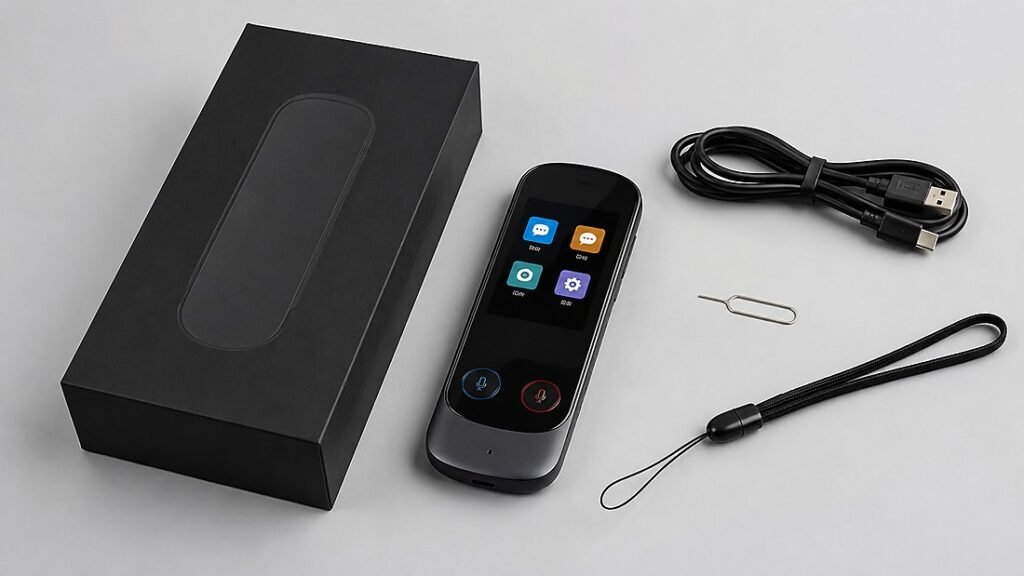
AI translator suppliers buyers need a supplier evaluation process that checks product fit, OEM/ODM capability, compliance documents, quality control, pricing, lead time, and after-sales support before placing a bulk order.
Table of Contents
Table of Contents
AI Translators Distribution in Southeast Asia: 7 Critical Factors for Distributors in 2026
AI translators distribution in Southeast Asia is one of the fastest-moving hardware categories in the region, driven by cross-border trade, tourism recovery, and multilingual workforces. For distributors evaluating this category, the decision is less about picking the flashiest device and more about language coverage, offline reliability, connectivity models, certification, and supply terms that match your channels. This guide gives 7 decision factors that distributors can apply immediately to shortlist suppliers, test samples, and plan market entry.
AI translator suppliers: Table of Contents
- Short Answer
- Key Takeaways
- Key Facts for Buyers
- What Are AI Translators, and Why Do Distributors Care?
- 1. Language Coverage and Dialect Fit
- 2. Online vs Offline Translation Reliability
- 3. Connectivity, SIM, and eSIM Models
- 4. Hardware Specification Trade-Offs
- 5. OEM, ODM, and Private Label Options
- 6. Certification and Import Compliance
- 7. MOQ, Lead Time, and After-Sales Planning
- AI Translator Comparison Table
- Common Mistakes and Buyer Red Flags
- Practical Buyer Checklist
- FAQ
- Conclusion

Short Answer
Successful AI translators distribution in Southeast Asia depends on matching device language coverage, offline translation reliability, and connectivity options to specific country channels, then verifying certification and MOQ terms before committing to stock. Distributors should evaluate suppliers on documented testing, customization capability, and realistic lead times — not on headline translation speed alone.

Key Takeaways
- Language coverage and dialect accuracy are the leading purchase criteria for distributors in Indonesia, Thailand, Vietnam, Malaysia, and the Philippines.
- Offline translation modes matter in areas where mobile data is inconsistent; buyers should test this in-field before scaling.
- Certification requirements differ by country and typically depend on the device’s wireless capability and battery configuration.
- OEM/ODM options (appearance, language packs, packaging) help distributors localize for regional retail channels.
- MOQ, lead time, and warranty terms are as commercially important as product spec, especially for first orders.
- Request documented test data and sample units; do not accept supplier claims without review.
Key Facts for Buyers
| Decision Factor | What to Verify | Why It Matters for SE Asia |
|---|---|---|
| Language coverage | Supported languages and dialect list per model | Regional trade requires Bahasa, Thai, Vietnamese, Tagalog, and English accuracy |
| Offline capability | Which languages work offline and total data size | Cellular reliability varies significantly by country and province |
| Connectivity | Wi-Fi, SIM, eSIM, or Bluetooth pairing | Distribution channel and traveler use cases differ |
| Certification | CE, FCC, and country-specific radio approvals | Battery-containing devices typically need additional documentation |
| MOQ | Quantity tiers and per-tier customization | Smaller first orders reduce inventory risk for new categories |
| Warranty | Duration, replacement terms, spare-parts availability | After-sales support is a retail channel requirement in most markets |
| Customization | Logo, packaging, language packs, app branding | Helps distributors build a defensible local brand position |

What Are AI Translators, and Why Do Distributors Care?
AI translators are handheld or wearable devices that perform real-time speech translation between two or more languages, typically using a combination of embedded speech-recognition models and cloud or on-premise translation engines. Some devices act as a standalone product; others pair with a companion app for extended features. For distributors, this category represents a high-margin accessory to existing electronics, travel, and office portfolios — but the buying risk is higher than for commodity hardware, because software performance and language pack quality change the customer experience directly.
Distributors who treat AI translators as a simple hardware SKU often run into language coverage complaints, connectivity issues, and firmware update problems after launch. Treating them instead as software-plus-hardware requires a supplier evaluation approach closer to the one used for connected health devices, which is why many regional distributors review related wearables and AI office hardware in the same sourcing cycle. STAR KING’s AI hardware portfolio, including AI translators for OEM and private label programs, is built around this combined hardware–software view.
1. Language Coverage and Dialect Fit
Language list length is a weak metric on its own. Distributors should ask which languages are supported in offline mode, which require cloud connectivity, and how the supplier handles regional dialects — for example, Bahasa Indonesia vs. Bahasa Melayu, or formal vs. colloquial Vietnamese speech. Misalignment here is the most common cause of returns in this category.
Questions to ask a supplier
- Which Southeast Asian languages are supported, and at what accuracy level?
- Are language packs updated via firmware, app, or new hardware SKU?
- Can the supplier provide sample recordings or short field-test units per language pair?
Buyers should verify language coverage through live trials in the target country. Cloud-based language models typically update more frequently, but offline accuracy may lag; buyers should confirm the update schedule and any cost implications per firmware release.
2. Online vs Offline Translation Reliability
Offline translation capability determines whether the device works in markets with inconsistent mobile data. In practice, distributors serving travel, hospitality, or field-service channels frequently encounter end users operating without reliable connectivity. Devices with strong offline models command a premium and reduce returns, but they also tend to cost more at the factory level.
Buyers should request a documented offline performance test and confirm the language pairs covered offline. Where offline language coverage is limited, the distributor may need to set channel expectations accordingly — for instance, positioning the device for urban or connected scenarios rather than remote field-service deployments.
3. Connectivity, SIM, and eSIM Models
AI translators typically work via Wi-Fi, Bluetooth pairing to a phone, a physical SIM, or eSIM. Each model creates different distribution requirements:
- Bluetooth + app: Lowest device cost, but requires smartphone tethering and app installation.
- Wi-Fi only: Suitable for office and hospitality use; limited for outdoor travel.
- Physical SIM: Flexible local data plans; buyers should consider SIM logistics and telecom partner support.
- eSIM: Strong travel positioning, but may require carrier agreements in each country.
Distributors planning multi-country rollouts should map connectivity against local telecom conditions. For office productivity channels, a Wi-Fi-first device paired with AI office productivity solutions is often a more coherent portfolio than a standalone travel translator.
4. Hardware Specification Trade-Offs
AI translator specification trade-offs are similar to other compact connected devices: battery capacity vs. size, screen quality vs. cost, microphone array quality vs. form factor, and speaker volume vs. privacy. Distributors should map specification choices to the intended channel — tourist retail, corporate procurement, education, or logistics — rather than chasing the highest spec list.
Typical trade-offs
- Battery life vs. thinness: Longer battery life may require a larger cell and heavier device.
- Screen vs. voice-first: Screen-based units are better for text and confirmation; voice-first designs reduce cost.
- Mic array vs. cost: Better microphones improve accuracy in noisy environments like markets or airports.
- Local storage vs. reliance on cloud: Affects privacy positioning and offline use.
Battery safety documentation, including UN38.3 and related requirements, should be part of the specification review where the device uses a lithium battery — which is nearly universal in this category. Buyers should ask for documentation upfront rather than after PO confirmation.
5. OEM, ODM, and Private Label Options
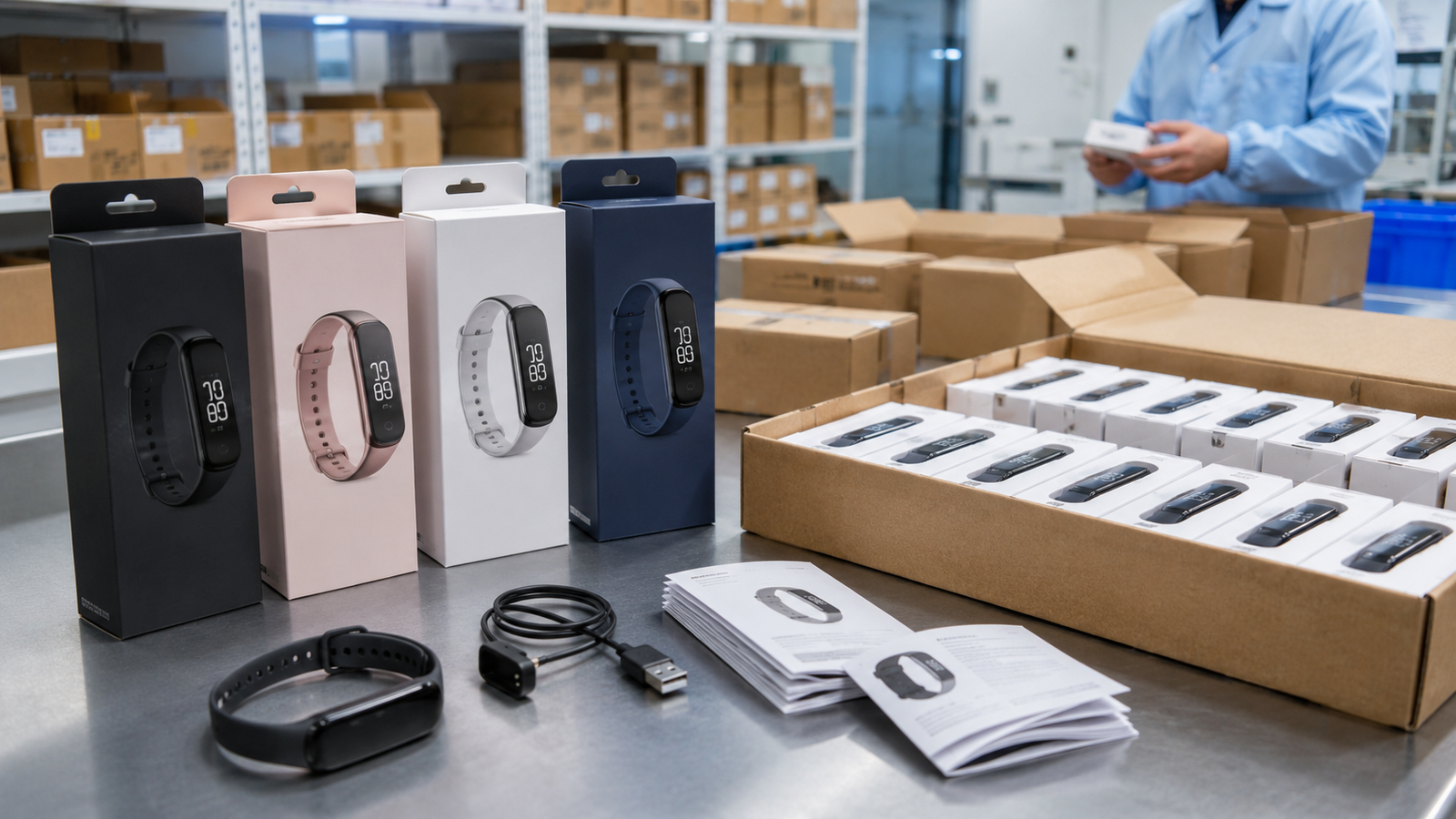
OEM, ODM, and private label arrangements are how distributors build defensible positions in this category. Typical customization layers include device appearance, logo, packaging, language pack selection, onboarding materials, and app branding.
Customization tiers distributors typically request
| Tier | Typical Elements | Typical Trade-Off |
|---|---|---|
| Logo only | Device logo, simple packaging | Lower minimum quantity, fastest lead time |
| Private label | Logo, branded packaging, manual, app splash screen | Higher MOQ, longer lead time, stronger brand position |
| ODM | Customized hardware configuration, language pack edits | Longest lead time, tooling or NRE costs |
| Full custom | New enclosure, unique feature set | Highest investment; suitable for established brands |
For first orders, a logo-only or light private label program is usually the lowest-risk entry point. Retail and e-commerce distributors often layer more customization after confirming sell-through. Buyers can review the private label and OEM/ODM program page for a summary of the customization layers typically available. This is a natural point to request samples with your intended packaging and language configuration before finalizing a launch plan.
6. Certification and Import Compliance
Certification is the most frequently underestimated factor. Wireless and battery-containing devices may require CE, FCC, RoHS, UN38.3, and country-specific radio approvals, depending on the target market and product configuration. In Southeast Asia, local requirements vary: some countries recognize CE or FCC markings, while others may require local registration or import licenses. Distributors should verify requirements with a local compliance consultant or customs broker before committing to stock.
Buyers should ask suppliers for:
- Available certification documents per model and per market;
- MSDS and UN38.3 documentation for the battery;
- Radio-frequency test reports and firmware version associated with the tested unit;
- Update policy if firmware or hardware changes after certification.
Regulatory references such as the U.S. Federal Communications Commission, the International Electrotechnical Commission, and national telecommunications regulators in each Southeast Asian country should be reviewed alongside supplier documentation. Certification should not be assumed for every configuration — requirements typically depend on the specific model and market.
7. MOQ, Lead Time, and After-Sales Planning
MOQ and lead time shape how aggressively a distributor can launch. Typical market practice varies by supplier and configuration, and buyers should treat MOQ as negotiable within tiers rather than a fixed number. Common planning questions include:
- How many units per carton, and how does that affect landed cost?
- Is the MOQ per SKU or per order?
- What is the lead time for samples vs. mass production, and how does customization extend it?
- What is the warranty period, and are spare parts stocked locally or regionally?
After-sales support is a common differentiator. Distributors in multi-country markets should confirm how returns, replacements, and firmware issues are handled and whether a regional service partner is available. For product categories where distributors also handle sensitive applications such as senior health monitoring or hospital communication, after-sales support standards should be reviewed with the same rigor.
AI Translator Comparison Table for Distributors
The comparison below is a decision framework, not a specific product comparison. Distributors can use it to score supplier proposals consistently.
| Evaluation Criterion | Low-Risk Profile | Higher-Risk Profile |
|---|---|---|
| Language coverage | Documented SEA language list with sample verification | Broad global list, no regional sample |
| Offline mode | Tested offline pairs with update path | Cloud-only, no offline fallback |
| Connectivity | Options for Wi-Fi, SIM, or Bluetooth | Single mode with unclear carrier support |
| Certification | Documents available per model and market | Documents “available on request” without timelines |
| Customization | Structured private label path with samples | Case-by-case, no sample process |
| MOQ/lead time | Documented tiers and realistic lead time | Unclear MOQ, optimistic lead time |
| After-sales | Regional forward-stocking plan | No warranty process defined |
Common Mistakes and Buyer Red Flags
- Judging by language count alone. A long language list does not confirm dialect accuracy or offline coverage.
- Skipping localized field testing. Samples tested in a quiet showroom often fail in noisy markets and airports.
- Assuming certification is universal. Requirements differ by country and configuration; buyers should verify.
- Underestimating firmware risk. A supplier without an update plan may leave distributors supporting outdated language models.
- Committing to full private label on the first order. Start with logo or light private label, then scale.
- Overlooking after-sales cost. Returns and replacements materially affect gross margin in this category.
Practical Buyer Checklist
- Supplier provides documented Southeast Asian language and dialect coverage.
- Offline translation is tested in-field, not just specified.
- Connectivity model matches the target channel (travel, office, education, logistics).
- Battery documentation (including UN38.3 and MSDS) is current and available.
- Certification status is confirmed per model and per country; buyers should verify with local regulators.
- MOQ and lead time are documented and consistent with the first-order plan.
- Warranty, spare parts, and firmware update policy are in writing.
- Private label and OEM/ODM terms (logo, packaging, language packs) are specified.
- Sample order timeline and cost are agreed before PO.
FAQ
What is the biggest risk when sourcing AI translators for Southeast Asia?
Language accuracy and offline reliability are the primary risks. Distributors should test samples in the target country before committing to volume.
Are AI translators certified for every Southeast Asian country by default?
No. Certification requirements typically depend on the device’s wireless capabilities, battery, and local regulatory rules. Buyers should verify requirements market by market and request documentation per model.
Can distributors customize language packs?
In many cases, yes — but this depends on the supplier and ODM terms. Language pack customization is usually part of a structured ODM program rather than a logo-only order.
What MOQ should a new distributor expect?
MOQ varies by supplier and customization tier. A logo-only order typically has a lower MOQ than a full private label or ODM program. Distributors should request formal MOQ tiers.
How long does it take to test an AI translator sample?
Many suppliers can ship samples within a few weeks, but timelines should be confirmed. Buyers should plan an in-country field test before placing a first bulk order.
Which connectivity option is best for Southeast Asia?
There is no universal answer. Travel channels often favor eSIM or Wi-Fi first; office channels may prefer Bluetooth and app pairing. Distributors should match connectivity to the target channel.
What warranty terms typically apply?
Warranty length varies. Distributors should confirm warranty duration, replacement process, and spare-parts availability in writing before ordering.
Conclusion
AI translators distribution in Southeast Asia rewards distributors who evaluate language accuracy, offline performance, connectivity, certification, and after-sales jointly. The category has real retail pull across travel, office, education, and e-commerce channels, but a hardware-only evaluation will typically lead to returns and margin loss. Distributors should approach this as a software-plus-hardware product category, and should align supplier, MOQ, and certification terms with the specific country channels they plan to enter before committing to stock.
Next Step: Request Product Samples
If you are evaluating AI translators distribution in Southeast Asia and want to verify language coverage, offline performance, and customization options before launching, the next practical step is a sample order with your intended configuration. Request product samples and discuss your distribution plan with the STAR KING team, or review the STAR KING sourcing resources for additional buyer guides.
Multimedia Placement Suggestions
- Insert an image of a distributor field-testing an AI translator in a Southeast Asian market near section 2 (Offline vs Online).
- Insert a product photo of the AI translator model near section 4 (Specification Trade-Offs).
- Insert a packaging customization photo near section 5 (OEM/ODM and Private Label).
- Insert a comparison-table graphic or certification document photo near section 6 (Certification).
Discuss Your Smart Wearable OEM/ODM Project
Planning a smart ring, smart watch, smart band, AI glasses, AI translator, or AI voice mouse project? Contact STAR KING to discuss product positioning, sample testing, customization scope, certification requirements, lead time, and quotation details.

Team Star King

Scan WhatsApp QR code
Leave a Reply