
AI smart glasses suppliers: AI Smart Glasses for UK Corporate Procurement: 7 Steps to Evaluate Suppliers (2026 Guide)
November 1, 2026 · Team Star King

AI Smart Glasses for UK Corporate Procurement: 7 Steps to Evaluate Suppliers (2026 Guide)
AI smart glasses for UK corporate procurement are not a simple catalogue purchase. A single procurement decision can touch IT security, health and safety, data protection, brand risk and after-sales support. This guide gives corporate buyers a practical 7-step framework to compare suppliers, validate samples, plan a pilot and confirm certification before committing. It is written for UK corporate procurement teams evaluating AI smart glasses for the first time in 2026.
Table of Contents
Table of Contents
Short Answer: To evaluate AI smart glasses suppliers for UK corporate procurement, follow seven steps: 1) define the corporate use case, 2) shortlist suppliers with verifiable AI hardware experience, 3) confirm specifications and software integration, 4) request samples and run a pilot, 5) review certification and UK compliance, 6) agree MOQ, lead times and landed cost, 7) plan branding, deployment and after-sales support. Buyers should verify all certification and test documentation directly with the supplier.
AI smart glasses suppliers: Table of Contents
- Introduction
- Key Takeaways
- Key Facts for Buyers
- What Are AI Smart Glasses in a Corporate Context?
- Step 1: Define the Corporate Use Case Before You Contact Suppliers
- Step 2: Shortlist Suppliers with Verifiable AI Hardware Experience
- Step 3: Confirm Specifications and Software Integration
- Step 4: Request Samples and Run a Pilot
- Step 5: Review Certification and UK Compliance
- Step 6: Agree MOQ, Lead Times and Landed Cost
- Step 7: Plan Branding, Deployment and After-Sales Support
- Comparison Table: Procurement Stages and Buyer Actions
- Common Mistakes and Buyer Red Flags
- Practical Buyer Checklist
- FAQ
- Conclusion
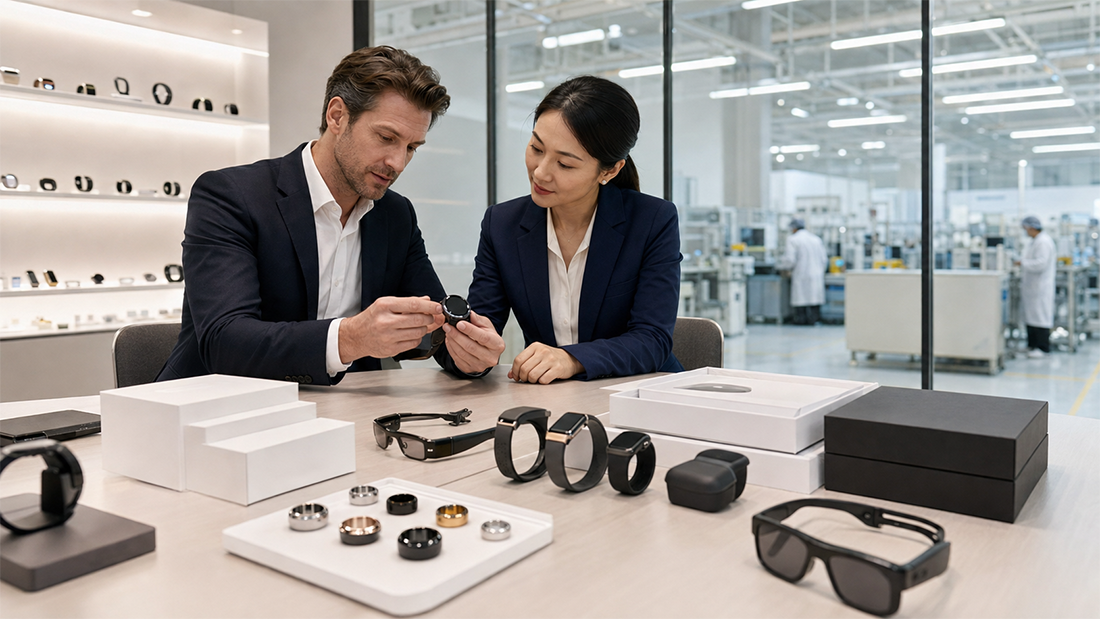
Key Takeaways
- AI smart glasses for UK corporate procurement should be evaluated against a defined use case, not just a product sheet.
- Supplier experience in AI hardware, firmware and app integration reduces deployment risk.
- Samples and pilot programmes are the most reliable way to validate performance before a volume order.
- Certification requirements depend on the final product configuration and the UK target market; buyers should verify documentation.
- MOQ, lead times and landed cost are usually negotiable within limits, but should be confirmed in writing.
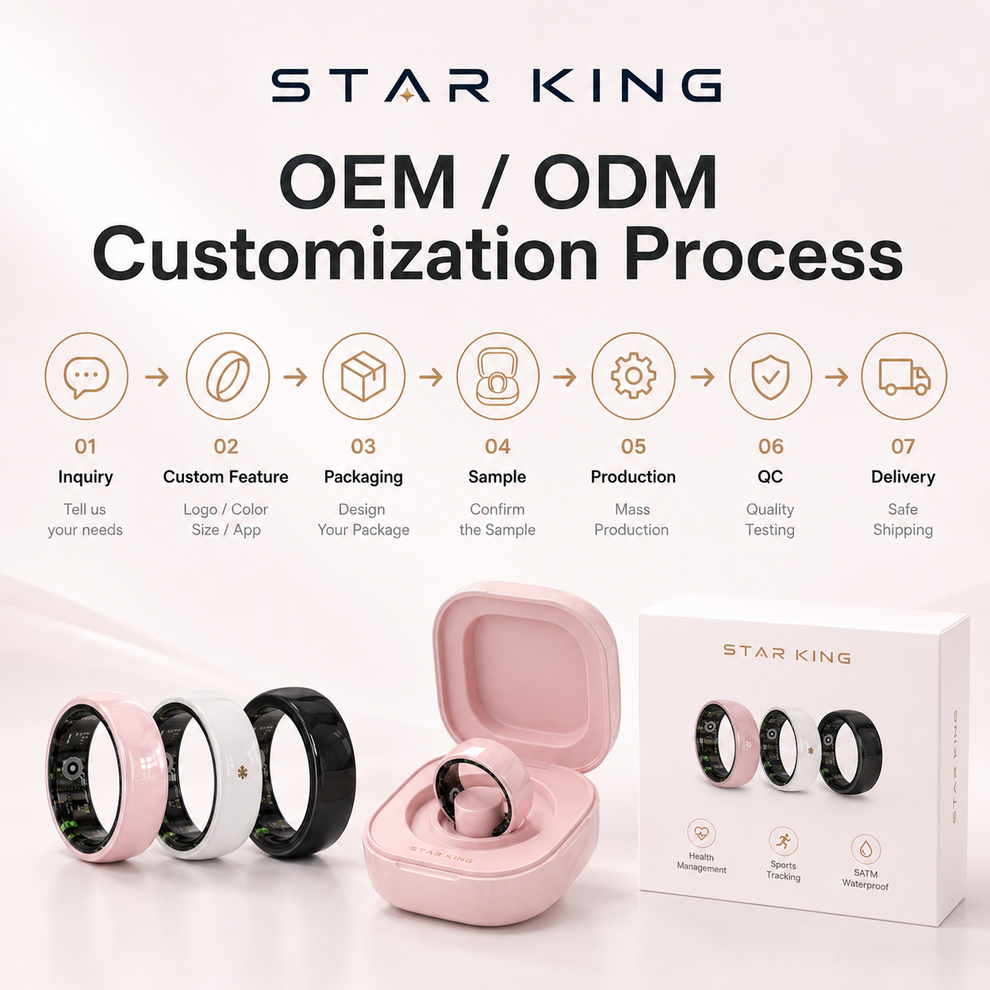
Key Facts for Buyers
| Procurement Factor | What UK Corporate Buyers Should Confirm |
|---|---|
| Use cases | Remote assistance, training, field service, translation, hands-free workflows, corporate wellness or events |
| Supplier capability | AI hardware experience, hardware/firmware/app development, OEM/ODM or private label options |
| Specification | Display, camera, audio, battery life, weight, connectivity, supported languages, SDK/API availability |
| Samples | Sample cost, sample lead time, pilot quantities, test evaluation criteria |
| Certification | CE, UKCA where applicable, RoHS, WEEE, battery transport documents; verify per SKU |
| Commercial terms | MOQ, unit price tiers, tooling or NRE costs, payment terms, Incoterms |
| Lead time | Sample lead time, mass production lead time, shipping time to the UK |
| After-sales | Warranty period, spare parts, RMA process, firmware update policy |
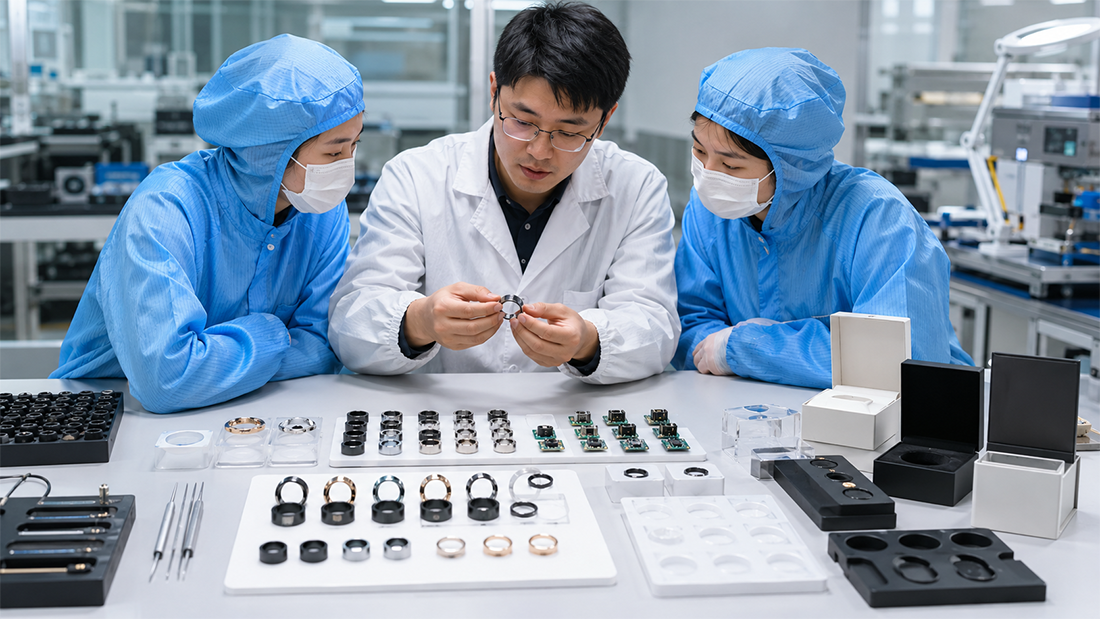
What Are AI Smart Glasses in a Corporate Context?
AI smart glasses are wearable devices that combine a head-mounted form factor with computing, sensors, audio and often a camera or display, plus software that supports AI-assisted tasks. In a corporate context, they are typically used for hands-free information access, remote expert support, training, real-time translation or workflow assistance.
For corporate procurement teams, the important distinction is between consumer smart glasses and enterprise-oriented AI smart glasses. Enterprise buyers usually need clearer documentation on data handling, software integration, device management, warranty and lifecycle support. A supplier that primarily sells consumer products may not be structured to support corporate rollouts.
Step 1: Define the Corporate Use Case Before You Contact Suppliers
Procurement teams get better responses from suppliers when the use case is specific. Before sending an RFI, define which departments will use the glasses, what tasks they will support, and what success looks like.
Common corporate use cases
- Field service and maintenance: hands-free access to manuals, checklists or remote expert guidance.
- Training and onboarding: guided procedures, recorded sessions or step-by-step instructions.
- Translation and multilingual meetings: real-time or near-real-time translation support.
- Corporate wellness and events: guided activities or interactive experiences at company events.
- Office productivity: hands-free note-taking or voice-driven workflows.
Write a one-page use case brief covering the department, number of potential users, required features, data sensitivity and target deployment date. This brief becomes the baseline for supplier comparison and pilot evaluation.
Step 2: Shortlist Suppliers with Verifiable AI Hardware Experience
AI smart glasses are a complex hardware category. A credible supplier should be able to explain how the device is designed, how firmware and app updates are handled, and how quality is controlled during production.
Supplier evaluation criteria
- Documented experience in AI hardware or smart wearables.
- Ability to support OEM/ODM or private label requirements.
- Clear explanation of hardware, firmware and app architecture.
- Access to sample units for evaluation.
- Willingness to share test documentation and certification status per SKU.
- Responsive project communication and named contacts.
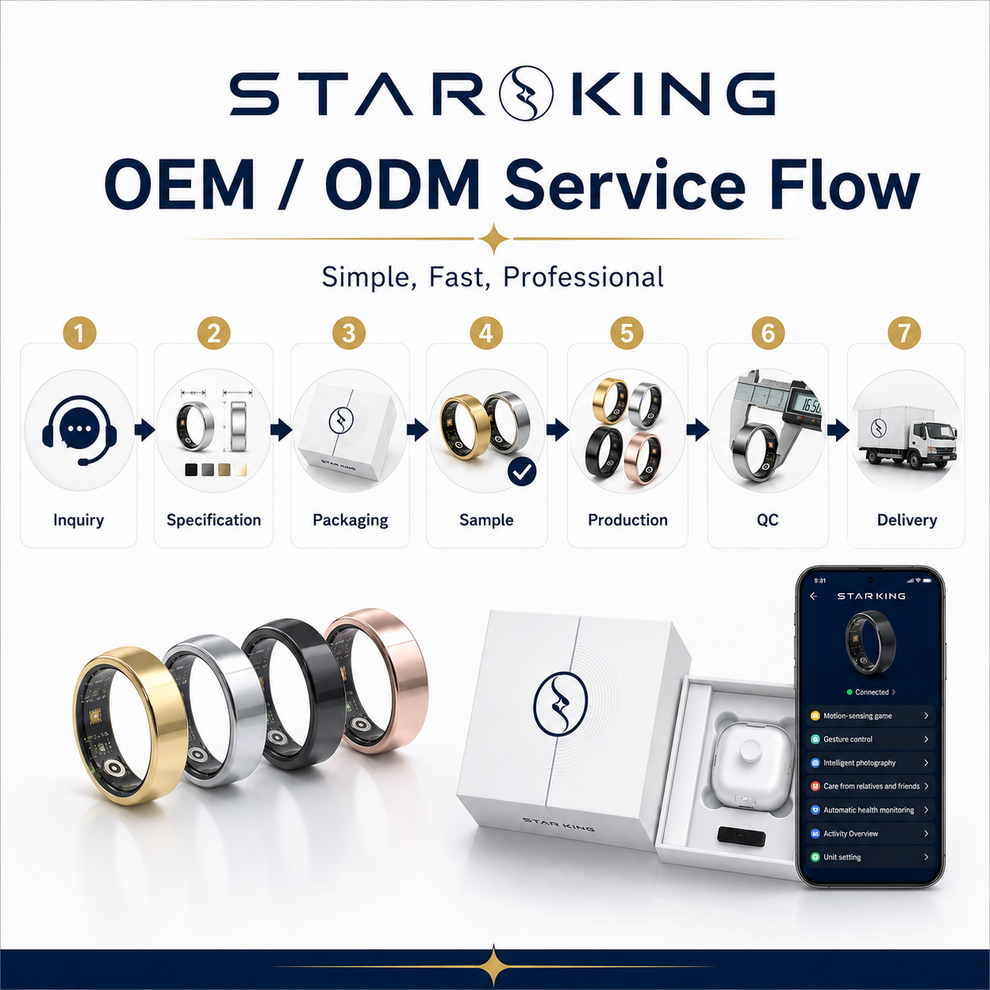
For buyers who want to understand the broader smart hardware sourcing landscape, the private label OEM/ODM solution page explains how customization is typically structured. Procurement teams can use it to frame questions about branding, packaging and software options.
Step 3: Confirm Specifications and Software Integration
Specifications should be compared in a structured way. Small differences in battery life, weight, connectivity or language support can have a large impact on user adoption.
Specification areas to confirm
- Display and optics: resolution, brightness, field of view, prescription compatibility.
- Camera and audio: camera resolution, microphone array, speaker quality.
- Connectivity: Bluetooth, Wi-Fi, pairing with Android or iOS devices.
- Battery: typical runtime, charging method, battery safety documentation.
- Software: companion app, SDK/API availability, device management options.
- Languages: supported translation languages and offline/online behaviour.
If the glasses are intended for translation, the AI translators product line can help buyers understand how multilingual support is typically positioned. For office productivity scenarios, the AI voice mouse demonstrates complementary voice-control devices that may fit the same corporate workflow.
Step 4: Request Samples and Run a Pilot
Samples are not a formality. A structured pilot reduces the risk of a costly volume order. Procurement teams should agree on evaluation criteria before samples arrive.
Pilot evaluation criteria
- Ease of setup and pairing.
- Battery life under realistic conditions.
- Audio and display quality in typical work environments.
- Stability of firmware and app.
- Comfort during extended use.
- Quality of support from the supplier during the pilot.
The AI smart glasses product page can be shared with internal stakeholders to align on baseline expectations. If your organisation also plans to test adjacent wearables, the AI office productivity solution explains how AI hardware fits into office workflows.

Step 5: Review Certification and UK Compliance
Certification requirements depend on the final product configuration and the target market. For the United Kingdom, buyers should confirm which markings and documentation the supplier can provide for the exact SKU being purchased.
Documents to request
- CE declaration and test reports where applicable.
- UKCA marking status where applicable.
- RoHS and WEEE compliance documentation.
- UN38.3 test summary and MSDS for the lithium battery.
- Bluetooth SIG listing if Bluetooth is used.
- Any additional documentation required by your compliance team.
Buyers should verify documents directly and check that the product description matches the test scope. For official reference, see the UK government guidance on UKCA marking, FCC for US market reference, and Bluetooth SIG for Bluetooth qualifications.
Step 6: Agree MOQ, Lead Times and Landed Cost
AI smart glasses are not commodity products. Minimum order quantities, tooling costs and lead times should be discussed as part of a project plan, not as a single price negotiation.
Commercial factors to clarify
- MOQ per model and per configuration.
- Sample cost and whether it is credited against a bulk order.
- Tooling, NRE or customization fees.
- Production lead time and shipping time to the UK.
- Incoterms and responsibility for import duties and VAT.
- Payment terms and milestone schedule.
Ask suppliers to present a landed cost estimate rather than an ex-works price. This makes supplier comparison more realistic and helps internal finance teams budget accurately.
Step 7: Plan Branding, Deployment and After-Sales Support
Corporate deployments often require some level of branding or customization. The scope can range from logo and packaging to app customization and firmware options. Buyers should confirm what is feasible, what is not, and what the associated costs and timelines are.
Deployment and support questions
- What warranty period is offered?
- How are returns and repairs handled?
- Are spare parts available?
- How are firmware updates delivered?
- Is there a documented support process for corporate accounts?
At this stage, a soft CTA can help move the conversation forward: if your team is shortlisting suppliers, requesting samples against your use case brief is usually the fastest way to compare real performance. You can also review the STAR KING resources blog for related sourcing guidance.
Comparison Table: Procurement Stages and Buyer Actions
| Stage | Buyer Action | Output |
|---|---|---|
| Use case definition | Write internal use case brief | Clear requirements |
| Supplier shortlist | Screen suppliers on capability and documentation | Shortlist of 3–5 suppliers |
| Specification review | Compare specs and software integration | Specification matrix |
| Sample and pilot | Request samples and run structured evaluation | Pilot report |
| Compliance review | Verify certification and documentation per SKU | Compliance file |
| Commercial negotiation | Confirm MOQ, lead times and landed cost | Approved budget and schedule |
| Deployment planning | Agree branding, support and after-sales | Deployment plan |
Common Mistakes and Buyer Red Flags
Common mistakes
- Starting with a price request before defining the use case.
- Assuming consumer smart glasses are suitable for enterprise deployment.
- Skipping pilot testing and relying only on specifications.
- Not confirming certification status for the exact SKU.
- Overlooking after-sales and firmware update processes.
Buyer red flags
- Supplier cannot explain the software architecture.
- Certification documents are vague or not product-specific.
- Lead times are promised without a written schedule.
- No clear process for samples or pilot evaluation.
- Resistance to discussing warranty or spare parts.
Practical Buyer Checklist
- ☐ Use case brief documented internally.
- ☐ At least three suppliers shortlisted.
- ☐ Specification matrix completed.
- ☐ Samples requested and pilot criteria agreed.
- ☐ Certification documents verified.
- ☐ MOQ, lead time and landed cost confirmed in writing.
- ☐ Warranty and after-sales process documented.

FAQ
1. What is the typical MOQ for AI smart glasses?
MOQ varies by supplier, model and configuration. For customized or private label orders, it is usually higher than for standard samples. Buyers should ask for the MOQ per model and confirm whether sample costs can be credited against a bulk order.
2. Can AI smart glasses be customized for our corporate brand?
Customization options may include logo, packaging, app branding and firmware settings. The scope depends on the supplier and the product platform. Buyers should confirm what is feasible before approving a project plan.
3. What certification should we expect for the UK market?
Depending on the final product configuration, documentation may include CE marking, UKCA marking where applicable, RoHS and WEEE, plus battery transport documents such as UN38.3 and MSDS. Buyers should verify all documents for the exact SKU.
4. How long does sampling and production take?
Sample lead times and mass production lead times depend on customization and current production schedules. Buyers should request a written schedule that covers sampling, production and shipping.
5. Can we run a small pilot before a volume order?
Many suppliers support pilot orders within their MOQ policy. A structured pilot with agreed evaluation criteria is the most practical way to validate performance before a larger commitment.
6. How should we compare landed cost between suppliers?
Ask each supplier for a landed cost estimate that includes unit price, tooling or NRE, packaging, freight and Incoterms. This makes comparison more accurate than comparing ex-works prices alone.
7. What after-sales support should we confirm?
Confirm the warranty period, RMA process, spare parts availability and firmware update policy. For corporate deployments, a named support contact is also useful.
Conclusion
For UK corporate procurement teams, AI smart glasses should be evaluated as a deployment project rather than a one-off purchase. A clear use case, a structured supplier shortlist, pilot testing and verified compliance documentation reduce risk and improve the quality of the decision. STAR KING supports corporate buyers with AI smart glasses and OEM/ODM options, and can discuss sample requests against your use case brief.
Request AI Smart Glasses Samples for Your UK Procurement Project
Discuss Your Smart Wearable OEM/ODM Project
Planning a smart ring, smart watch, smart band, AI glasses, AI translator, or AI voice mouse project? Contact STAR KING to discuss product positioning, sample testing, customization scope, certification requirements, lead time, and quotation details.

Team Star King

Scan WhatsApp QR code
Leave a Reply