
AI Smart Glasses OEM for UK Startup Brands: 7 RFQ Steps Before You Commit
October 30, 2026 · Team Star King
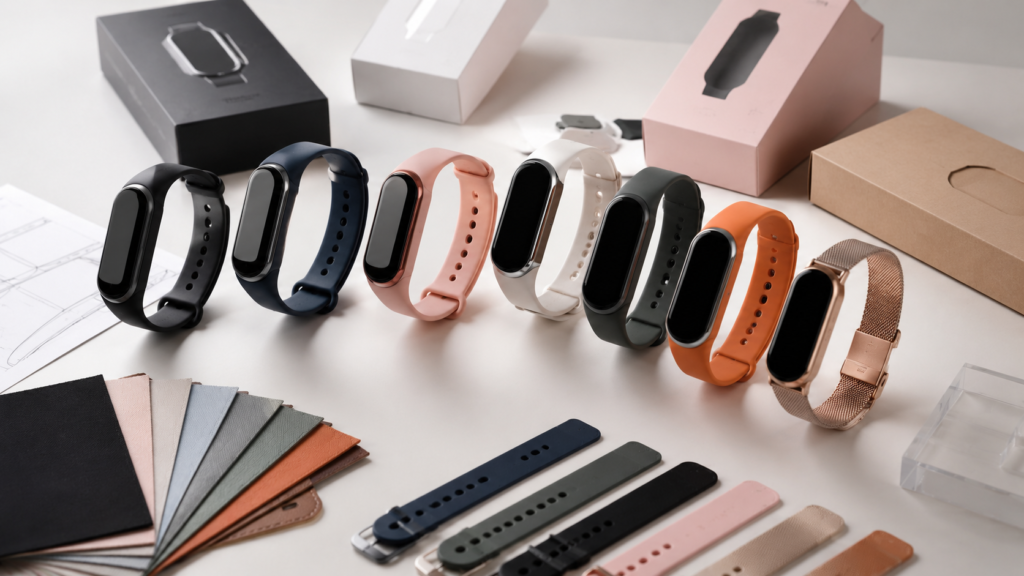
AI Smart Glasses OEM for UK Startup Brands: 7 RFQ Steps Before You Commit
Choosing an AI smart glasses OEM supplier is the point where a UK startup brand moves from concept to committed spend. The fastest way to reduce risk is to send a structured RFQ that forces clear answers on specifications, MOQ, sample testing, UKCA/CE and battery logistics before you pay a deposit. This guide walks through seven RFQ steps, the questions to ask, the red flags to watch and the documents to request from any AI smart glasses manufacturer you shortlist.
Table of Contents
Table of Contents
AI smart glasses OEM: Short Answer
For a UK startup brand, a strong AI smart glasses OEM RFQ should specify the target use case, hardware and firmware scope, expected first-order volume, required UK market documentation, packaging and branding needs, and a sample validation plan. Expect pricing and MOQ to depend on the chosen chipset, frame design, camera and audio configuration, app requirements and certification scope, and confirm all of these in writing before committing to tooling or mass production.
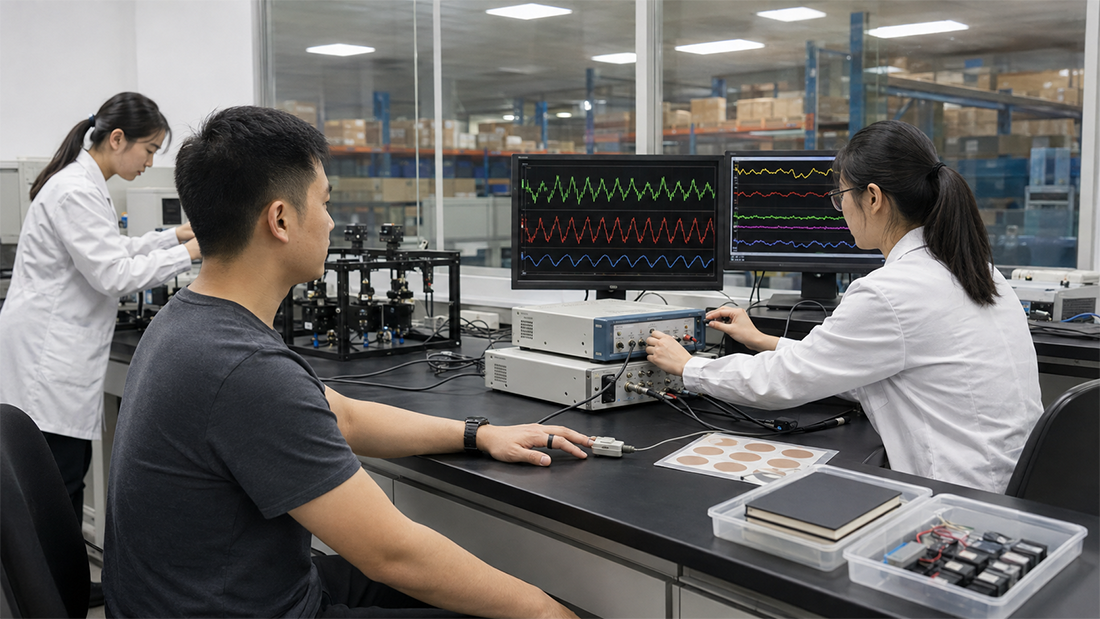
Table of Contents
- Why the RFQ stage decides your AI glasses project
- Key Takeaways
- Key Facts for Buyers
- Step 1: Define the product and use case
- Step 2: Decide OEM vs ODM vs private label
- Step 3: Lock down the technical specification
- Step 4: Plan MOQ, pricing and tooling
- Step 5: Validate with samples and testing
- Step 6: Confirm UK compliance and battery shipping
- Step 7: Agree lead time, warranty and after-sales
- OEM vs ODM vs private label comparison
- Common mistakes and buyer red flags
- Practical buyer checklist
- FAQ
- Conclusion

Key Takeaways
- Your RFQ is a risk-control document, not just a price request. It should define specs, volumes, compliance and validation.
- AI smart glasses OEM pricing is driven by chipset, sensors, frame design, firmware and app scope, packaging and certification.
- UK market entry typically requires UKCA marking plus relevant radio, EMC and RoHS documentation; battery items need UN38.3 and MSDS.
- Sample approval and pre-shipment inspection reduce the gap between prototype and mass production.
- Confirm tooling ownership, MOQ, lead time and spare-parts terms in the contract before paying for tooling.
Key Facts for Buyers
| RFQ Factor | What to Specify | Why It Matters for UK Startups |
|---|---|---|
| Target use case | Office productivity, translation, field support, retail, training | Drives chipset, audio, camera and firmware choices |
| Sourcing model | OEM, ODM or private label | Determines customization depth, tooling and timeline |
| MOQ | First order and reorder volume | Affects unit cost, tooling amortization and cash flow |
| Compliance | UKCA, CE, UK radio/EMC, RoHS, battery docs | Required to sell legally in the UK |
| Battery logistics | UN38.3, MSDS, shipping mode | Required for air and sea freight of lithium batteries |
| Samples | Golden sample, pilot run approval | Validates quality before mass production |
| Lead time | Sample, tooling, mass production, shipping | Protects launch dates and cash flow |
Why the RFQ Stage Decides Your AI Glasses Project
The RFQ stage is where most AI smart glasses projects either gain a reliable supply partner or inherit months of avoidable rework. A UK startup brand often has a clear product vision but limited buffer for tooling, re-certification or freight delays. A well-structured RFQ forces the supplier to confirm, in writing, what they can actually build and document.
Before you send an RFQ, review the AI smart glasses product range to understand typical hardware configurations, and read how private label engagement models work via the private label OEM/ODM solution. This helps you frame realistic questions rather than broad ones.
Step 1: Define the Product and Use Case
AI smart glasses is a broad category. Buyers should state the primary use case because it drives nearly every downstream decision: chipset, camera module, audio output, display, weight, firmware features and companion app functions.
Common AI glasses use cases for UK startups
- Office productivity and voice-assisted workflows
- Real-time translation for multilingual teams
- Field service and remote support
- Retail and training content delivery
Specify the top two use cases only. A product designed for office productivity has different thermal, battery and weight targets than one designed for field support. Suppliers can then recommend a matching platform and firmware scope instead of quoting a generic device.
Questions to include in your RFQ
- What is the recommended platform for my use case?
- What customization is possible without new tooling?
- What features require firmware or app development?
Step 2: Decide OEM vs ODM vs Private Label
UK startup brands often assume they need full OEM development. In practice, a staged approach works better: launch with a private label or ODM configuration, validate demand, then invest in deeper customization.
Define your sourcing model
Ask the supplier to clarify which elements are already available and which need development. For AI glasses, the difference between ODM and full OEM often sits in the frame design, firmware features and app branding rather than the core electronics.
If you plan a hardware roadmap beyond glasses, review related AI hardware such as an AI voice mouse to align your product family and app ecosystem.
Step 3: Lock Down the Technical Specification
Technical ambiguity is the most common cause of pricing gaps and sample rejection. Ask for a documented specification sheet and confirm which fields are fixed versus configurable.
Specification checklist
| Area | What to Confirm |
|---|---|
| Display | Type, resolution, brightness, monocular or binocular |
| Optics | Field of view, prescription-lens compatibility |
| Audio | Speakers, microphones, noise handling |
| Camera | Resolution, image processing, privacy indicator |
| Connectivity | Bluetooth version, Wi-Fi, pairing behavior |
| Battery | Capacity, runtime, charging method, cycle life |
| Companion app | Platforms, account handling, data flow |
| Firmware | Update method, localization, feature toggles |
For Bluetooth-related claims, verify supported profiles and versions against the Bluetooth SIG specifications rather than marketing descriptions.
Step 4: Plan MOQ, Pricing and Tooling
MOQ and pricing for AI smart glasses OEM projects are rarely fixed numbers. They depend on platform choice, customization depth, packaging, certification scope and order timing.
What drives unit price
- Core hardware platform and sensors
- Frame material and tooling requirements
- Firmware and app customization
- Logo, packaging and accessory customization
- Certification and testing scope
- First-order volume and forecast
Ask for a cost breakdown and a tooling quote as separate line items. Request confirmation of tooling ownership and whether the tooling can be transferred if the relationship ends. If you need deeper guidance on cost structures, the STAR KING resources blog covers related sourcing and manufacturing topics.
Typical MOQ and lead-time figures for AI smart glasses at STAR KING are [STAR KING TO CONFIRM]. Do not plan launch dates until these are confirmed in writing.
If you need guidance on choosing a supplier beyond price, review how to evaluate an AI office productivity solution partner for firmware and app integration support.
Step 5: Validate With Samples and Testing
Samples are the only reliable way to confirm fit, weight, audio quality, thermal behavior and firmware stability. Treat sampling as a formal approval process rather than a casual check.
Sample validation plan
- Request at least two sample units per configuration
- Test pairing, firmware update, app onboarding and battery runtime
- Check comfort during a 60-90 minute wear test
- Confirm branding, packaging and accessory contents
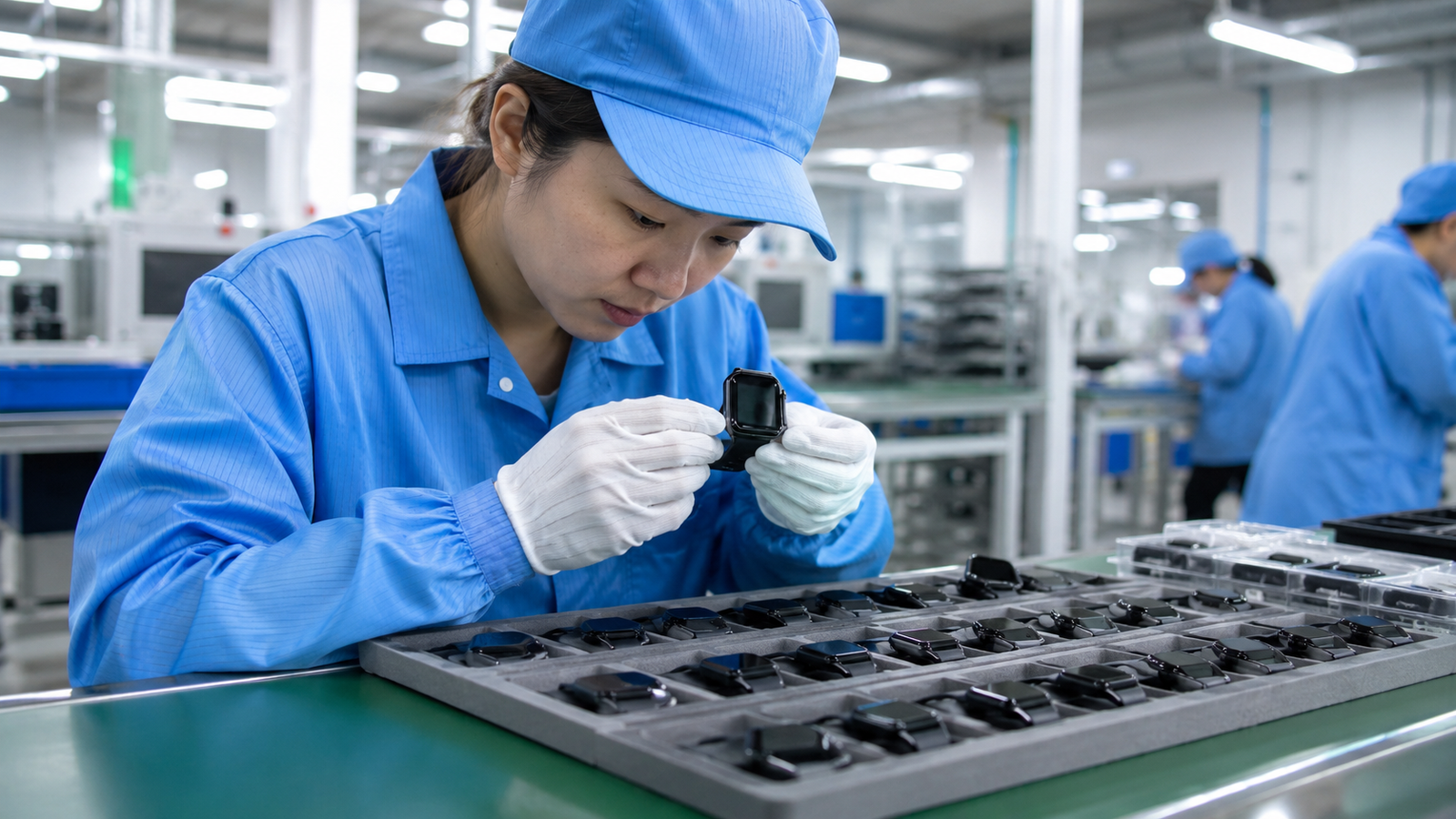
- Approve a golden sample before mass production
Ask whether the supplier performs aging, drop and charging tests and whether test records can be shared. Sample lead time for AI smart glasses is [STAR KING TO CONFIRM], and should be included in your RFQ response.
Step 6: Confirm UK Compliance and Battery Shipping
UK market entry for AI smart glasses typically requires compliance documentation before retail or distribution. Because requirements depend on the exact configuration and target market, buyers should verify each item with the supplier and, where needed, a compliance advisor.
Documents to request
- UKCA declaration and supporting test reports
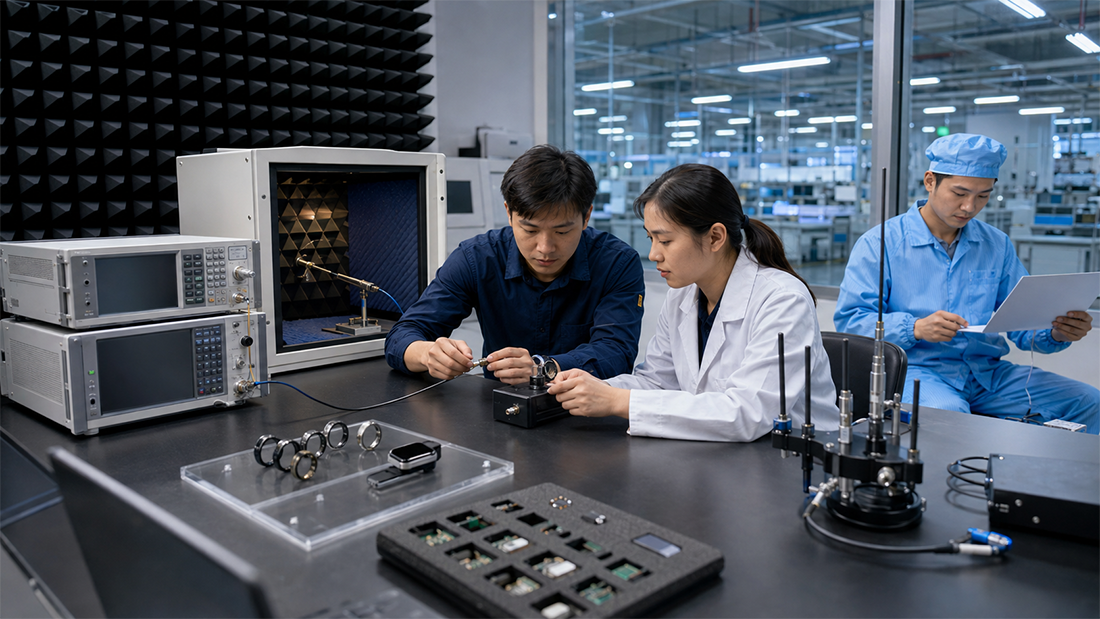
- Radio equipment and EMC test documentation
- RoHS and REACH statements
- UN38.3 test summary and MSDS for the lithium battery
- Packaging and labeling artwork aligned to UK requirements
Refer to the official UK government UKCA guidance and the European Commission CE marking pages to understand current obligations. Certification status for each STAR KING AI smart glasses SKU is [STAR KING TO CONFIRM] and should be confirmed per product and destination market.
For battery-powered wearables, freight forwarders typically require UN38.3 documentation and an MSDS before confirming air or sea shipping. Plan this early because it affects packaging and labeling.
Step 7: Agree Lead Time, Warranty and After-Sales
RFQ responses should include a realistic timeline covering sample approval, tooling, pilot run, mass production and freight. A startup brand should also confirm warranty terms, spare-parts availability and repair or replacement procedures.
Timeline fields to request
- Sample production time
- Tooling and validation time
- Pilot run and mass production time
- Inspection and packing time
- Freight time to the UK
Lead-time commitments for STAR KING AI smart glasses are [STAR KING TO CONFIRM]. Request these in writing and build a buffer into your launch plan.
OEM vs ODM vs Private Label Comparison
| Model | Customization Level | Typical Startup Fit | Key Considerations |
|---|---|---|---|
| Private label | Logo, packaging, accessories | Fast launch, limited budget | Lower tooling cost, faster sampling |
| ODM | Frame, firmware, app, packaging | Brands with defined use case | Moderate tooling, longer validation |
| Full OEM | Custom design and development | Funded brands with clear roadmap | Highest cost and timeline, full ownership |
Common Mistakes and Buyer Red Flags
Common mistakes
- Requesting price without a specification sheet
- Assuming certification is included without written confirmation
- Paying for tooling before sample approval
- Ignoring battery shipping documentation until after production
- Underestimating app and firmware integration time
Red flags
- Supplier avoids written specifications or refuses test documentation
- MOQ or price changes without explanation
- No clear answer on tooling ownership or spare parts
- Vague compliance claims such as “all certificates included” without documents
- No defined sample approval process
Practical Buyer Checklist
- Defined primary use case and target customer
- Written specification sheet including firmware and app scope
- Confirmed MOQ, pricing breakdown and tooling cost
- Sample plan with golden sample approval
- UKCA, CE, RoHS, UN38.3 and MSDS documentation status confirmed
- Packaging, logo and branding requirements documented
- Lead time and warranty terms agreed in writing
- Pre-shipment inspection criteria agreed
- Tooling ownership and exit terms confirmed
For related application scenarios, review the business and education display solution to understand how AI glasses fit into training and workplace deployments.
FAQ
What MOQ should a UK startup expect for AI smart glasses OEM?
MOQ typically depends on the platform, customization level and packaging. Request MOQ for both private label and ODM configurations; STAR KING figures are [STAR KING TO CONFIRM].
Does AI smart glasses OEM include UKCA certification?
Certification scope varies by product configuration and target market. Ask for a written list of available test reports and confirm the UKCA and radio documentation status for each SKU before ordering.
How long does sample development take?
Sample lead time depends on whether you choose private label or ODM customization. Request a written sample timeline and include it in the RFQ response. STAR KING sample timelines are [STAR KING TO CONFIRM].
Can firmware and companion apps be customized?
Firmware and app customization vary by platform. Confirm supported features, update methods, data handling and localization requirements in the specification sheet.
What documents are needed to ship lithium-battery glasses to the UK?
Freight forwarders usually require UN38.3 test documentation and an MSDS. Confirm the shipping mode and packaging compliance with the supplier and forwarder before production.
Who owns the tooling?
Tooling ownership should be defined in the contract. Confirm ownership, transfer conditions and any related costs in writing before paying for tooling.
Conclusion
A structured RFQ protects your budget, launch timeline and brand reputation. By defining the use case, sourcing model, technical specification, MOQ and tooling terms, sample validation, UK compliance and battery documentation, and lead time and after-sales terms, UK startup brands can compare AI smart glasses OEM suppliers on evidence rather than sales claims.
Send the same RFQ to each shortlisted supplier so responses are directly comparable, and request written confirmation for every item that affects cost, compliance or timing.
Next Step
Ready to move from research to a real quotation? Request a quotation for your AI smart glasses project and include your use case, expected volume and target market so the team can respond with relevant specifications, sample options and customization scope.
Discuss Your Smart Wearable OEM/ODM Project
Planning a smart ring, smart watch, smart band, AI glasses, AI translator, or AI voice mouse project? Contact STAR KING to discuss product positioning, sample testing, customization scope, certification requirements, lead time, and quotation details.

Team Star King

Scan WhatsApp QR code
Leave a Reply